Hygiene poverty is reaching people who once felt financially stable, according to a charity warning that the crisis has entered a critical phase affecting millions across the UK.
Rosemary Ashworth, deputy chief executive of The Hygiene Bank, told BBC Radio Surrey that the demographic experiencing hygiene poverty had shifted dramatically.
"We're at a bit of a tipping point so now feels like the time to do something about it,"she said, noting that working families and those who previously considered themselves financially secure were now struggling to afford basic cleaning and personal care items.
A 2026 survey conducted by Savanta among 3,042 UK adults between 29 May and 8 June found that one in five (18%) had experienced hygiene poverty in the last six months, or someone in their household had. According to research from the charities, approximately 9.6 million people have gone without hygiene essentials because they could not afford them in the past six months, with 36% of UK adults expecting to go without at least one essential hygiene product in the next six months.
Among those affected by hygiene poverty, two in five (41%) said they had experienced it for the first time this year, highlighting how rapidly the crisis is expanding into new households.
What products are people struggling to afford?
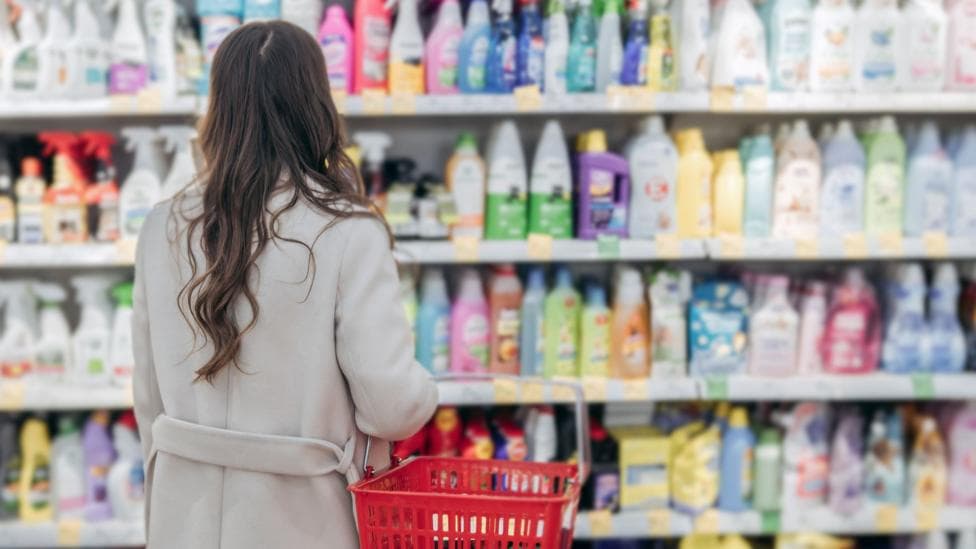
Janice Sedgwick, a volunteer at the charity's Guildford branch, explained that essential items included toothbrushes, toothpaste, shower gel, shampoo, sanitary pads and laundry detergent. However, the struggle extended beyond personal hygiene to household cleaning products as well.
According to the 2026 research, the products most frequently skipped were toilet roll (47%), deodorant (43%), laundry and cleaning products (38%), shampoo (39%) and toothpaste (34%), with 28% having gone without period products.
How does hygiene poverty affect people's lives?
The inability to afford hygiene products creates far-reaching consequences beyond physical cleanliness. The Hygiene Bank stated that the phenomenon "can create a vicious cycle, affecting health, confidence, education, work and social participation".
Research from the 2026 survey revealed that 43% of respondents had avoided seeing friends or family in the past six months because they could not afford essential hygiene or cleaning products, demonstrating the social isolation that accompanies this form of poverty.
Tom May, from Guildford-based mental health charity Oakleaf, highlighted a particular challenge for women, noting that they required hygiene products on a regular basis while stores were frequently depleted by the end of the week, making access even more difficult for those with limited budgets.
Why is this happening now?
The expansion of hygiene poverty into previously stable households reflects broader economic pressures facing UK families. Earlier research has shown that similar patterns are emerging across multiple forms of essential need. In June 2026, rising living costs and health challenges increased foodbank reliance in South Cotswolds, with many seeking help for the first time. A July 2026 report found that 7.4 million households struggled to afford essentials in the past six months, as families cut meals and heating to save money.
Ashworth emphasised that the affected population defied common stereotypes.
"It's not people who [you] might necessarily expect experiencing it. It's working families. People who previously felt financially secure... It feels like a problem that is worsening."
What is being done to address hygiene poverty?
The Hygiene Bank is urging people to donate essential products or money during National Hygiene Week, which ends on 11 October. The charity is also organising fundraising activities, with a Kent Downs walk, jog or run scheduled for 10 October 2026 to mark the conclusion of the awareness week.
The scale of the problem extends beyond immediate relief efforts. A 2025 study by The Hygiene Bank and laundry brand smol estimated that nearly three million UK schoolchildren experienced hygiene poverty and that it contributed to 23 million missed school days a year, underscoring the long-term educational and developmental impacts of the crisis.
Key Facts
- Approximately 9.6 million people have gone without hygiene essentials in the past six months due to affordability
- 41% of those experiencing hygiene poverty reported encountering it for the first time in 2026
- 43% of survey respondents avoided social contact because they could not afford hygiene or cleaning products
- Nearly three million UK schoolchildren experience hygiene poverty, contributing to 23 million missed school days annually
- 36% of UK adults expect to go without at least one essential hygiene product in the next six months