

Pupils across Northern Ireland collected their GCSE grades this week amid what counsellors, teachers and charities describe as an unusually intense mix of relief, disappointment and anxiety. Schools reported the familiar scenes of pupils gathering with friends to open envelopes together, but professionals working with young people say the emotional toll of results day has become harder to manage in recent years. According to those who support pupils through the process, a poor set of grades need not close off opportunities, even though it can feel that way in the moment.
Results day for GCSE pupils in Northern Ireland follows closely behind A-level results, which were issued across England, Wales and Northern Ireland on 13 August 2026, producing what was widely reported as a record number of university acceptances alongside the usual mixture of pride and nerves detailed in our earlier coverage of A-level results day 2026. That report also set out how grade boundaries, appeals and Ucas clearing operate this year, information many families found useful when navigating unexpected outcomes, as explained in our guide to grades, appeals, resits and clearing. For GCSE pupils specifically, a separate guide covering appeals, resits and next steps was published alongside this year's results, as detailed in our GCSE results day explainer.
Who is Rainers Ragainis and why does his story matter?
Rainers Ragainis is a former student who says he enjoyed learning at school and was recognised by teachers as capable, yet consistently struggled to perform once inside an exam hall. He received two Es and a D in his A-levels, a result he says left him feeling "quite crushed" and convinced that higher education was no longer an option open to him.
Years later, while completing bookkeeping and payroll courses arranged through a job centre, someone suggested he consider the Open University. He enrolled on a computing and IT course, a format that suited the way he learned far better than traditional exams had.
"I read and studied at my own pace, not the teacher's, and there was less emphasis on traditional exams," he said.
He graduated in 2025 and now works in IT and customer support. His advice to pupils facing disappointing results is not to see university as the only route forward, nor to treat a lack of one as a personal failing.
"Don't let anyone make you think that university is the only path or that not going to it is a mark against you," he said.
"As much as it feels like grades can be very defining of who you are, remember they're not. Even when you apply to jobs and courses and people see you as your grades, you are not what you got."

Why are pupils from the Covid-affected cohort feeling extra pressure?
Linda-Jayne Hoey, a school counsellor at Belfast High School, said she and colleagues across Northern Ireland have noticed an unusually high number of Year 12 pupils referred to pastoral care services over the past year. She links part of this increase to the fact that this cohort did not sit the usual transfer test because of the pandemic, meaning this year's GCSEs are the first major exams many of them have faced.
"To build resilience we have to face difficult situations," said Linda-Jayne Hoey.
"For many in this year group [who are receiving their GCSE results], this is the first time they have sat big exams and are awaiting their grades."
Because pupils in this cohort were admitted to secondary school using non-academic criteria rather than transfer test results, Hoey said a number of them have described feelings resembling imposter syndrome.
"I've spoken with colleagues and they say the same. Not all, but some, in this year group think they were lucky to get into the school they're at or feel they didn't have to prove themselves the way others did."
"I think, possibly, that is feeding into the negativity some are feeling in the run-up to results."
How much pressure do pupils and teachers actually face?
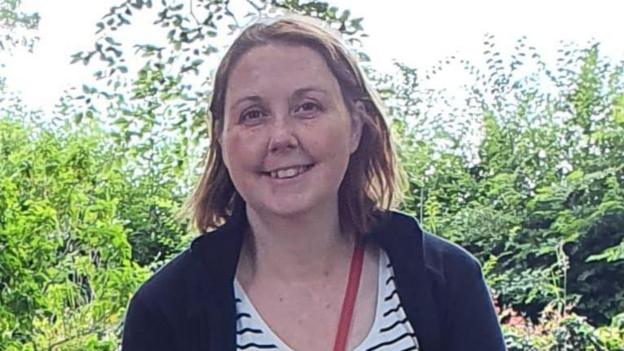
Brian Banks, junior vice president of the teaching union NASUWT and a teacher at Hazelwood College in Newtownabbey, said the weight placed on exam performance has grown disproportionate over recent decades. He argues that expectations from parents, employers, universities, politicians and schools have combined to make results feel far more consequential than they should.
"I think the central importance of examination performance in education has certainly become overinflated over the last few decades," he said.
"Parents expect it, employers expect it, universities expect it, politicians expect it, and schools expect it."
Banks said the fear of failure is now so pronounced that many students describe relief rather than joy even when they achieve top grades, driven by a wish not to disappoint themselves or others.

"There's this sense of not letting themselves and others down," he said.
"I know when I got my own A-level results many decades ago I had the sense of a bullet dodged rather than a mountain climbed. That's tough pressure for a young person just starting out in the world."
He added that teachers are not immune to this pressure, since schools themselves are judged largely on how well pupils perform in public exams.
"It's hardly surprising as teachers and schools are measured by how well their students do in public examinations," he said.
Banks said exam results remain "the easiest metrics to measure" when assessing school performance, which he believes has made them one of the strongest sources of pressure on pupils and educators alike. He acknowledged the difficulty of persuading students that good grades matter without leaving them to believe their futures are determined solely by results.
"It's a tricky job, ensuring students understand that good exam grades are important and useful for their future, while also assuring them that they can still build a successful and thriving life without these qualifications," said Banks.

What support is available to pupils who are struggling?
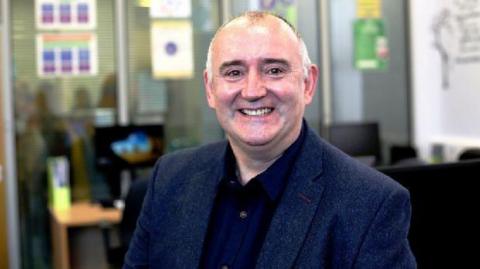
Figures from the children's charity Childline show that between April 2025 and March 2026 it delivered 728 counselling sessions across the UK to young people worried specifically about exam results, with sessions peaking last August at 142 in a single month. Cormac Nolan, from Childline, said Northern Ireland accounted for a notable share of these calls.
Nolan said reactions to disappointing grades vary widely, ranging from mild disappointment to genuine crisis, largely depending on the support a young person has around them.
"Parents and carers can be extremely supportive and understanding, but some put a degree of pressure or expectation on the young person and that's very hard for them to cope with," he said.
"Others may be distracted and have other things to deal with and maybe not able to give the attention the young person needs. In other cases, fractured or difficult relationships can leave them isolated."
He encouraged pupils to avoid pinning all their hopes on a single outcome and to keep broader options in mind ahead of results being issued.
"Ahead of exam results coming out, think of broad options," he said.
Nolan added that most young people who miss their expected grades eventually regain perspective, though some need additional support to get there.
How does this compare with other results days this summer?
This year's GCSE results follow a pattern already seen in Wales, where thousands of pupils received GCSE and vocational results on 20 August 2026, with Year 10 pupils sitting reformed qualifications for the first time amid continuing concern about workload, as reported in our coverage of Wales's GCSE results day. Official guidance from the exams regulator confirms that GCSE results in England are also due on Thursday 20 August 2026, with Ofqual updating its published guidance to reflect that date on 18 August 2026, according to Ofqual's latest updates. A government student guide confirms the same date and notes that individual schools and colleges set their own arrangements for collecting results, according to the official student guide to exams and assessments. Exam board AQA lists the same 20 August 2026 date for GCSE results from the June 2026 series, according to AQA's results days page.
Broader Ofqual guidance explains that GCSE results are issued in August as part of the standard summer assessment cycle rather than immediately after pupils sit their papers in May and June, according to Ofqual's guide for schools and colleges. Practical advice for pupils on the day itself includes bringing a trusted adult, identification and paper for notes, along with guidance pointing worried students toward Childline and their GP for support, according to a national broadcaster's results-day guide. Separate guidance from the same source advises pupils to confirm their collection time in advance and to plan ahead for support if needed, according to further results-day advice.
What happens next?
Schools and colleges are due to hand out GCSE results on Thursday 20 August 2026, with each institution setting its own collection arrangements, according to the official student guide. Pupils who need immediate support after receiving their results can contact Childline, which operates a 24-hour helpline every day of the week, according to a national broadcaster's guidance for results day. Pupils unhappy with their marks also have the option of pursuing appeals or resits, as outlined in our earlier guide to appeals and resits.
Key Facts
- GCSE results in England, Wales and Northern Ireland were released around 20 August 2026, shortly after A-level results were issued on 13 August 2026.
- Childline delivered 728 counselling sessions across the UK between April 2025 and March 2026 for pupils worried about exam results, peaking at 142 sessions last August.
- Counsellors report an unusually high number of Year 12 referrals linked to a cohort that missed the transfer test due to the pandemic.
- Support options for pupils include school pastoral services, Childline's 24-hour helpline, and formal appeal or resit processes.


