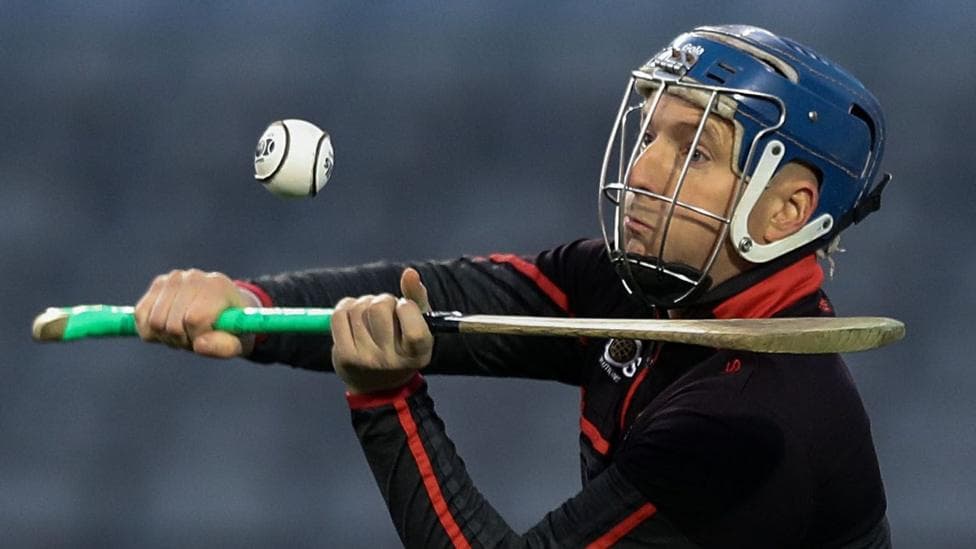
Stephen Keith, a former goalkeeper for Down's hurling team, has credited his training partners with saving his life after he suffered a cardiac arrest during a gym session in Portaferry. He spent nearly four weeks recovering in Belfast's Royal Victoria Hospital while medical staff investigated the cause of his collapse, and he now advocates strongly for CPR training and community access to defibrillators.
The 39-year-old collapsed suddenly after dismounting an exercise bike at the end of a fitness class. He retained almost no memory of the immediate aftermath, but witnesses described how he fell to the ground and stopped breathing moments after stepping away from the equipment.
A trained nurse participating in the same session began administering CPR immediately, while other gym members retrieved defibrillators stationed nearby in the town. The period during which Keith's heart was not beating effectively lasted between 20 and 22 minutes—a critical window in which brain damage and death become increasingly likely.
Without Barry (Milligan) being there and starting CPR, it wasn't looking good that morning. I was very, very lucky.
Keith reflected on how narrowly he escaped a fatal outcome.
If the lads weren't in the gym with me that morning and there wasn't a defib close by, I wouldn't be sitting here talking to you today. That's 100% true.
What did doctors discover about his condition?
Hospital investigations revealed that one of Keith's main coronary arteries was severely narrowed. Cardiologists inserted a stent to restore blood flow through the blocked vessel. As a precautionary measure, he was also fitted with an implantable cardioverter-defibrillator (ICD)—a device that monitors heart rhythm and delivers an electric shock if a dangerous arrhythmia develops.

The experience mirrors that of other athletes who have faced sudden cardiac events. Christian Eriksen's implanted ICD device activated during a match, restoring his heart rhythm after a collapse, demonstrating how such technology can be life-saving in competitive settings. Keith's case underscores the importance of rapid response and accessible defibrillation in any environment where people exercise.
Will he return to competitive hurling?
Although medical staff have cleared Keith to resume training and gym activities, he has decided against returning to competitive hurling. He played as a goalkeeper for Down until the previous season and had hoped to contribute one more year to his club, Ballycran, but the cardiac event has altered his perspective on the risks involved.
I've had a good career and a good run. I played county hurling up until last season and I was hoping to give another year to my club Ballycran. But personally, going forward, I don't think I will play again. I don't think it would be fair putting my wife and family through that.
The father of two young children—aged five and three—has found new meaning in his survival.
I have a five-year-old and a three-year-old at home. I just think to myself how lucky I am to have another chance here. I could have been dead, gone, and still had a wife and two young kids there.
Why is Keith speaking publicly about his experience?
Keith is using his recovery as a platform to encourage wider CPR training and defibrillator provision across communities and sports organisations. He emphasises that his survival depended entirely on the presence of trained responders and accessible equipment—circumstances that are not guaranteed everywhere.
The main reason I'm telling this story is that CPR training saves lives. Communities, sports clubs and organisations need defibs and they need to make sure they're working - it saved my life.
His message aligns with broader public health efforts to increase CPR awareness. Similar cases have demonstrated the critical role of bystander intervention: a three-year-old boy was rescued from drowning at a Welsh park by bystanders including two nurses who performed CPR until paramedics arrived, highlighting how trained responders in the community can make the difference between life and death.
Key Facts
- Stephen Keith collapsed after a gym session in Portaferry and was without effective heart function for 20–22 minutes before CPR and defibrillation restored his rhythm
- Doctors discovered a blocked coronary artery and inserted a stent; he was also fitted with an implantable defibrillator as a preventive measure
- Keith has retired from competitive hurling despite medical clearance to resume training, citing concern for his family's wellbeing
- He is now advocating for mandatory CPR training and accessible defibrillators in all community and sports settings