Christian Eriksen’s Heart Device in Action
Footballer Christian Eriksen is reported to be in "good spirits" and is expected to be discharged from hospital shortly after collapsing during an international match between Denmark and Ukraine on Sunday.
The 34-year-old Danish player, who previously experienced cardiac arrest five years ago, was able to walk off the pitch after regaining consciousness, due to a small device implanted in his chest known as an ICD (implantable cardioverter defibrillator).
Denmark's national team doctor, Morten Boesen, referred to the device as a pacemaker and stated that it "responded as it should."
How does an ICD work?
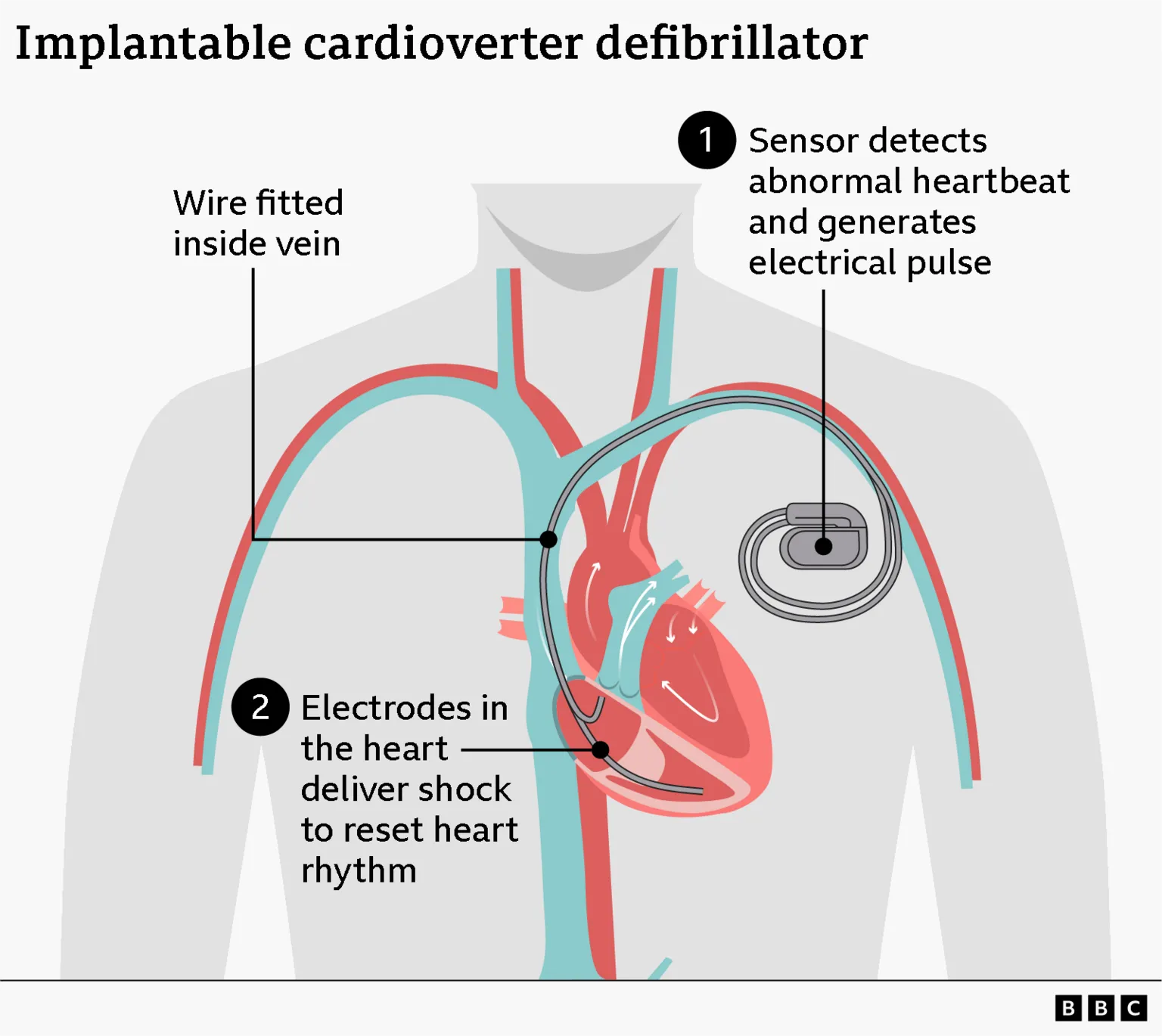
The ICD is a compact, life-saving device designed to detect irregularities in the heart's rhythm and immediately attempt to correct them. It serves as a treatment rather than a cure.
There are two primary types of ICDs: one is implanted beneath the skin, typically near the armpit, functioning as a mini defibrillator with wires extending under the skin to the chest. The other type connects directly to the heart and, similar to a pacemaker, sends regular electrical signals if the heart beats too slowly.
In Eriksen's case, the ICD likely delivered an electrical shock upon detecting a dangerously fast or abnormal heart rhythm, restoring the heart to its normal pattern.
"It feels like being thumped in the chest," says Prof Aneil Malhotra, sports cardiologist at the Institute of Sport, Manchester Metropolitan University.
He explains that resetting the heart is akin to "switching a computer off and on again," and describes ICDs as "highly effective devices."
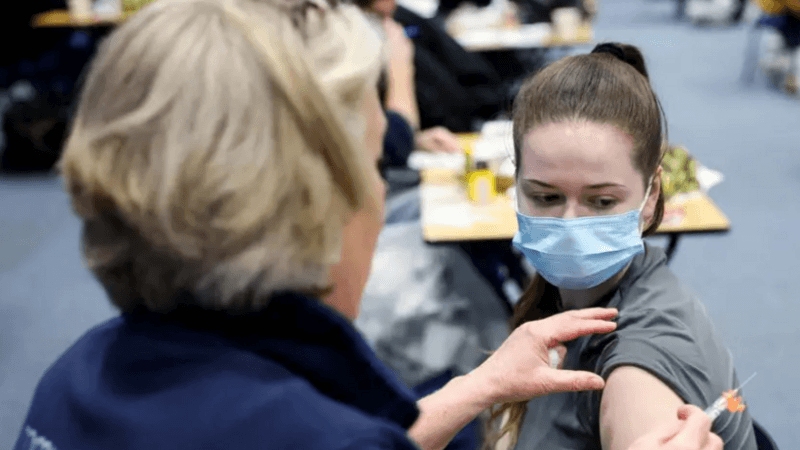
In 2021, during a European Championships match, Eriksen suffered a cardiac arrest, where blood circulation stops. He collapsed and lost consciousness. His teammates, visibly concerned and emotional, witnessed him receiving CPR on the pitch before a portable defibrillator was used to reset his heart.
Experts agree that the prompt medical intervention saved his life.
This time, the defibrillator was implanted inside his body during an operation a few days after his previous collapse. It acted as a safety net and activated immediately when his heart was in distress, facilitating a quicker recovery.
"Because he had the ICD in place, he didn't have to wait," explains Prof Malhotra.
Prof Michael Papadakis, a cardiology expert at St George's, University of London, refers to the device as a "shock box."
"It looks after your [heart] rhythm and, if it detects a very fast, life-threatening irregularity, it will shock you out of it and jump-start the heart," he says.
Why do heart problems like this happen?
Cardiac arrest, distinct from a heart attack, can occur due to various reasons, including malfunctioning electrical impulses that regulate heartbeats or inflammation or damage to the heart walls.
In young individuals, causes may be genetic or acquired, such as after an infection or an allergic reaction to medication. Rarely, cardiac arrest may be a singular event without a clearly identified cause.
Heart problems in young professional athletes are uncommon but not unprecedented. Eriksen's initial collapse occurred nine years after Fabrice Muamba's near-fatal incident at Tottenham and 19 years after Marc-Vivien Foe tragically passed away in Lyon.
Muamba retired at 24 on medical advice, but others have continued playing with ICDs, including former Manchester United midfielder Daley Blind, who returned to play for Ajax and the Netherlands after a 2019 heart condition diagnosis.

In 2023, Luton Town's Premier League match at Bournemouth was abandoned after captain Tom Lockyer collapsed on the pitch. Two years after his cardiac arrest, Lockyer resumed playing football with Bristol Rovers.
How common are these conditions?
Outside professional sports, sudden cardiac arrests claim 12 lives weekly among those under 35 in the UK, according to Cardiac Risk in the Young (CRY).
"This second, sudden collapse of Eriksen is a reminder of the potentially devastating impact that cardiac conditions can have on so many young people every day in the UK and across the world," says chief executive Dr Steve Cox.
He notes that approximately 80% of cases show no prior signs or symptoms before collapse.
Screening programs testing healthy individuals aged 14-35 have found that about one in 300 may have dangerous underlying heart issues that, if untreated, could become life-threatening.
Prof Malhotra's research on young footballers suggests one in 250 could have a heart condition requiring monitoring. Additionally, black athletes have a higher incidence of cardiac death than white athletes, though reasons remain unclear.
Dr Cox emphasizes that while much remains to be learned, significant advances have been made in prevention and management.
Currently, all players signing their first professional contract across England's 92 Premier and Football League clubs undergo screening, with follow-ups at ages 18 and 20, using electrocardiograms to assess heart rhythm and electrical activity. Ultrasound imaging also examines heart structure for defects.
Does it stop you from playing sport?
Research indicates many individuals with ICDs can return to sports at various levels after consulting medical professionals.
Studies show approximately 10% receive shocks from their device upon detecting abnormal heart rhythms, indicating the device's functionality.
"We used to spend a lot of time telling people what they should and shouldn't do," says Prof Rachel Lampert, sports cardiologist and electrophysiologist at Yale School of Medicine.
She adds that current practice involves discussing risks and benefits with athletes to decide on the best course of action.
Regulations vary internationally; for example, in Italy, footballers are prohibited from playing at amateur or professional levels with an ICD.
It remains unclear whether Eriksen will continue professional football following this incident.
Prof Lampert notes that Eriksen's doctors must determine why his heart rhythm changed during the match and explore measures to reduce recurrence risk.
"Shocks can happen at any time," she says.
"People who aren't athletes have them [ICDs] so it doesn't mean if he stops [playing], he won't get another one."
Eriksen stated in 2022, upon returning to football with Brentford, that he was aware the ICD could one day save his life.
"There was always the possibility this could happen," Prof Lampert says.