

A senior medical physicist has told the Scottish Hospitals Inquiry that safety concerns he raised over ventilation, electrical systems and humidity control at Glasgow's Queen Elizabeth University Hospital (QEUH) campus went unaddressed for around 15 years. Dr Michael Bradnam, who has worked for NHS Greater Glasgow and Clyde (NHSGGC) for more than four decades, said he never received a formal response confirming that his recommendations had been acted upon. The health board says it is now reviewing his evidence and has set up a working group, though it insists patient safety has always been its top priority.
The inquiry was established in 2019 to investigate failings in the planning, design and construction of the QEUH campus, which includes the Royal Hospital for Children (RHC), after a series of unusual infections and four patient deaths came to light. As earlier reporting on the inquiry has shown, documents suggested Scottish ministers were not told about water and ventilation problems at the site before it opened in 2015.
What safety issues did Dr Bradnam identify over the years?
Bradnam, who has been involved with the QEUH project for roughly 20 years, told the inquiry he had filed three separate formal situation, background, assessment and recommendation (SBAR) reports — the health service's standard method for flagging serious concerns to management. In 2020, his first report focused on ventilation and temperature control in rooms containing anaesthetic gases.
He said a hospital estates worker had told him those rooms were designed for only two to three air changes per hour, while an external contractor who reviewed the system estimated it was closer to six. Both figures, Bradnam said, were "lower than the 15 air changes per hour" he believed were necessary to protect staff, and he argued that the system's actual performance exposed a "deficiency" in its original design.
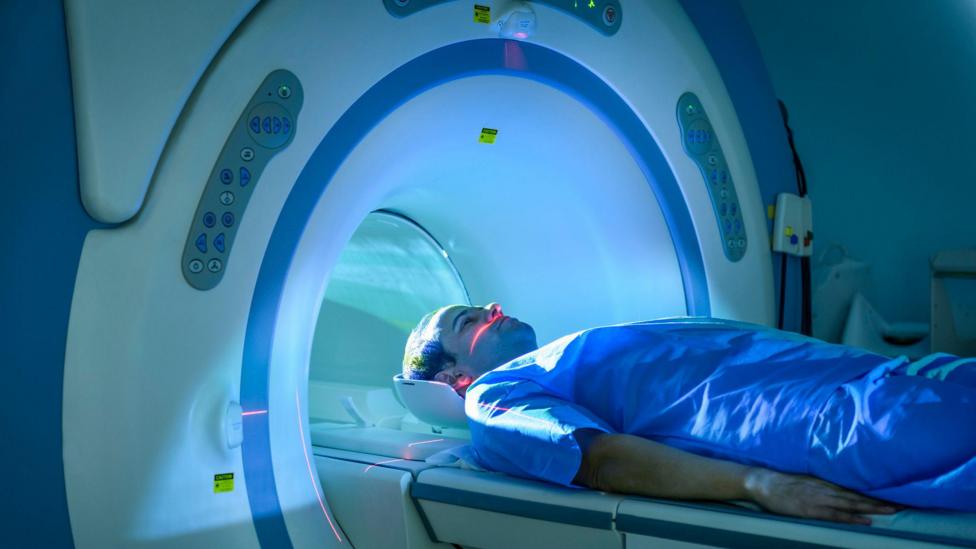
A second SBAR, submitted in 2024, raised alarm over electrical safety in critical patient care areas, noting that "no department within NHSGGC" was carrying out checks on wiring and earth bonding for medical equipment — something he described as presenting "a safety risk to patients and a business risk to the organisation." A third report, lodged in 2025, concerned environmental humidity control in imaging rooms at both the QEUH and the RHC, where he had identified "recurring humidity control failures" and "elevated humidity levels."
Bradnam warned of the "potential impact on high-value medical imaging equipment" and the "possibility of condensation forming within ventilation systems," recommending "further investigation" because of risks to "equipment reliability and the possibility of microbial growth." It remains unclear whether these particular concerns were ever formally investigated further.
Why does he say his warnings went unanswered?
Bradnam told the inquiry that he had received no "formal responses" to any of his three SBAR submissions, and no confirmation that his recommendations had been implemented or that the gaps he identified had been closed. He said he was also unaware of whether his concerns were ever escalated within the health board's management structure.
By 2026, I had been raising concerns for at least 15 years.
Although some had been partially addressed, I had not seen evidence of a documented, system-wide gap analysis or of a documented process for demonstrating that the identified assurance gaps, particularly those relating to legacy issues, had been resolved and formally closed across the imaging facilities.
Earlier this year, during a meeting with NHSGGC chief executive Prof Jann Gardner, Bradnam said he raised the possibility that "elevated humidity levels in the supply air could be contributing to mould growth within the ventilation system." Gardner subsequently confirmed a review of imaging facilities had been launched in response.
Separately, in a 2014 email to management, Bradnam said the hospital's diagnostic team was being "pressured" to install high-value imaging equipment before construction was finished, warning this risked the "deterioration and damage" of an MRI scanner. According to reporting on his witness statement, that equipment was worth roughly £10 million. First Minister John Swinney and former first minister Nicola Sturgeon have both rejected suggestions that political pressure led to the hospital opening before it was ready.

Bradnam explained he had only recently been able to bring his concerns to the inquiry's attention because of health issues and a family bereavement, and the submissions process had formally closed in January 2026. According to the same reporting, he was told in April 2026 by the Central Legal Office that he was free to contact the inquiry directly as an individual witness, which he then did.
How has the health board responded?
A spokesman for NHSGGC said a new working group, which includes Bradnam himself, has been formed to examine his concerns in detail.
The work of this group is currently under way with plans to further augment the expert input and we await full recommendation in due course.
We are therefore not in a position to comment further at this time, however, patient safety remains our utmost priority and as work progresses through the working group, we will take forward any actions identified as appropriate.
According to the same report, the health board said it had only recently become aware of the full extent of Bradnam's evidence and had acted swiftly to establish the working group once it did.
What is the status of the criminal investigation?
Police have submitted a "standard prosecution report" to the Crown Office and Procurator Fiscal Service (COPFS) relating to four of the seven deaths currently under scrutiny by Scotland's independent public prosecution and death investigation authority. Among them is Milly Main, who died at the age of 10 after contracting stenotrophomonas bacteria while being treated for leukaemia at the hospital.
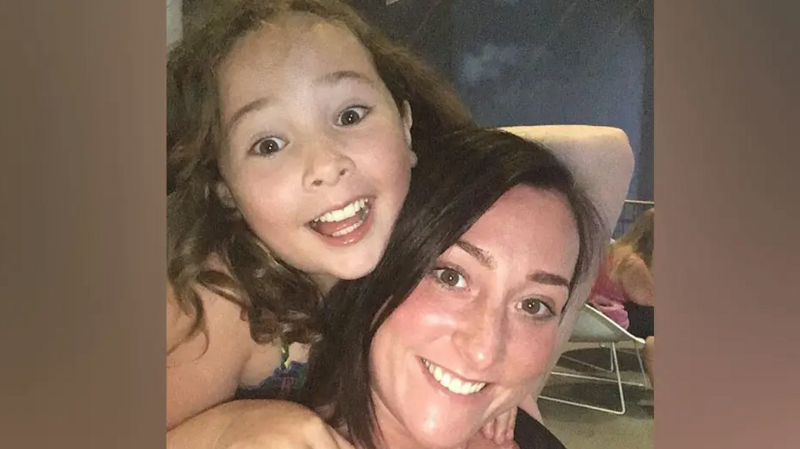
The report also covers two other children and 73-year-old Gail Armstrong. In closing submissions to the inquiry earlier this year, NHSGGC said that, on the balance of probabilities, some infections were connected to the hospital's water system, though it disputes any link between the hospital environment and specific individual infection cases.
In three further cases — those of Andrew Slorance, Tony Dynes and Molly Cuddihy — police have been asked to gather additional information, though no prosecution report has yet been submitted for any of them.
The scrutiny of the hospital's environment has extended beyond the inquiry itself. Earlier coverage found that an inspection of the maternity ward at the same campus identified unsafe conditions and delays, while the family of leukaemia survivor Charly Bisset has said the inquiry has yet to answer questions about the long-term impact on individual patients.
What happens next?
The Scottish Hospitals Inquiry's final oral hearings concluded in January 2026, having heard from 186 witnesses, according to reporting on the proceedings. Its chair, Lord Brodie, is expected to publish a final report by the end of 2026, according to the Scottish Government.
A Scottish Government spokesperson said an oversight group, made up of infection control experts, whistleblowers and patients, had been established earlier this year to monitor safety measures at the QEUH.
Ministers have complete confidence in Lord Brodie and the independent inquiry.
It is right that Lord Brodie be given the time and space to get to the truth for families without political influence, interference or speculation on the outcome of his conclusions.
Meanwhile, NHSGGC's working group reviewing Bradnam's concerns remains active, with a full set of recommendations expected in due course, according to the health board.
Key Facts
- Dr Michael Bradnam says he raised safety concerns about the QEUH campus for around 15 years without receiving a formal response.
- He filed three SBAR reports in 2020, 2024 and 2025 covering ventilation, electrical safety and humidity control.
- Police have submitted a prosecution report to the COPFS covering four deaths, including 10-year-old Milly Main and 73-year-old Gail Armstrong.
- The inquiry's final hearings concluded in January 2026 after testimony from 186 witnesses; a final report is expected by the end of 2026.
- NHSGGC has formed a working group, including Bradnam, to review his concerns, with recommendations due in due course.


