

A baby bank in County Durham says some parents are resorting to unsafe measures, including watering down infant formula, in an effort to stretch limited budgets. Megan Sinden, who founded Moorside Baby Bank in Consett last year, said a couple of families had told her they were adding less powder than recommended to make tins last an extra week.
Sinden described the practice as dangerous and called for government intervention to control the rising price of formula.
It's not a luxury item, it's a basic need for a baby.
The charity National Childbirth Trust (NCT) said a recent survey it conducted found that 48% of parents reported worsening financial pressure after having a baby. It stressed that formula should always be mixed strictly according to manufacturer guidance, since diluting it disrupts the nutritional balance babies rely on.
Why is diluted formula dangerous?
Adding extra water reduces the concentration of nutrients a baby receives while also making it harder for their body to absorb what little remains. NCT said this can result in poor weight gain, stunted growth and developmental delays. In more severe cases, excess water can overwhelm a baby's system, since infants are not equipped to process large amounts of fluid safely.
According to a study from Swansea University, almost 40% of parents surveyed admitted to unsafe feeding practices, ranging from watering down formula to reusing leftover milk and cutting corners on sterilisation.
How much has formula actually cost recently?
The Competition and Markets Authority has previously found that the average retail price of some infant formulas rose by more than 25% in recent years. More recent monitoring adds further detail: according to a cost-tracking report, the average price of infant formula reached £12.45 per unit in May 2026, up from £11.96 in February 2026 and £11.99 in May 2025.
The same report found the price gap between the cheapest and most expensive first infant formula stood at £11.01 per 800g tin, with Aldi's own-brand Mamia priced at £6.99 compared with £18.00 for Aptamil Advanced. Branded powdered formula averaged around £13 per 800g tin, more than double the cost of supermarket own-brand alternatives. Separately, a February 2026 analysis estimated that a baby aged two to three months fed exclusively on formula could cost parents as much as £93.90 a month, depending on which product they buy.
Campaigners have also flagged a mismatch between formula prices and government support. A letter cited by Sustain noted that only four of twelve standard-size infant formulas were priced below the weekly Healthy Start allowance of £8.50. UNICEF UK has separately pointed out that all first infant formulas must meet the same legal nutritional standards regardless of price, meaning cheaper brands are not nutritionally inferior.

What is Moorside Baby Bank doing to help?
Moorside Baby Bank opened in February 2025 and has since supported 226 families with donated goods such as clothing, nappies and baby wipes. Sinden said the bank struggles to receive donations of baby milk specifically because of its cost, and instead relies on grants to purchase formula directly.
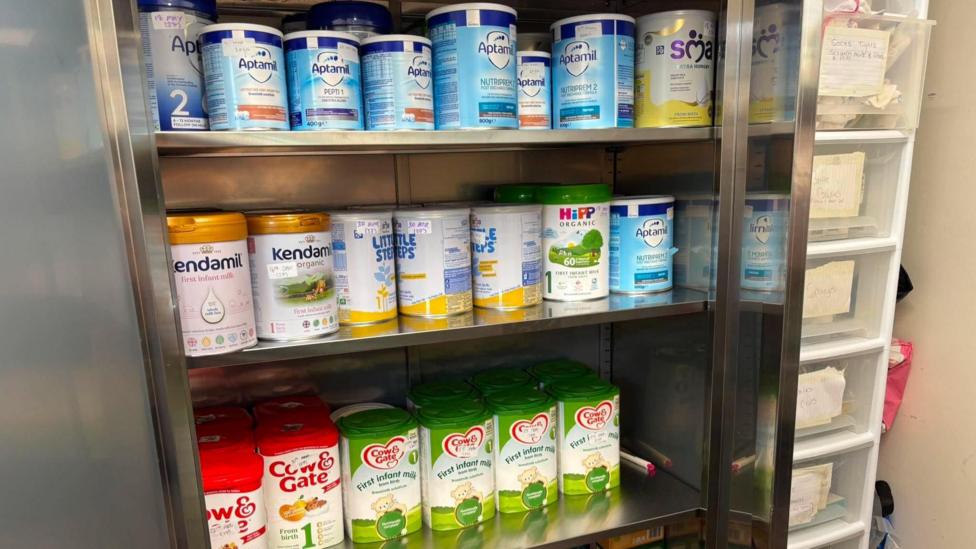
Sinden said some parents had resorted to making their own baby wipes from kitchen roll to save money, and recalled speaking with one mother who felt she had no choice but to breastfeed despite experiencing latching difficulties, purely because of the cost of formula.
I've heard of people feeling the need to steal baby milk.
Obviously I don't condone stealing, but I really sympathise with any parent that finds themselves in a situation like that.
A 21-year-old mother of one, who is expecting a second child and asked not to be named, said the baby bank had proven essential to her family.
It's a struggle affording everything for baby and me, sometimes we have to ask for help even when we don't want to, but we will when it comes to our babies.
She added that the supportive atmosphere at the baby bank had helped her avoid feeling like she was failing as a parent.
We don't feel lost and helpless and like we're failing when really where just trying our best.
Sinden urged families not to wait until they are desperate before asking for help.
I really want parents to know that they can come to us before they reach crisis point and to not feel embarrassed or ashamed to have a little helping hand.
NCT echoed that message, pointing parents toward midwives, health visitors, GPs, infant feeding teams, local family hubs and organisations such as itself. It also reassured parents that buying the cheapest available formula still meets a baby's full nutritional requirements.
How does this fit into wider pressures on families?
Moorside Baby Bank's experience mirrors patterns seen elsewhere in the country. In Bedford, Faces BabyBank reported that demand for support was rising faster than donations, having assisted more than 2,000 families in 2025 amid continuing cost-of-living pressures. Similarly, Hartlepool Baby Bank has described unprecedented demand, now supporting around 150 families a week and recording thousands of repeat referrals since it was founded in 2019.
What happens next?
At least one major retailer has moved to shield shoppers from further rises: Aldi has confirmed that the price of its Mamia Infant Milk will remain frozen at £6.99 through the end of 2026. Monitoring bodies and campaign groups are expected to continue tracking formula prices in the coming months as pressure builds on regulators and manufacturers to address the affordability gap facing families.


