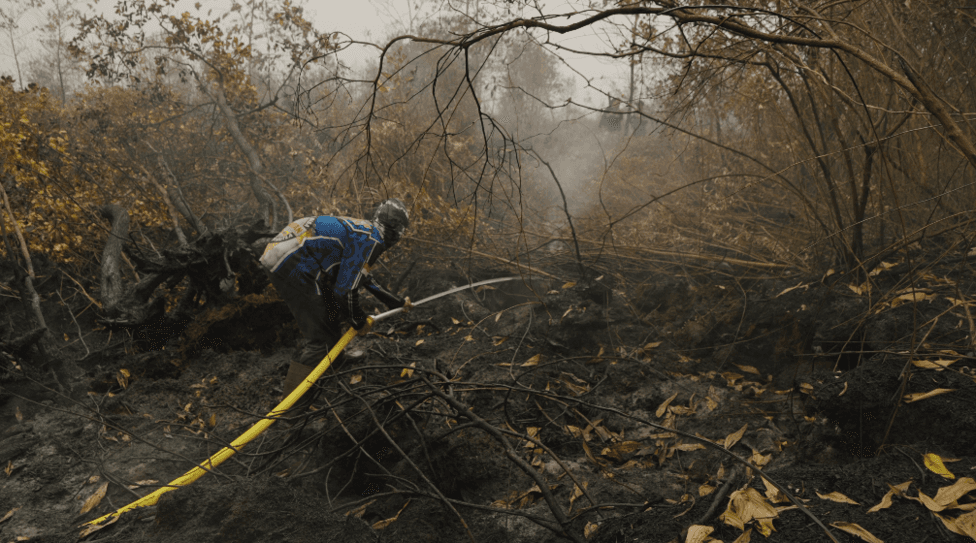
Firefighting crews have been engaged in an intense battle against sprawling wildfires across Indonesian Borneo for more than 100 days, with flames consuming vast tracts of forest and peatland while releasing a suffocating toxic haze across Southeast Asia. According to BBC News, the environmental catastrophe has blanketed the region in microparticles and carbon monoxide, forcing hundreds of thousands of residents to shelter indoors and triggering a public health emergency that has overwhelmed hospitals.
Since the start of the year, wildfires have torched approximately 1.9 million hectares across Indonesia—an expanse equivalent to the US state of New Jersey or the entire nation of Fiji, with one million hectares burning in September alone. The toxic fallout extends far beyond Indonesia's borders, drifting into Singapore, Malaysia and the Philippines. By mid-October, Indonesia's Health Ministry had documented more than 277,000 cases of chronic coughs and acute respiratory infections, with over 62,000 affecting infants and toddlers under five years old.
In Palangkaraya, the epicentre of this environmental disaster in Central Kalimantan, the sun disappears behind a rust-coloured smog that transforms the landscape into an apocalyptic wasteland. Cars, houses and streets materialise and vanish within the dim russet fog, creating an atmosphere of dread that intensifies as darkness falls.
How are families coping with the health crisis?
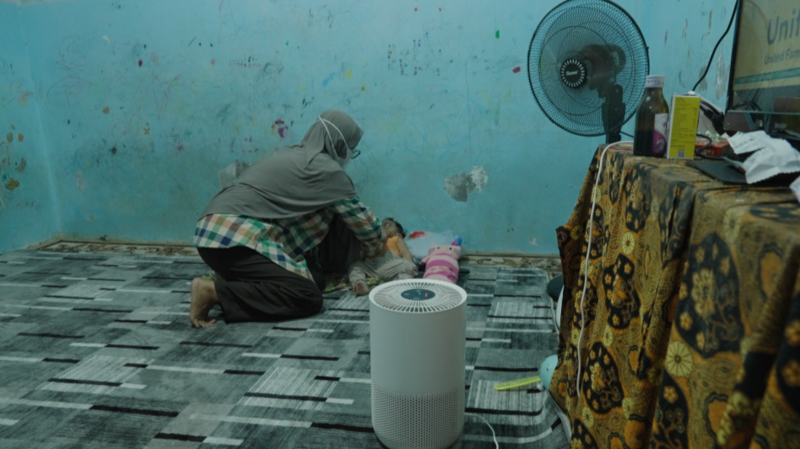
Dianyra Eka Nastiti, a mother of three living in Palangkaraya, spends her nights consumed by fear for her children's wellbeing. Her youngest daughter was hospitalised for bronchopneumonia at just one and a half months old, and the experience has left lasting trauma.
Sometimes at night my baby's chest makes a rattling sound. She was hospitalised for bronchopneumonia when she was just a month and a half old, and every single night I worry: Will my child cough tomorrow? Those thoughts haunt me every night.
Nastiti faces an impossible dilemma: official guidance instructs residents to remain indoors and avoid exposure, yet her family's survival depends on venturing outside.
I still need to buy vegetables, stock up on food, purchase school supplies, and take care of other necessities. It's simply not possible, and I feel like the people who say things like that have no idea what is actually happening here.When conditions deteriorate, she confines her children to the house, sacrificing their education and development.
With conditions being so unsafe, I have no choice. Our young children should be at the park, playing with their friends and going to school. Instead, they are locked inside the house.
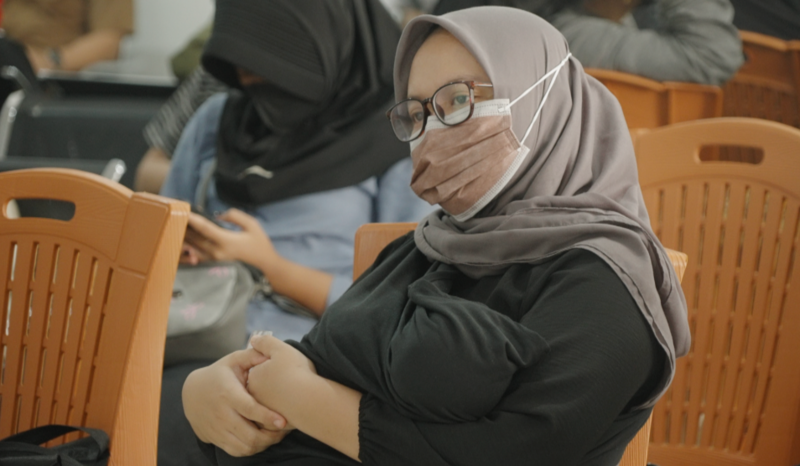
Natari Victoria, a 22-year-old, was admitted to a health centre in Palangkaraya after suffering from a persistent cough lasting more than a week.
The forest fires have had a huge impact, especially on everyone's health. I have young cousins, including babies, who are coughing too. It's really taking a toll on them.
What health dangers does the toxic haze pose?
Smoke and haze from peat fires contain a hazardous mixture of pollutants that penetrate deep into the lungs and, in severe cases, enter the bloodstream. These microscopic particles trigger inflammation, chronic lung diseases and elevate the risk of premature death. The toxic greenhouse gases released simultaneously deprive the body—particularly the brain—of adequate oxygen supply.
Children, older adults and pregnant women face heightened vulnerability to haze exposure, with health impacts accumulating during prolonged periods of contact. Riduan, head of the Palangkaraya Health Office, described the atmospheric conditions in stark terms:
Here in Central Kalimantan, especially in Palangkaraya, the sky has turned yellow and hazy. So what are the residents actually breathing in? It's not fresh oxygen; it's carbon dioxide and pollutants. And what happens as a result? The body – specifically the brain – doesn't get enough oxygen.
On 7 October, particulate pollution levels in Palangka Raya reached 1,400 according to WALHI Central Kalimantan executive director Janang Firman, far exceeding safe thresholds. The scale of the crisis has prompted residents in Borneo to sue the Indonesian government, alleging negligence in its handling of the fires.
How are livelihoods being affected?
Lola Macitri, a 37-year-old resident of the rural village of Ramang located 50 kilometres north of Palangkaraya, has become largely housebound as smog has deepened from dusty grey to amber yellow and burnt orange over recent weeks. Her family spends most of their time indoors, with her children attending school classes online while she and other adults struggle to manage even half-days of work in the poisonous air.
Countless farmers, daily-wage earners and small vendors have been forced to choose between sacrificing their livelihoods or risking their health by working outdoors. Macitri expressed the desperation felt across affected communities:
If you ask whether we are afraid of the health risks, of course we are. But where else can we go? We just have to endure and stay strong through this situation, because there is simply no other option.
The economic impact extends to transportation infrastructure. Indonesia's transport ministry reported that haze had affected approximately 2,400 flights nationwide since mid-August, disrupting commerce and travel across the region.
Why are firefighting efforts proving so difficult?
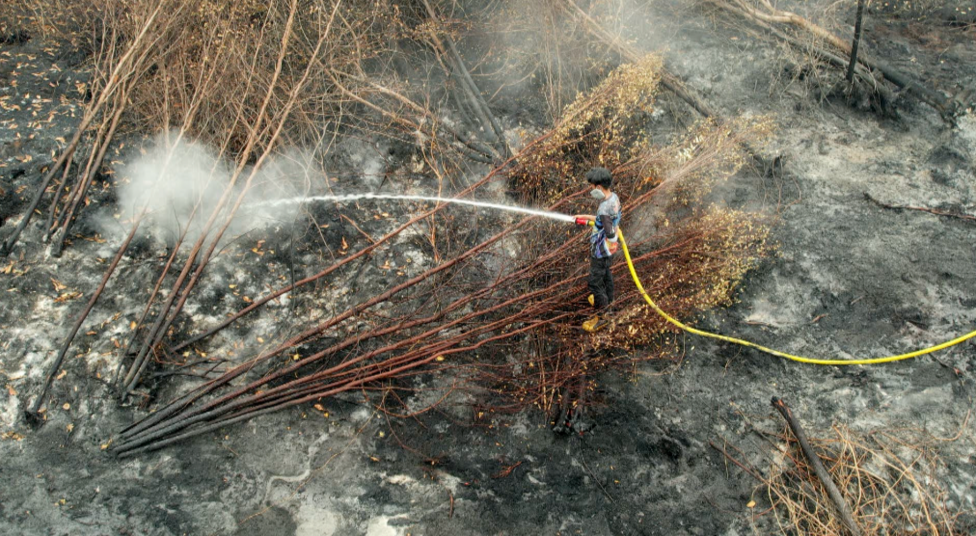
Firefighters battling the blazes face extraordinary challenges that extend far beyond surface-level flames. Juni, a firefighter who has spent more than 100 days fighting wildfires, described the physical and psychological toll:
It is truly exhausting. The haze makes it hard to breathe. We are just hoping for heavy rain.He suffers from shortness of breath, a persistent cough and unrelenting eye pain, with his primary need being simply breathable air.
Peatland fires present unique difficulties that distinguish them from conventional wildfires. Fauzi Rahman, another firefighter in Palangkaraya, explained the technical obstacles:
Peatland fires are hard to put out because they require a lot of water and a long time. On regular land we can clear 20 hectares in a single day, especially with a large team. On peatland, it can take months. We really have to inject water deep down, all the way to the bottom, which requires a huge amount of water. And right now, water is hard to find.
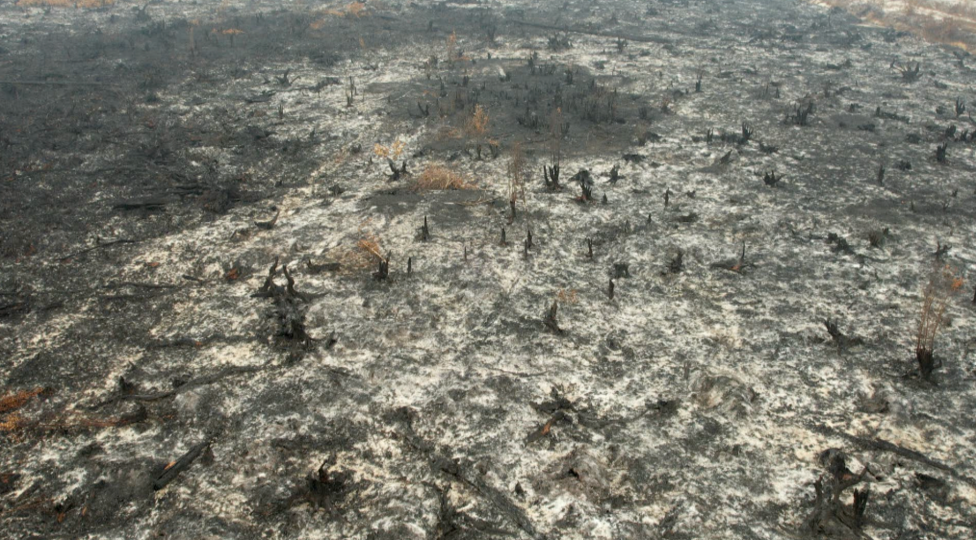
Underground smouldering continues long after surface flames are extinguished, as fires burn through deep layers of carbon, vegetation and peat. This subsurface combustion can reignite without warning, making complete extinguishment extraordinarily time-consuming. Indonesia's government has deployed more than 69,000 firefighting personnel, up from approximately 44,000 in mid-September, yet resources continue depleting rapidly.
A so-called Super El Niño has amplified drought conditions and delayed the seasonal rainfall critical to extinguishing peat fires, making conditions exponentially harder for responders. Dr Nisa Novita, a forestry expert and peatland researcher at Indonesian conservation NGO Yayasan Konservasi Alam Nusantara, emphasised the urgency:
At this point, I think we need to use every safe and effective option available to suppress the fires. It's a bit like trying to save a sinking ship: we need to act urgently, use whatever tools can help, and prevent further damage while we still can.
Dr Novita's team has reported fires spreading into areas with no history of previous burning, indicating that the crisis is expanding beyond traditional hotspots into new and unprepared territories. Prolonged drought has made water increasingly scarce, compounding the difficulty of fighting fires that demand enormous quantities of water to reach deep peat layers.
What is the broader environmental impact?
The scale of carbon emissions from these fires has reached catastrophic proportions. By 6 October, Indonesian wildfires had emitted an estimated 140.5 megatonnes of carbon, representing approximately 13 per cent of global fire emissions that year according to the Copernicus Atmosphere Monitoring Service.
The crisis has extended to wildlife, with dozens of critically endangered orangutans requiring rescue from burning forests. Additionally, ASEAN's meteorological centre activated its highest haze alert level for the Southern ASEAN region, reflecting the unprecedented severity of the atmospheric pollution.
Indonesia's government has attributed the severe fire season to degraded peatlands, including damage associated with past food-estate projects, compounded by El Niño-driven drought that has rendered forests and land increasingly flammable. Drainage canals have dried peat and increased its vulnerability to ignition, creating conditions where fires sp readily and burn more intensely.
What measures are authorities taking and what comes next?
The Indonesian government has pursued multiple strategies to combat the fires, including aerial waterbombing and experimental weather modification techniques. Officials claim to have achieved an 80 per cent success rate in extinguishing new fires through a "land operation" involving tens of thousands of personnel. However, public criticism of the government's response remains intense, with many viewing official efforts as inadequate given the scale of the disaster.
Riduan, head of the Palangkaraya Health Office, expressed cautious optimism:
Hopefully, with all the extraordinary efforts from the community, the military, and the police working together, the fires can be put out. However, as of right now, the fires are still burning. So what can we hope for? Our greatest hope is that Almighty God will bring us rain soon.
Indonesia has announced plans to restore peat ecosystems, drill wells to rewet peatlands and improve water-canal management to prevent future fires. WALHI Central Kalimantan is calling for reviews of fire-affected concessions, stronger oversight of permits, and comprehensive restoration of damaged peatlands to address the underlying conditions that enabled this crisis.
Key Facts
- Wildfires have burned approximately 1.9 million hectares across Indonesia since the start of the year, with one million hectares consumed in September alone
- Indonesia's Health Ministry recorded more than 277,000 respiratory illness cases by mid-October, including over 62,000 affecting children under five
- Indonesian wildfires emitted an estimated 140.5 megatonnes of carbon by 6 October, representing 13 per cent of global fire emissions that year
- More than 69,000 firefighting personnel have been deployed, yet underground peat fires continue smouldering and reigniting despite surface flames being extinguished
- A Super El Niño has amplified drought conditions and delayed seasonal rainfall critical to extinguishing fires, while haze has disrupted approximately 2,400 flights nationwide since mid-August