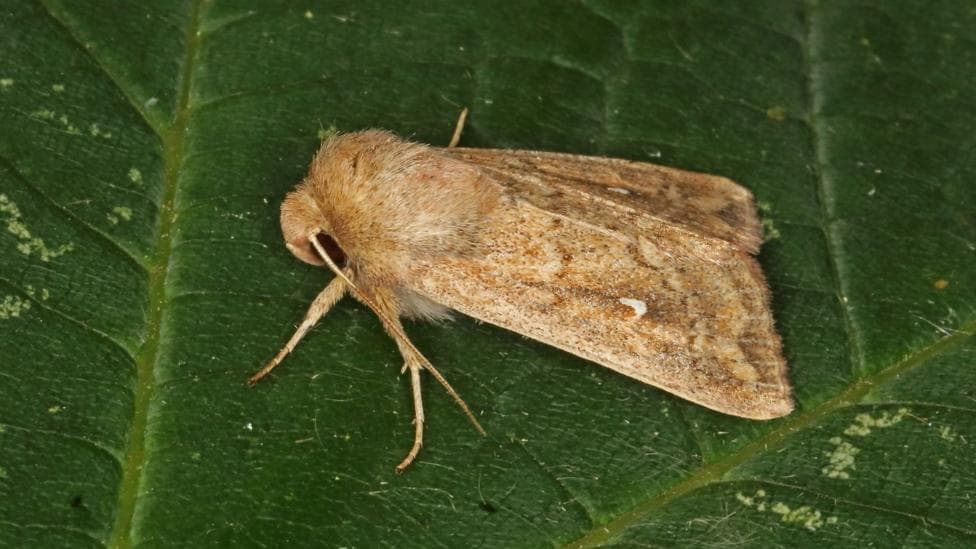
A white-point moth that crossed the North Sea has been found at a nature reserve in the Scottish Borders, marking what specialists believe to be the first confirmed sighting of this species in Scotland.
The discovery occurred during a community survey at St Abb's Head, where the insect was captured overnight in a moth trap positioned within the reserve's Mire Loch reed beds. The migrant species typically inhabits continental Europe but has appeared multiple times in southern England after being transported across the North Sea by strong winds.
David Lewis, a ranger with the National Trust for Scotland at St Abb's Head, described the find as an exceptional example of a "rare migrant." He noted that while the species has established breeding populations in parts of England, this represents an unprecedented northward expansion of its recorded range in the UK.
"There have been a number of recordings down in England and some breeding success as well but nothing this far north,"Lewis explained.
"You get migrant species getting pushed over from continental Europe on favourable winds."

How was the moth identified?
Berwickshire County Moth Recorder Barry Prater made the identification when examining the trap on Saturday morning during the reserve's routine collection work. According to Lewis, Prater was delighted by the discovery, recognising immediately its significance for Scottish natural history records.
"He was delighted when he found it in the trap on the Saturday morning when we were collecting the traps,"Lewis said.
"It is a really, really good find but also shows what species are coming into the UK."
Why does this discovery matter?
The white-point moth is a noctuid species with a UK flight period mainly in August and September, with records from June to October. Its appearance in Scotland extends the known distribution of a species that has been logged widely across England, with Derbyshire recording it continuously from 2015 to 2025. The species is established enough to have county-level recording histories, which underscores why a Scottish first record represents a notable expansion of its range.
Lewis emphasised that such discoveries validate the ongoing effort invested in community monitoring.
"It is always that treasure-box moment where you open up the trap because you just don't know and you might get a box full of species that you have seen a lot of,"he said.
"Sometimes you can get hundreds of these things in the trap - it just depends - at the right time in the right conditions overnight anything can turn up and that is the great thing about mothing."
What does this reveal about species movement?
The white-point moth's arrival in Scotland demonstrates how weather patterns and wind systems facilitate the dispersal of continental insects across the North Sea. Lewis noted that discoveries of this kind illustrate the dynamic nature of species distribution and the value of systematic recording in detecting shifts in wildlife patterns. The find contributes to understanding how climate and atmospheric conditions influence the northward expansion of species ranges into previously uncolonised areas.
Key Facts
- The white-point moth was captured in a trap at St Abb's Head's Mire Loch reed beds during a community survey
- This represents the first confirmed Scottish record of a species normally found in continental Europe
- The moth has been recorded multiple times in southern England and has established breeding populations there
- Strong winds across the North Sea are the primary mechanism for transporting these migrant species northward
- The discovery was made by Berwickshire County Moth Recorder Barry Prater during routine trap collection work