Fire crews across the West Midlands were still working on 14 August 2026 to bring a series of wildfires under control, a day after blazes tore through grassland and homes during the hottest day of the year so far. Emergency services said 54 patients were treated by paramedics and 19 were taken to hospital, with the West Midlands Ambulance Service confirming the figures on 14 August.
The scale of the response reflects how quickly the fires spread once they took hold. According to an earlier report on the Stourbridge blaze, around 60 firefighters were initially sent to tackle the fire near Stourbridge Golf Club, with nearby homes evacuated and no injuries reported at that stage. That picture changed significantly as the fire grew, and a subsequent report noted that a child and three firefighters were later hospitalised as the blaze intensified, according to coverage of wildfires spreading across the UK and mainland Europe, which also detailed blazes hitting France, Greece, Croatia and Germany during the same heatwave.
Where did the fires break out?
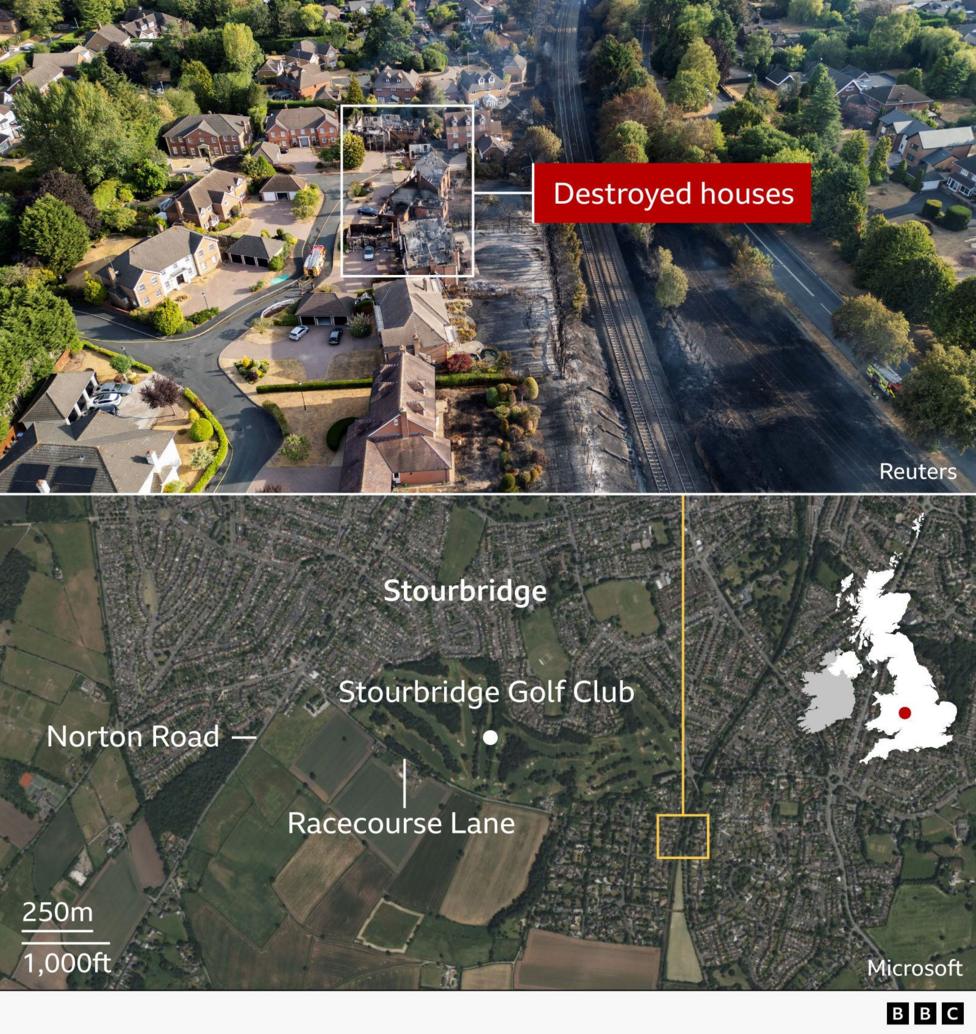
Fire services responded to multiple separate blazes across the West Midlands region on 13 August, generating thousands of emergency calls. In Stourbridge, West Midlands Fire Service was alerted shortly before 13:30 BST to a large grass fire near Stourbridge Golf Club in the Racecourse Lane area.
More than 100 firefighters were deployed as the flames crossed roads and reached nearby houses, forcing residents to leave their homes. West Midlands Fire Service later said the wildfire had multiple points of origin, stretching from Moreton Road to Iverley Lane and along the length of Racecourse Lane, and that it ultimately covered around 40 acres, including a wooded area, according to the fire service's own incident update. The same update said six properties in total were affected, and that Stourbridge Town Hall had been opened as a rest centre for residents who had left their homes.
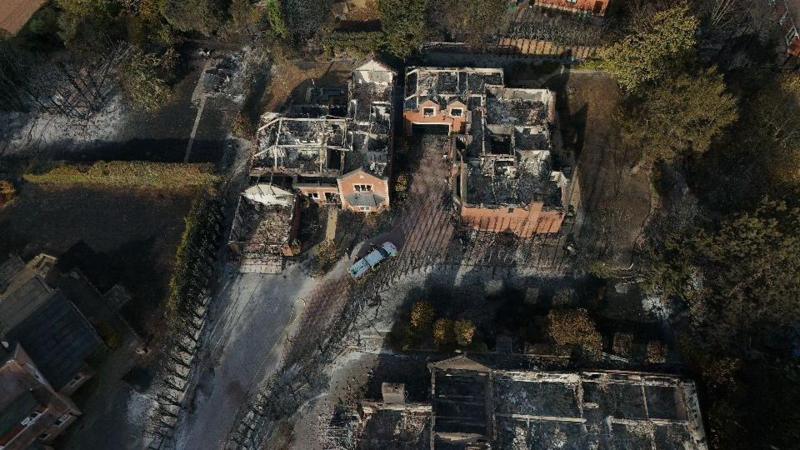
The incident was declared a major one. Three fire service staff were taken to hospital, six members of the public were treated for smoke inhalation, and a child was also hospitalised. West Midlands Fire Service chief fire officer Simon Tuhill described the situation in stark terms.
"some of the most challenging" he has seen in 28 years of service
Residents have been told they may be unable to return home for several days. By the morning of 14 August, crews were continuing to dampen affected ground and put out remaining hotspots rather than fighting active flames.
In neighbouring Worcestershire, Hereford and Worcester Fire and Rescue Service said a number of homes were damaged in the market town of Pershore, with 30 properties evacuated. One person was treated for smoke inhalation, and roughly 200 properties lost power as a result.
Staffordshire Fire and Rescue Service said crews attended several fires in Stoke-on-Trent after flames spread to fences, gardens and garages, understood to have started in a grassy area near the A50. In Warwickshire, a major incident was declared after a large fire broke out in Salford Priors, close to Stratford-upon-Avon.
Birmingham saw some of the most severe damage. In the Castle Vale area, houses on one street were badly damaged and part of a roof collapsed on one property; a woman suffered serious injuries and a man was also taken to hospital. In Druids Heath, footage showed flames spreading rapidly along a row of houses, while in nearby Highters Heath several terraced properties also caught fire.
Who has been affected by the fires?
Personal accounts from residents illustrate the scale of loss caused by the fires. Andrew Reynolds, 42, said his mother's house in the Highters Heath area of Birmingham was destroyed, along with possessions including a century's worth of family photographs.
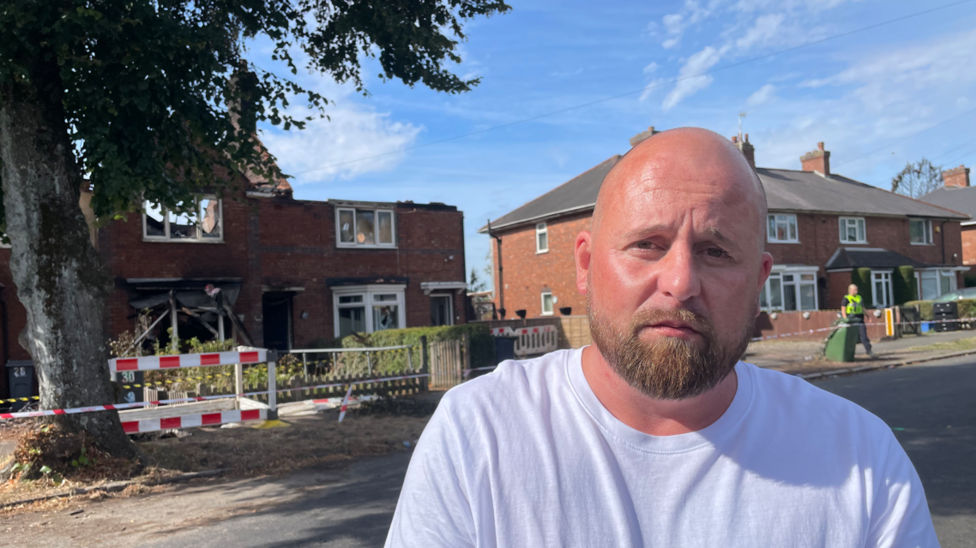
"Everyone's gutted, grieving, people have lost so much and no-one can go in to see if they can salvage anything."
Jane Baxter, whose property backs directly onto Stourbridge Golf Club, described being evacuated at short notice as the fire's direction shifted.
"The police knocked our door and said that everyone had to be evacuated quickly because they thought the fire was changing directions. So, it was literally grab what you need and get out. So, get out we did with the cat and away to go to our son's house."
Local farmers attempted to slow the fire's advance using their own equipment. Daniel Pardoe, of Iverley Park Farm, said around eight people used tractors and sprayers to try to cut a firebreak.
"There was about eight of us in total with various tractors and sprayers."
West Midlands Ambulance Service confirmed that 54 people in total received treatment from paramedics, with 19 admitted to hospital as a result of the fires.
How did the fires start?
The blazes coincided with the hottest day recorded in the UK so far this year, and the fifth hottest day on record nationally, as a heatwave gripped much of the country on 13 August. In the West Midlands, the Met Office recorded a maximum temperature of 38C in Pershore, Worcestershire.
Chief fire officer Tuhill said the underlying conditions were central to how the Stourbridge fire behaved.
the "tinder dry conditions" in the UK and West Midlands had meant that "the fire has spread rapidly"
Fire services have urged the public not to light disposable barbecues or burn waste at home or outdoors during the dry spell, and to dispose of cigarettes safely while being mindful of discarded glass items, which can help ignite fires in dry vegetation.
Dr Kerryn Little, a wildfire researcher at the University of Birmingham, said the West Midlands has been particularly badly hit because of how vegetation is arranged in and around built-up areas.
"There's a high amount of people moving around, resulting in ignitions. When that meets with large areas of continuous vegetation that is built up, that can lead to wildfires."
Data shared by the National Fire Chiefs Council shows 1,017 wildfires have now been recorded across England and Wales this year, a total that matches the record set the previous year. Broader climate trends are also being cited as a contributing factor, with the UK increasingly experiencing extreme conditions including heatwaves, drought and wildfires linked to climate change.
Where else in the UK have fires broken out?
The West Midlands fires were part of a wider pattern of wildfire activity across the UK this week. A major incident was declared in Dorset and Wiltshire, where numerous fires are burning, including one on grassland near the Westbury White Horse in Bratton, Wiltshire.
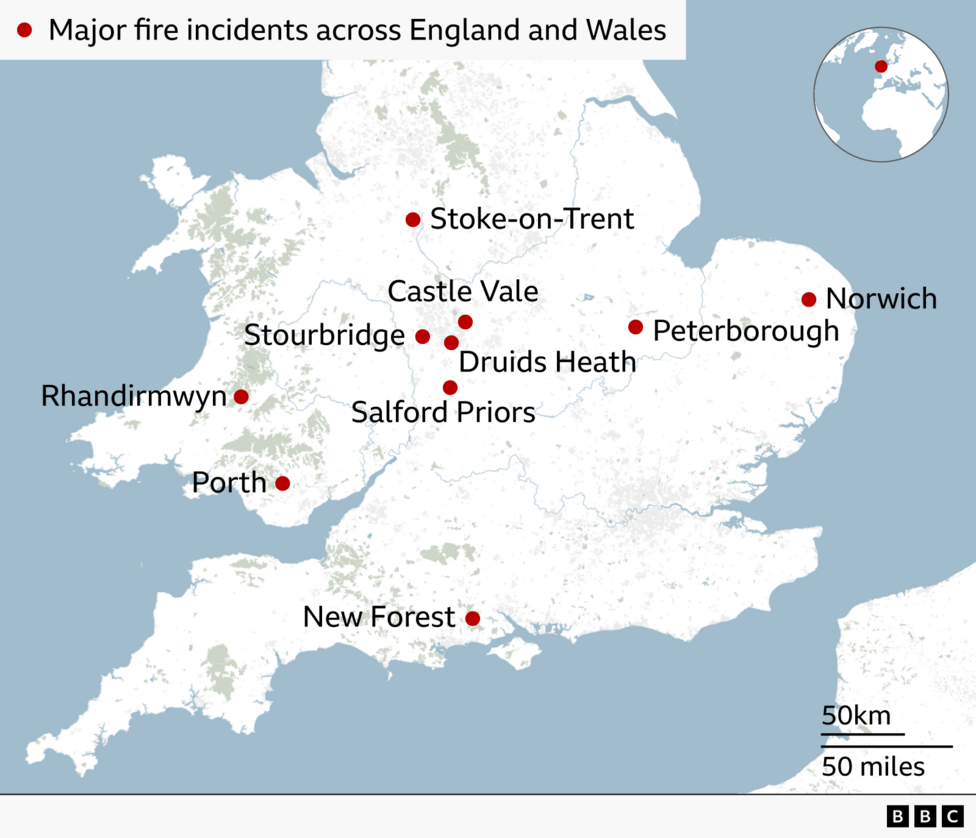
In Hampshire, firefighters have been tackling a wildfire in the New Forest for six consecutive days, with an area roughly equivalent to 230 football pitches affected. The fire service said the perimeter of that blaze has now been brought under control.
In Cambridgeshire, a wildfire has burned through around half of the Holme Fen nature reserve near Peterborough, affecting large sections of the 660-acre (270-hectare) site. In Norfolk, a major incident was declared over fires at Mousehold Heath in Norwich and at Sipdham, near Dereham, though that incident has since been stood down after the fire service said its resources were in a more stable position by the evening of 13 August.
Wales has also seen significant wildfire activity. A major incident remains in place near Llandovery, Carmarthenshire, where crews have been fighting flames since the afternoon of 12 August across an area of around 250 hectares. Separately, fire services said crews responded to 30 incidents across south Wales on 13 August, with a substantial deployment of resources sent to Porth in Rhondda Cynon Taf.
This summer's wildfire activity in Wales follows a similar pattern to a major incident declared in north Wales in July 2026, when a record heatwave triggered multiple wildfires across England and Wales, prompting evacuations and heightened fire risk warnings. A separate moorland fire that same month, a major incident on Tintwistle Moor in Derbyshire, affected around 260 hectares amid comparable hot, dry conditions.
What has the political reaction been?
Green Party leader Zack Polanski called for a stronger government response, describing the scale of the damage in a video posted to the party's account on X on 13 August.
"Across the country, wildfires are tearing through our countryside. These are the consequences of a climate crisis that is happening right now."
In a separate post, Polanski criticised the prime minister for focusing on disposable barbecues after convening an emergency Cobra committee meeting on 12 August.
Prime Minister Burnham said on 13 August that it was distressing to see homes and communities affected by fires nationwide as the heatwave continued.
"My thoughts are with everyone affected, particularly those who have been injured or forced from their homes, and with the firefighters who have been taken to hospital."
What happens next?
West Midlands Fire Service said on the morning of 14 August that 14 fire engines remained at the Stourbridge incident, and urged the public to stay away from the affected area while operations continue, according to a fire service update. By late morning, the service said crews were "tactically working" across several parts of the scene and reported progress being made in monitoring and extinguishing remaining hotspots, according to a further fire service update.
Crews are expected to remain on site over the coming hours and days to prevent the fire reigniting, with residents warned they may be kept away from their properties for an extended period. An earlier account of the incident, drawing on footage shared by a national broadcaster, noted that around 60 firefighters were initially deployed before the response was scaled up significantly, according to a news agency report on the early stages of the fire.
- 54 patients were treated by paramedics and 19 taken to hospital across the West Midlands fires
- The Stourbridge blaze covered around 40 acres, including woodland, and affected six properties
- 38C was recorded in Pershore, Worcestershire, the highest temperature in the West Midlands that day
- 1,017 wildfires have been recorded in England and Wales this year, matching last year's record
- 14 fire engines remained at the Stourbridge scene on the morning of 14 August