Chemical contamination at a former RAF base in Oxfordshire designated for 9,000 new homes has been identified as the most severe discovered anywhere in the United Kingdom, according to testing results. The site at RAF Upper Heyford contains dangerously elevated levels of polyfluoroalkyl substances (PFAS), commonly known as forever chemicals because they persist in the environment and do not break down naturally. According to BBC News, the developer's own investigation found these contamination levels to be "unacceptable."
PFAS are a category of thousands of synthetic chemicals, many of which carry cancer risks and were widely deployed in firefighting foams throughout the military and aviation sectors for several decades. The contamination discovered at RAF Upper Heyford surpasses even the levels found in Bentham, Yorkshire, which had previously held the distinction of having the highest PFAS concentration recorded in Britain. The Environment Agency confirmed that military installations and airports represent particular hotspots for PFAS pollution due to their historical reliance on these chemicals in aircraft firefighting operations.
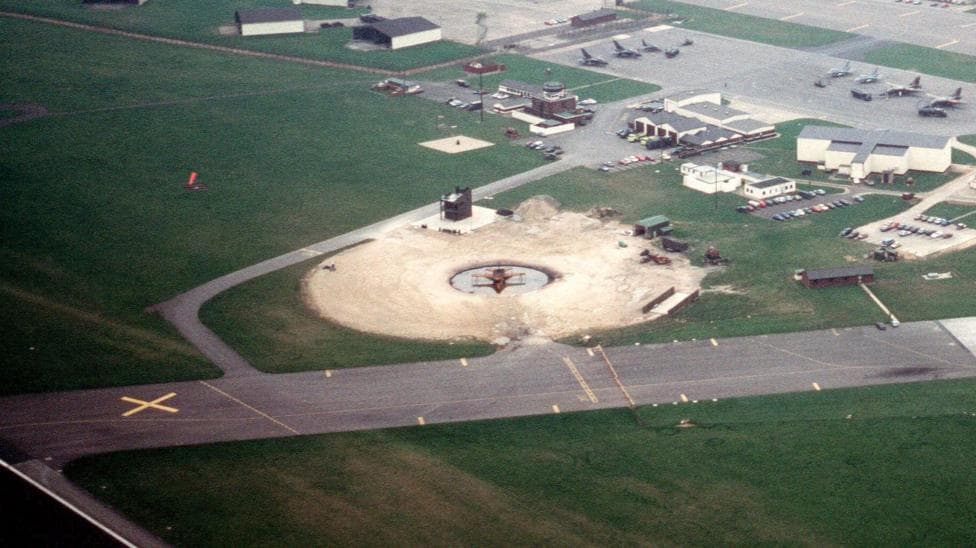
At RAF Upper Heyford, the primary source of contamination has been traced to a "fire practice pond" where military personnel trained by igniting aircraft above a pool of fuel. Ministry of Defence records from 1997 documented that firefighting chemicals were among the possible pollutants from this training area and indicated they drained into stormwater systems. This training facility was subsequently identified in the developer's report as "the most significant ongoing source of PFAS contamination identified" at the site.
Testing of groundwater and surface water across the location revealed contamination to be "widespread," with every sample collected exceeding established environmental quality standards. Independent analysis conducted by Gallos Brook Environmental Group discovered elevated chemical concentrations in more than a dozen streams flowing from beneath the base. In May, residents reported independent testing that found PFAS in a stream approximately 0.5 kilometres south of the base at levels 43,000 times environmental standards, though the precise contamination source had not been definitively established at that time.
What do the test results show?
The investigation results submitted to Cherwell District Council as part of the planning application demonstrate the scale of the problem. Paul Silver, chief executive of developer Dorchester Living, stated that separate soil samples extracted from areas designated for residential use indicated the location was "safe for use." However, this assessment contrasts sharply with the broader contamination picture revealed by comprehensive testing.
Another report examining ground and surface water conditions found contamination distributed across the site, with all samples exceeding environmental standards. The results have generated significant alarm among residents regarding both existing and approved developments in proximity to the base, including a newly planned primary school. Water testing from the school site in a separate report indicated PFAS levels exceeded safe thresholds according to environmental quality standards.

What are the health concerns?
Residents living in the vicinity of the former military base have expressed serious health anxieties following the contamination findings. The BBC has engaged with multiple residents who have requested blood testing to establish whether they have experienced disproportionate exposure to these chemicals. Leigh Radwell, who has resided near the former base for 16 years, expressed concern about her wellbeing after consuming vegetables cultivated in her garden. She stated:
"My little countryside haven and my dream of growing my own veg and having chickens and supporting wildlife is ruined."
Calum Miller, MP for Bicester and Woodstock, emphasised the necessity of comprehensive investigation:
"The most important thing is to understand fully what level of contamination, if any, there is in that area. And in the case of a primary school that people have real confidence that it's a safe environment for children."
However, Cherwell District Council has stated there is no current evidence of an immediate health risk to residents, and Thames Water has confirmed the local drinking-water supply meets PFAS guidelines. Nevertheless, in September, campaigners called for plans for a new Heyford Park primary school to be paused pending a clearer picture of contamination.
What do campaigners say about the findings?
Helen Christie, representing Gallos Brook Environmental Group, stated that the results substantiated what campaigners had been asserting:
"That the site is contaminated."She emphasised, however, that the testing conducted to date had been "inadequate." Christie added:
"The duty of care now must be towards the 1,300 houses already built and those living in the surrounding areas."
The group's independent investigations have played a crucial role in documenting the extent of the problem. Earlier discoveries by campaigners prompted investigations by the Environment Agency, which subsequently confirmed concerns about potential pollution in nearby waterways. The contamination findings have intensified calls for more rigorous oversight of the development plans and comprehensive remediation strategies before further construction proceeds.
What is the developer's response?
Dorchester Living has outlined a phased approach to managing the PFAS contamination. Paul Silver stated:
"This testing was the first step and an outline strategy for further investigation has been submitted as part of the planning application. We anticipate that this will include further investigation work on a phased basis with any necessary remediation to be secured through the planning process."
Silver noted that the contamination levels discovered were "significantly lower than we had expected given its historic use." The developer has committed to continuing its responsibilities as a landowner and is working collaboratively with Cherwell District Council, the Environment Agency, and other relevant government bodies. The developer says the proposed school site will be specifically tested before work begins, with any required remediation agreed with the district and county councils.
The results of the further testing have not yet been made available to the public. A working group has been established involving the local authority, the developer, and the Environment Agency to coordinate the response to the contamination issue. Cherwell District Council has previously requested government support in addressing the problem.
What happened at the fuel depot?
Beyond the main RAF Upper Heyford site, a separate former fuel depot that supplied the base presented its own contamination challenge. A separate former fuel depot that supplied RAF Upper Heyford had about 40 barrels of firefighting foam removed after campaigners found them; the developer said testing was carried out and any identified contamination would be cleaned up. This discovery underscores the widespread nature of PFAS contamination across multiple facilities associated with the former military installation.
What is the regulatory outlook?
The Environment Agency has established targets for environmental recovery at the site. The Environment Agency's monitoring classifies Gallos Brook's overall ecological status as "moderate," but it fails chemical targets for PFOS and other PFAS; the agency says reaching "good" status by 2039 is technically infeasible because no known technical solution is available. This acknowledgment highlights the persistent challenge posed by forever chemicals and the limitations of current remediation technology.
What happens next?
The planning application process will determine the conditions under which development may proceed at RAF Upper Heyford. Further investigation work is anticipated on a phased basis, with any necessary remediation to be secured through the planning process. The Environment Agency's stated objective is to improve the ecological status of Gallos Brook to "good" by 2039, although officials acknowledge that no currently available technical solution makes this target feasible given the persistent nature of PFAS contamination.
The situation at RAF Upper Heyford represents a significant test case for how the United Kingdom manages legacy contamination at former military sites while accommodating substantial residential development. The outcome will likely influence approaches to similar contamination challenges at other defence installations across the country.