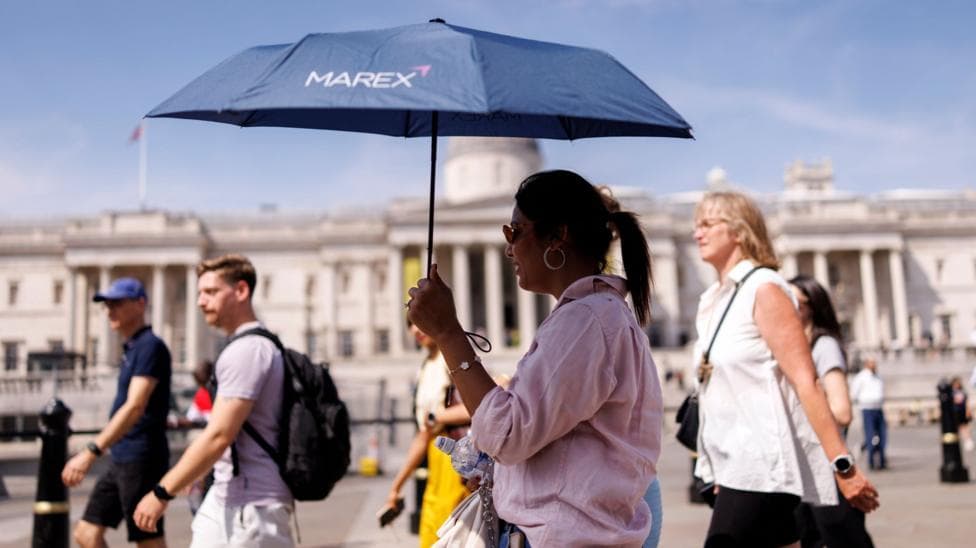
The Met Office is anticipated to announce on Tuesday afternoon that summer 2026 has become the warmest season recorded in the United Kingdom since systematic temperature monitoring began in 1884. Provisional data covering June, July and August are expected to demonstrate that average temperatures—combining daytime highs and overnight lows—have surpassed the previous benchmark established merely twelve months earlier in 2025. This milestone arrives following an exceptionally warm spring and summer characterised by five major heatwave events and 40 separate days when temperatures reached or exceeded 30°C (86°F), obliterating the former record of 34 days.
The temperature patterns align with broader scientific understanding that summers are intensifying, featuring more severe and recurrent heatwaves as a consequence of anthropogenic climate change. Record-breaking occurrences are becoming more frequent and are being exceeded by progressively larger margins.
How did the UK experience such persistent heat?
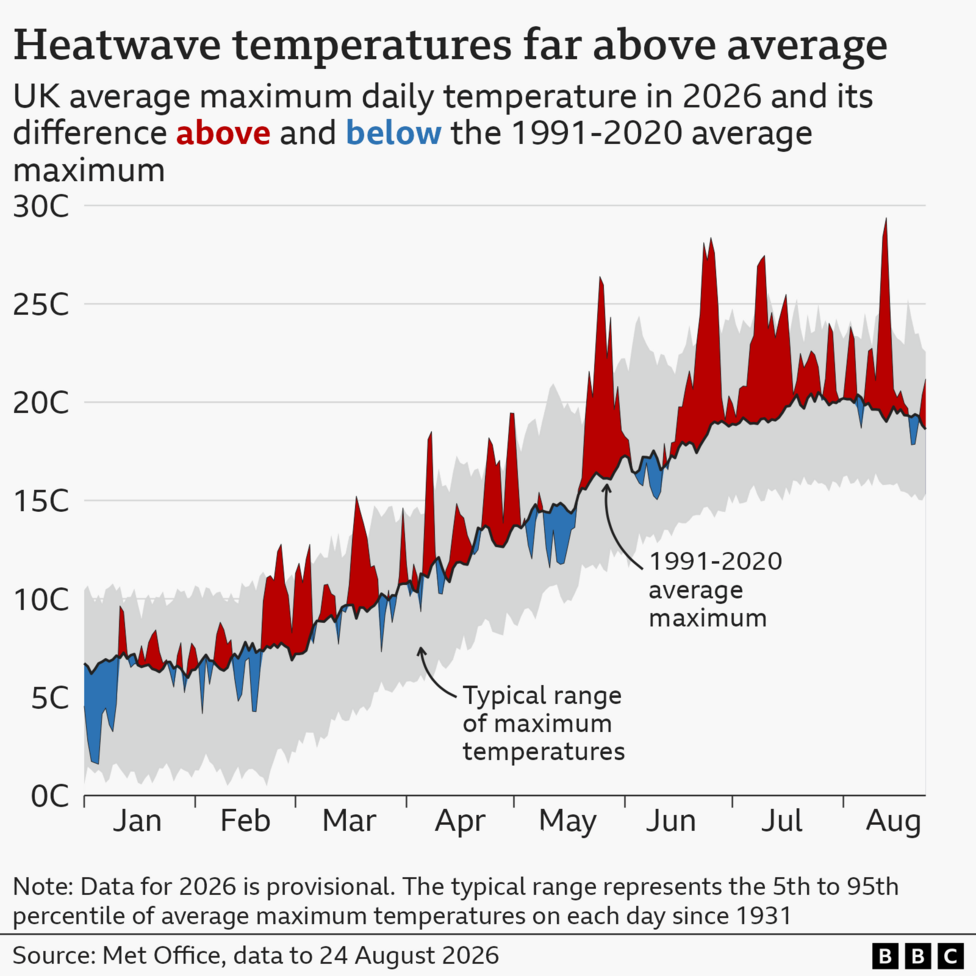
Throughout most of the summer, high-pressure systems remained anchored over the British Isles, generating arid conditions and winds originating from continental Europe that repeatedly drove temperatures upward. On 11 August, a national weather service reported that the season was increasingly likely to establish a new record, with only typical August conditions required to confirm the achievement. The mean temperature for summer up to that date had reached 16.48°C (61.66°F)—approximately 1.88°C above the 1991-2020 baseline—meaning the remainder of the month needed only average conditions to secure the record.
The latter half of August did introduce a shift in atmospheric patterns, bringing cooler and wetter conditions across many regions; however, temperatures generally persisted at or above their historical norms for the season. The four constituent nations of the UK are anticipated to show varying results: England and Wales are forecast to establish new records, Northern Ireland is expected to approach the threshold, while Scotland will fall short of record-breaking levels.
What was the highest temperature recorded?
The peak temperature this summer reached 38.1°C (100.6F) at Kew Gardens in London on 13 August. According to the Met Office's official announcement, this represented provisionally the fifth-hottest day in UK records when measured by maximum temperature alone, yet it remained below the all-time national record of 40.3°C (104.5°F) established at Coningsby, Lincolnshire in July 2022. The August monthly record itself—38.5°C, set in 2003—also remained unbroken, though 40 locations across central and southern England recorded 36°C or higher during the 13 August heat event.
What distinguishes this summer is not any single extreme reading but rather the sustained nature of the elevated temperatures throughout the season. Maximum temperatures have remained above their historical averages for nearly the entire meteorological summer, punctuated by successive heatwave episodes.
What records have been broken for heat persistence?
The accumulation of extreme heat days has shattered multiple benchmarks. Forty days experienced temperatures at or above 30°C, demolishing the previous record of 34 days established in 1995. Ten days saw temperatures reach 35°C or higher, vastly exceeding the prior record of five days set in both 1976 and 2020. Remarkably, temperatures of 35°C or above were recorded across four calendar months—May, June, July and August—compared to the previous maximum of two months. Three days recorded temperatures of 37°C or higher, establishing a new record; historically, 37°C+ has been observed only nine times in UK records, with three of those occurrences happening this year alone.

Five widespread heatwave episodes occurred across the season. One at the conclusion of meteorological spring exceeded the UK's May temperature record by more than 2°C. June brought another heatwave that broke that month's temperature record, with Lingwood, Norfolk reaching 38.0°C on 26 June, compared to the previous June maximum of 35.6°C recorded during the historic summer of 1976. July and August each delivered additional heatwaves, including one lasting three weeks in certain locations and another producing the year's highest temperature reading.
How did drought and fire conditions develop?
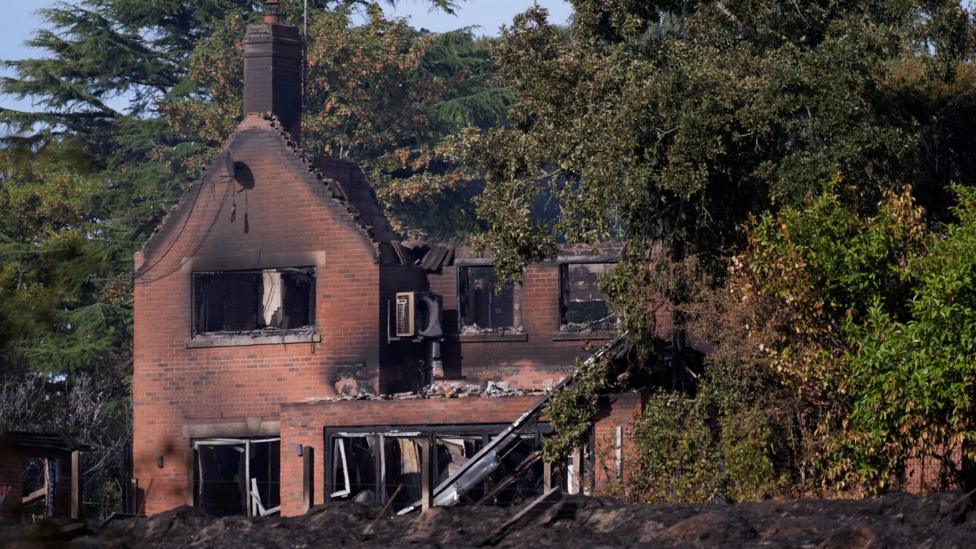
The intense heat occurred partly because of exceptional dryness across much of the summer, with certain areas experiencing no measurable rainfall for more than two months. Drought conditions were formally declared across all of Wales and in more than two-thirds of England, and wildfires caused substantial damage in multiple regions. On the UK's hottest day of the year, 19 homes were destroyed by fires in Stourbridge, West Midlands.
However, precipitation did fall during early June, and wet weather returned during the second half of August, producing some flash flooding in affected areas. Sheffield recorded more than a month's typical rainfall during the week of 24-30 August alone—exceeding the total precipitation the city had received throughout the rest of the season combined. Despite these wet episodes, summer 2026 is not anticipated to establish any records for overall dryness across the United Kingdom as a whole.
Why are UK temperature records being broken so rapidly?
In a stable climate, new records should theoretically become progressively rarer, as each record-breaking event raises the threshold for subsequent ones. Instead, all five of the UK's hottest summers on record have occurred since 2000. Until 2025, the differences between the four warmest summers were negligible, separated by merely five hundredths of a degree. Then 2025 arrived with a jump of 0.34°C above the previous record. Now, merely one year later, that benchmark appears poised to fall again.
Climate scientists employ the term
record-shatteringto describe records broken by unusually substantial margins. Research indicates that such large jumps become more probable when the climate is warming at an accelerated pace. The United Kingdom occupies the western periphery of Europe, which is the fastest-warming continent on Earth—warming at roughly double the global average rate. Multiple factors contribute to this phenomenon: land surfaces heat more rapidly than oceans, portions of Europe extend into the swiftly warming Arctic region, and shifts in weather patterns have generated more frequent and intense summer heatwaves. Scientists continue investigating the precise contribution of each factor, but the outcome is evident: the underlying climate in which British weather occurs is becoming warmer.
This pattern does not imply that the UK will break its summer temperature record annually. Weather will inevitably produce cooler summers alongside warmer ones. Yet the trajectory is unmistakable: temperature extremes that once represented the outer boundary of the UK's climate are being surpassed with striking rapidity. The question is no longer whether the United Kingdom will experience summers exceeding this one, but rather how frequently such events will occur and how much hotter they might become.
What happens next?
The Met Office's provisional statistics for June through August are scheduled for release on Tuesday afternoon, which will formally confirm whether summer 2026 has indeed broken the all-time UK temperature record. Following the cooler, wetter conditions that arrived in mid-August, forecasters have indicated that dry soil conditions, warm sea temperatures, and possible high-pressure development could still fuel another heat episode in early September 2026, though this remains uncertain.