

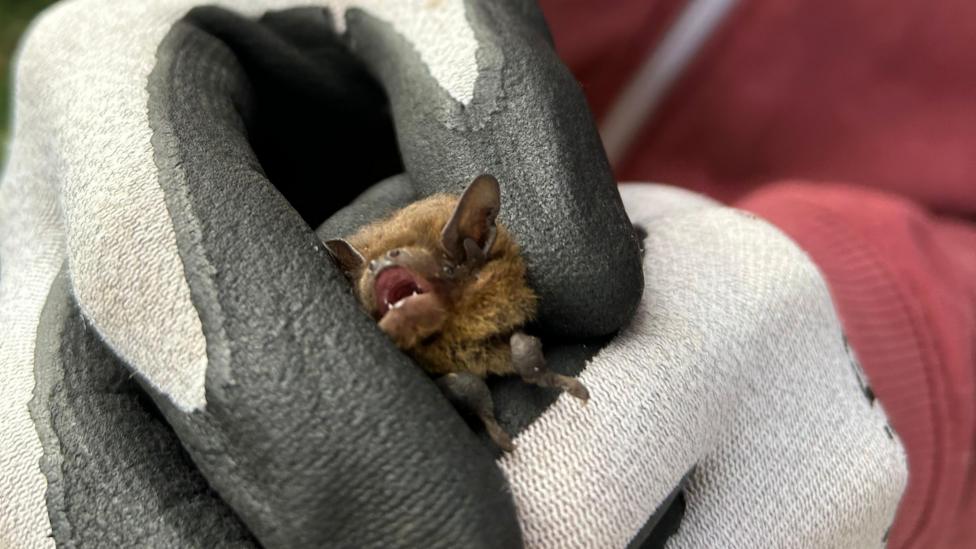
A Nathusius' pipistrelle, a rare migratory bat species, has been confirmed breeding in woodland near a Yorkshire Water reservoir close to Sheffield, marking the first record of the species in South Yorkshire. The discovery was made after environmental DNA (eDNA) collected from a bat box in March 2026 indicated the animal's presence, with a physical sighting following in April at a nearby box.
The bat boxes involved were installed in 2025 as part of Yorkshire Water's species conservation programme, designed to replicate natural roosting features and support bat populations across its sites. Sean Davey, lead ecologist at Yorkshire Water, said the speed with which the boxes had been used by multiple species was a positive sign.
The bat boxes on the Sheffield site were installed only nine months prior - so it's encouraging to see them being quickly adopted by multiple bat species.
How was the rare bat detected?
Ecologists from Yorkshire Water and the South Yorkshire Bat Group trialled DNA swabbing at bat boxes and known roost sites, collecting genetic traces left behind by the animals. Davey explained the process directly.
Bat boxes and other known roost sites were swabbed to collect eDNA samples, revealing the presence of the rare migrant bat.
Biodiversity intelligence company NatureMetrics analysed the eDNA samples in partnership with the South Yorkshire Bat Group and Yorkshire Water, identifying the Nathusius' pipistrelle as one of the UK's rarest breeding bat species and one known to migrate long distances between Britain and continental Europe. The initial detection was later verified through follow-up surveys, confirming the roost as the first recorded instance of the species breeding in South Yorkshire.

Why does eDNA monitoring matter for conservationists?
Yorkshire Water said the technique offers a more reliable way of tracking whether conservation measures are working, since manual, one-off inspections of bat boxes can easily miss evidence of activity. The company added that eDNA surveys could also broaden understanding of where different species are distributed, helping target future conservation efforts more precisely.
Dr George Muscatt, a product ecologist at NatureMetrics, described the science behind the method in straightforward terms.
Tiny traces or fingerprints of DNA that species in that ecosystem have left behind.
He noted that ecologists previously had to climb trees at night to try to visually confirm which species was occupying a roost, a slow and labour-intensive process.
By taking a surface swab approach, we've been able to monitor a far larger number of bat boxes in a very short space of time.
How rare is the Nathusius' pipistrelle and where has it been found before?
The Bat Conservation Trust classes the species as


