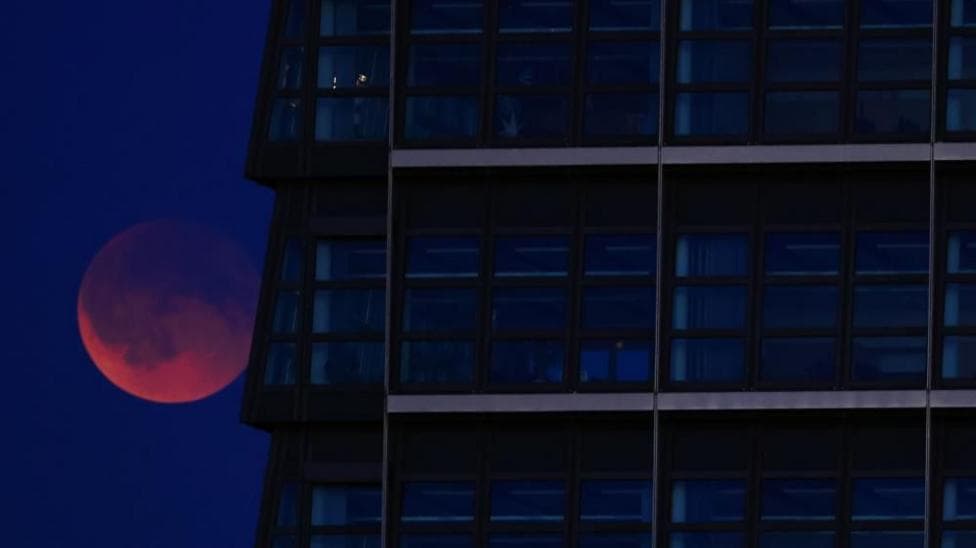
Stargazers across Northern Ireland will have the opportunity to witness a striking partial lunar eclipse in the early hours of Friday, 28 August, when the Moon passes through Earth's shadow and potentially takes on a reddish hue.
At its peak, approximately 93% of the Moon's diameter will be covered by Earth's umbra—the darkest part of the planet's shadow—creating an effect that closely resembles a total eclipse. The event will be visible across the UK, Europe, Africa, and North and South America, according to Sky at Night Magazine.
For Northern Ireland observers, the main obstacles will be the pre-dawn timing, potential cloud cover, and the Moon's position low in the western sky as dawn approaches. The Met Office has forecast cloud across much of Northern Ireland at the start of the eclipse, which could significantly affect visibility.
This partial lunar eclipse follows a deep partial solar eclipse that darkened Irish and UK skies on 12 August 2026, marking a remarkable pair of eclipse events within a fortnight.
When will the eclipse occur?
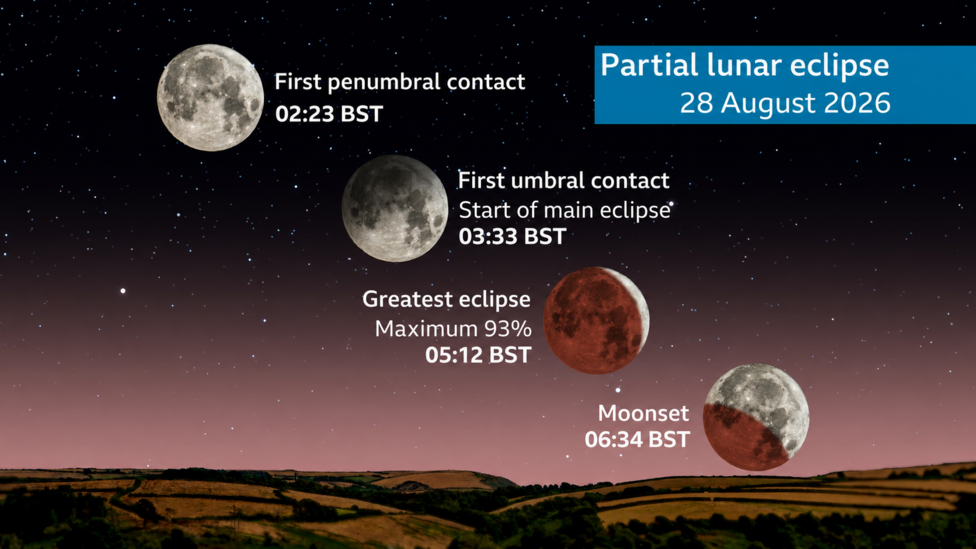
The eclipse unfolds in stages across the early morning hours. The initial phase begins at 02:23 BST when the Moon enters the penumbra, Earth's lighter outer shadow, though this stage is barely perceptible to the naked eye.
The much more dramatic phase commences at 03:33 BST as Earth's darker central shadow begins sweeping across the lunar surface. Maximum eclipse will occur at 05:12 BST, when the Moon reaches its deepest point within Earth's umbra.
In Belfast, the Moon will sit low in the western sky at approximately nine degrees above the horizon, with the eclipse concluding at 06:34 BST. In Dublin, the Moon will be slightly higher and the eclipse will last until 06:38 BST. Further west in Enniskillen, moonset occurs at 06:41 BST, potentially allowing slightly longer viewing time before the Moon disappears below the horizon.
Visibility will depend not only on cloud cover but also on having an unobstructed westward view, as buildings, hills, and trees could block the sight line as the Moon descends toward the horizon during dawn.

What happens during a lunar eclipse?
A lunar eclipse occurs when the Sun, Earth, and Moon align in a straight line, positioning Earth directly between the other two celestial bodies. This alignment allows the Moon to pass through Earth's shadow rather than receiving direct sunlight.
During a partial lunar eclipse, only a portion of the Moon enters the umbra—the darkest section of Earth's shadow. The Moon does not become completely invisible because some sunlight still reaches it, though the majority of direct illumination is blocked.
Why might the Moon appear red?
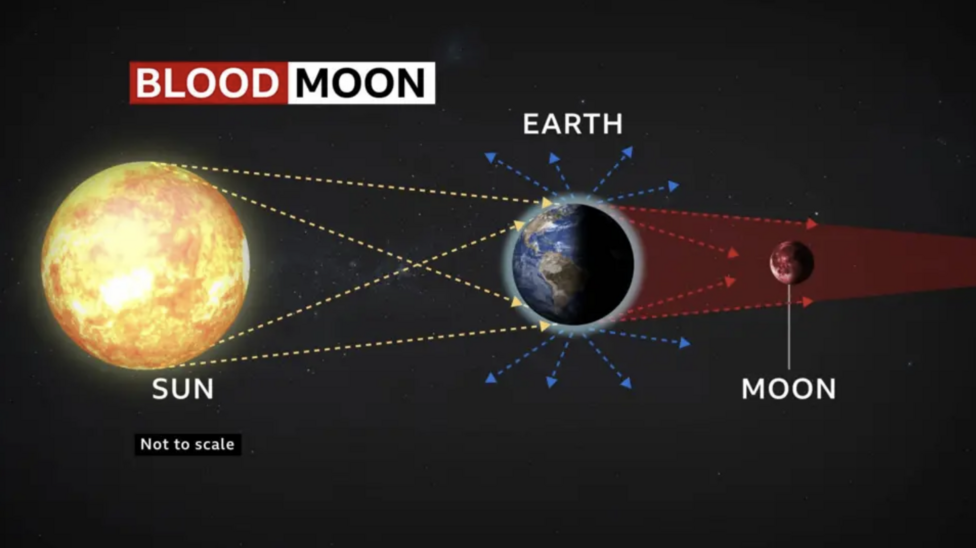
Although Earth's shadow blocks most direct sunlight from reaching the Moon, a portion of light still penetrates through Earth's atmosphere. This atmospheric filtering has a dramatic effect on the Moon's appearance.
Shorter blue wavelengths scatter more readily in the atmosphere, while longer wavelength red light passes through more effectively and reaches the lunar surface. This selective filtering causes the eclipsed portion of the Moon to take on reddish tones.
That'll be enough for it to turn a reddish colour. This is sometimes called a blood moon—which is a nice dramatic name—but it's not always the colour of blood. It can turn anything from orange to a deep red, but the part near the centre of the eclipse will be the most spectacular.
Terry Moseley from the Irish Astronomical Association explained that the intensity and exact shade of red depend on atmospheric conditions at the time of the eclipse. According to BBC Weather, the lunar eclipse may make the Moon appear reddish in the UK.
How can you safely observe the eclipse?
Unlike solar eclipses, lunar eclipses require no protective eyewear. The Royal Observatory Greenwich confirms that no special glasses are needed because a lunar eclipse is safe to view with the naked eye.
Binoculars or telescopes are not necessary to enjoy the eclipse, though they can enhance the viewing experience by making the changing colours across the Moon's surface easier to distinguish. The most important requirement is a clear sky and an unobstructed view toward the western horizon.
Current weather forecasts suggest that western areas of Northern Ireland will have more favourable conditions, while central and eastern parts are expected to experience cloudier skies. Observers should position themselves in locations with a clear westward view before the eclipse begins, as the Moon will be too low on the horizon to be visible above obstacles as dawn breaks.
Key facts
- Maximum eclipse occurs at 05:12 BST on 28 August 2026, with 93% of the Moon covered by Earth's umbra
- The eclipse is visible across the UK, Europe, Africa, and North and South America
- In Belfast, the Moon will be low in the western sky at about nine degrees, with the eclipse ending at 06:34 BST
- No protective glasses or equipment are required to safely observe a lunar eclipse
- Cloud cover and westward visibility are the primary challenges for Northern Ireland observers