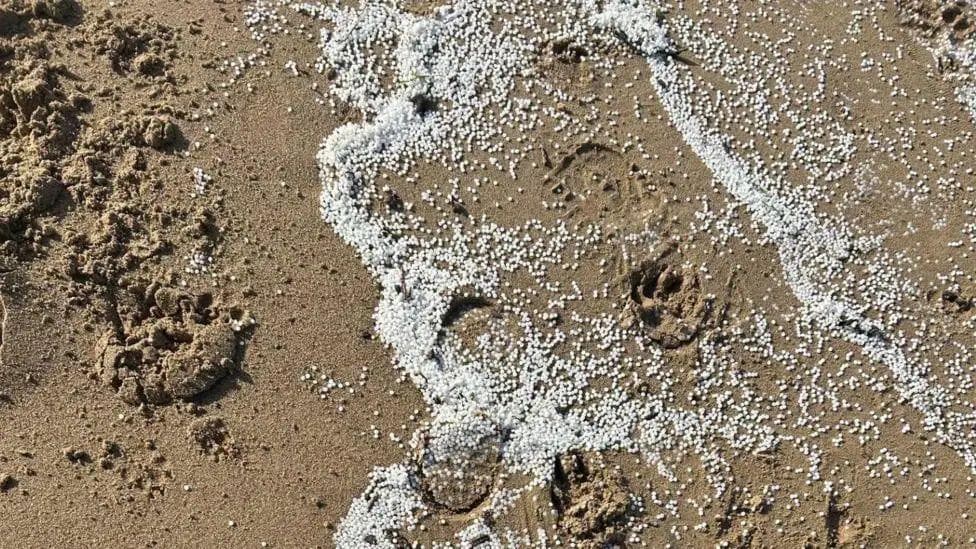
Researchers have determined that only 28% of plastic nurdles discharged into the River Tyne following a July collision between vessels have been retrieved, with scientists warning that additional pellets are likely to continue appearing on beaches across the region for an extended period.
The incident at the Port of Tyne resulted in an estimated 18 tonnes of plastic nurdles entering the river. Despite extensive volunteer efforts involving thousands of hours of beach cleaning operations, only 5.14 tonnes have been recovered, according to analysis conducted by Newcastle University and the Centre for Environment, Fisheries and Aquaculture Science (Cefas).
The collision occurred at approximately 13:00 on 19 July when the Wind Orca struck the berthed BG Orange as it was departing the dock, damaging a gantry crane and injuring one person. The protective boom surrounding the BG Orange did not enter the water until 22 July, three days after the collision, according to Port of Tyne officials.
However, the overall recovery picture is more complex. According to South Tyneside Council on 28 September, material removed from damaged containers before the nurdles entered the environment brought the overall share of the original cargo recovered to almost 75%. Between 3 and 23 September alone, a further 358.85kg of nurdles was recovered through shoreline and on-water operations.
Where are the remaining nurdles?
Scientists have concluded that the remaining nurdles have likely dispersed beyond the Tyne estuary into the North Sea, with some potentially remaining within the river system itself. Depending on weather patterns, winds and tidal movements, additional pellets are expected to continue washing ashore on various sections of the coastline in the future. The spill has already been reported as far south as North Yorkshire and Teesside, more than 30 miles from the collision site, with environmental charity Fidra warning that nurdles could continue washing ashore for years.
Can all the nurdles be recovered?
The Scientific and Technical Advice Cell (STAC) has reviewed Cefas' modelling data alongside recovery information and shoreline surveys, concluding that complete recovery of every nurdle is not considered achievable. The modelling cannot accurately forecast precisely when and where nurdles will wash up on beaches. Dr Robert Bradburne, STAC chair, stated:
As with any environmental incident of this nature, ongoing monitoring remains important and the situation should continue to be reviewed as further evidence becomes available.
What are officials saying about the response?
South Tyneside Council's director of community operations Gary Kirsop stated that the multi-agency group overseeing the nurdle response "remained committed" to ongoing efforts. North East mayor Kim McGuinness expressed concern about the situation, describing it as upsetting for those caring for the region's coastline. She has commissioned an independent review into the response and recovery operations.

McGuinness has also backed calls for changes to international regulations governing how plastic nurdles are transported.
It's vital the agencies involved in the clean up are ready and act quickly to continue their work when this happens.
What happens next?
Recovery methods and resources are currently being reviewed, with additional local labour expected to assist specialist contractors. The Recovery Working Group is examining thresholds for transitioning from active recovery to monitoring phases, and determining what level of nurdle accumulation would warrant renewed clean-up operations.
Key Facts
- An estimated 18 tonnes of plastic nurdles entered the River Tyne following the 19 July collision between the Wind Orca and BG Orange vessels
- 5.14 tonnes have been recovered from water and beaches, though almost 75% of the original cargo was recovered when including material removed from damaged containers before environmental release
- Scientists warn that complete recovery of all nurdles is not achievable and additional pellets will continue washing ashore depending on weather and tidal conditions
- Nurdles have already been found more than 30 miles from the collision site, with environmental groups suggesting they could wash ashore for years
- An independent review into the response has been commissioned, and calls for international rule changes on nurdle transportation are being supported by regional officials