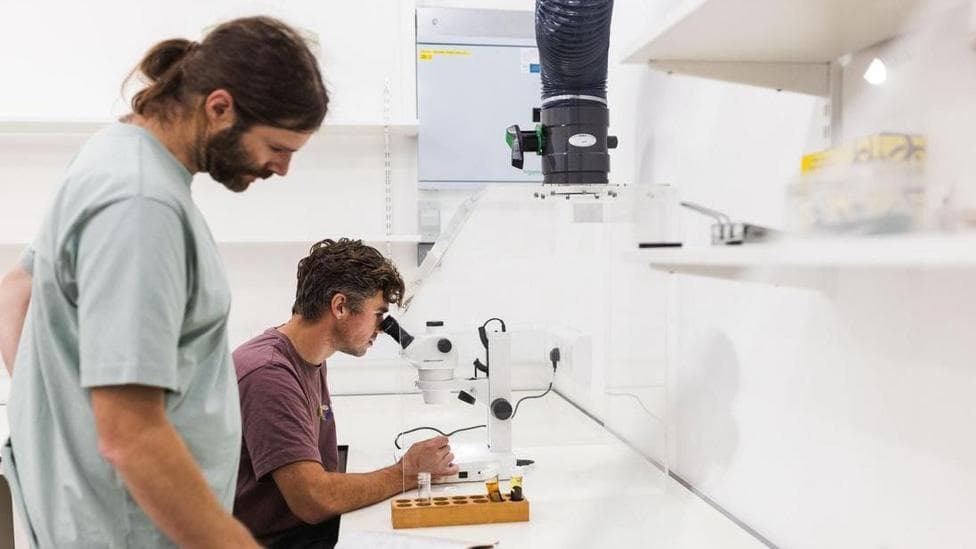
A purpose-built laboratory has opened at RSPB Wild Haweswater in Penrith to serve as a research base for scientists, universities and students investigating Cumbria's upland landscapes and their response to nature recovery efforts. According to BBC News, the facility was funded by the estate of the late ornithologist Denis Summers-Smith and is already being used by researchers for field studies and academic collaboration.
The laboratory is intended to function as a hub for upland science, bringing together researchers and conservationists to conduct fieldwork, exchange expertise, and establish new partnerships. Will Peach of the RSPB stated:
"We want to build on Denis's commitment to field ecology and conservation research, creating a lasting legacy that will benefit both science and nature recovery in Cumbria and beyond."
The new facility supports ongoing research through Cumbria Connect, an initiative whose scientific monitoring extends across Wild Haweswater, the Lowther estate and the Lowther Valley. Cumbria Connect secured £4.1 million from the Endangered Landscapes Programme for restoration work across 34,000 hectares, with scientific monitoring embedded throughout the programme.
Why are Cumbria's uplands significant for conservation?
The region's landscape comprises distinctive environments including peatlands and rainforest habitats that play a critical role in carbon storage and water management. Dr Mo Verhoeven, conservation scientist at Cumbria Connect, explained:
"Cumbria's uplands are incredibly important for nature recovery. We hope this laboratory will give researchers, students and conservationists a place to work together and build the evidence needed to guide restoration, both here in Cumbria and in upland landscapes further afield. It's about making Cumbria a much stronger base for upland science."
What research is already underway?
A long-term grazing experiment at Mardale Common is comparing cattle grazing, tree planting and deer management strategies, with monitoring covering water, soil, fungi, plants, invertebrates and birds. Additionally, Cumbria Connect and the Society for the Protection of Underground Networks are studying mycorrhizal fungi using soil sampling, DNA sequencing and experiments with locally sourced fungal communities.
How will the laboratory benefit future scientists?
The facility will train the next generation of environmental scientists while providing a collaborative workspace for researchers and conservationists. Dr Verhoeven noted:
"Just as importantly, it will help train the next generation of environmental scientists."Researchers are already using the laboratory as a base for field studies and academic collaboration, establishing it as a working centre for upland science.
Cumbria Connect is part of a scheme funded by the Arcadia Fund, which was co-founded by one of the heirs to the Tetra Pak fortune. This funding structure reflects broader investment in landscape-scale conservation across the region, complementing other major habitat restoration initiatives in Cumbria and beyond.