

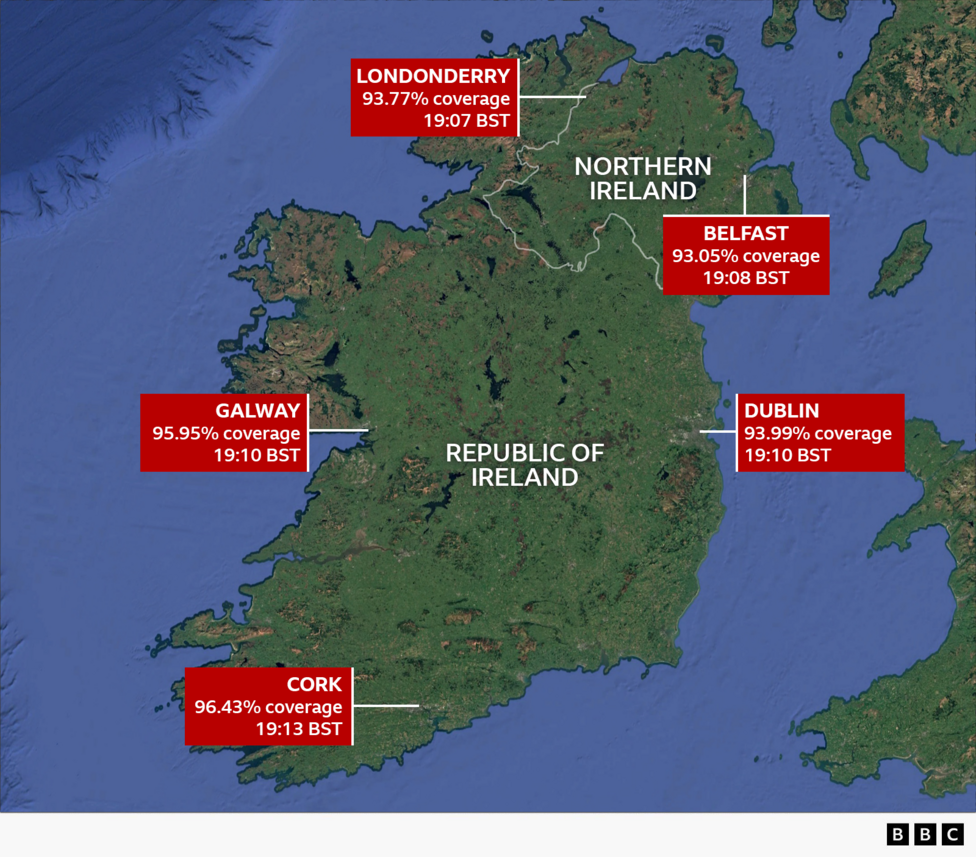
Crowds gathered at Armagh Observatory in County Armagh on 12 August 2026 to watch the deepest partial solar eclipse visible from Ireland until September 2090. During the early evening, more than 90% of the sun was obscured across the island, with viewers in Belfast expected to see coverage peak at 93.05%.
Dozens of visitors, from young children to older enthusiasts, positioned themselves on the hill outside the observatory for what many described as a once-in-a-generation viewing opportunity. Northern Ireland's only planetarium became a focal point for families travelling from both sides of the border to witness the event together.
Why does this eclipse matter so much to viewers?
For many attendees, the rarity of the event was the main draw, since no comparable eclipse will be visible from Ireland again until 2090. Ed Ronayne, who travelled from County Tipperary with his daughter Genevieve, said he had missed the 1999 solar eclipse because he was abroad at the time and was determined not to miss this one.
"It'll be really cool," Genevieve told NI. "And just to say: 'I've been around for a solar eclipse.'"
"And sure this little one wasn't even around so it's her first chance to see it," Ed said.
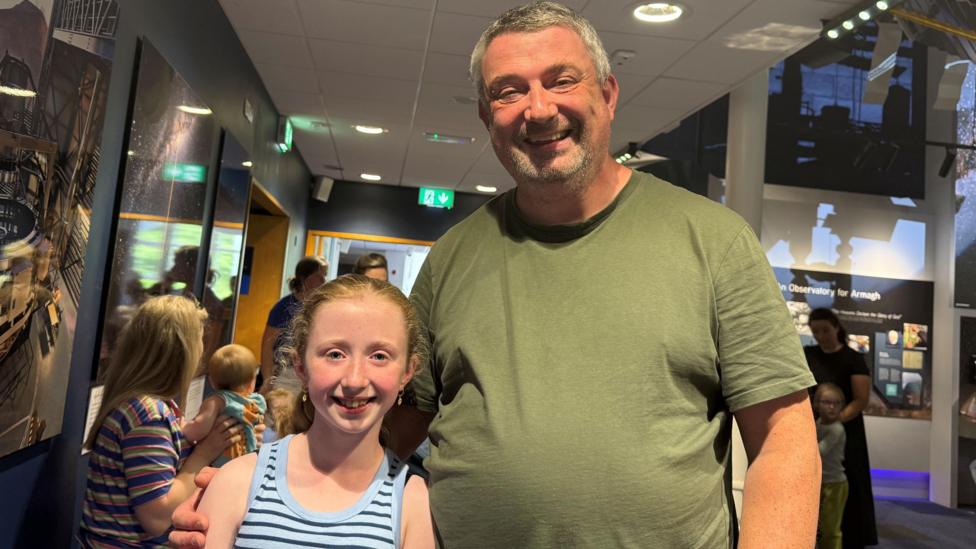
Sharon Walsh made a similar journey from Dublin with her daughter Mia to mark the occasion.
"We were looking for somewhere to the see the eclipse and just thought it'd be nice to mark such an event," Sharon said. "There won't be another one until 2090 and I'll probably be dead by then," she joked. "So it's a once-in-a-lifetime thing."
Mia, who had never seen a solar eclipse before, said she was keen to experience it firsthand.
Heather Alexander, senior education officer at Armagh Observatory, noted that many of the day's visitors were too young to remember the last comparable eclipse in 1999.

"I remember watching that on tv myself and getting solar filter glasses through the newspapers and everything," she said. "It's so significant because we will not see another eclipse like this again on the island of Ireland until 2090 which is pretty insane," she continued. "The excitement for this eclipse has been next level, I actually haven't seen anything like it before and I've worked here for eleven years. For lack of a better phrase it is astronomical."
How were other parts of the UK and Ireland watching?
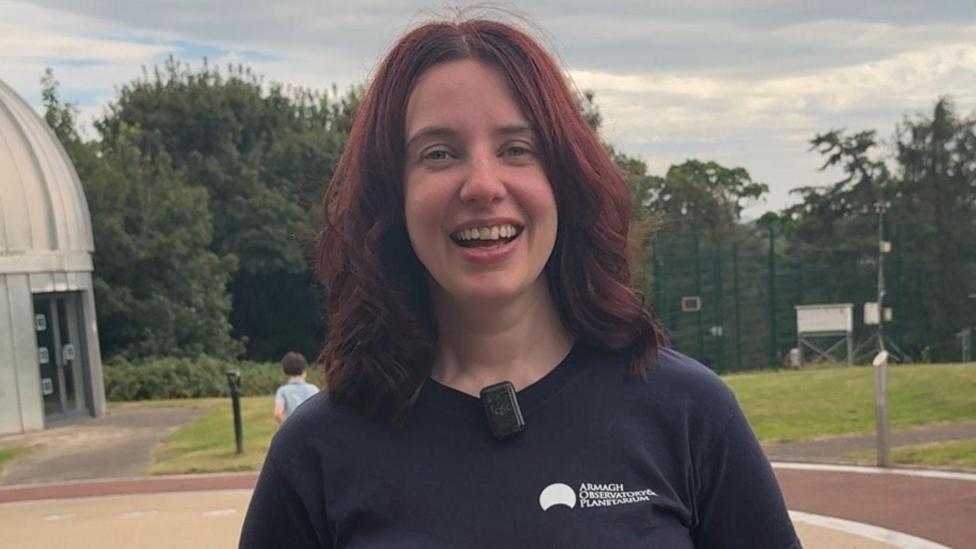
At Queen's University Belfast, several hundred people gathered to observe the partial eclipse, with around 1,500 having registered interest in the event beforehand. PhD researcher in solar physics Aisling O'Hare encouraged people to seize any break in the clouds.
"If you can get a clear minute, get your glasses on to take a look to see if moon has moved across the sun," she said.
Cloud cover over Belfast threatened to obscure the view, but O'Hare remained hopeful conditions would improve enough for a partial glimpse. As if on cue, the sun briefly broke through the clouds during the observation.

The Martin family, also watching from Queen's University, described the atmosphere as exciting for their children.
"This is a once in a lifetime event. We had to come down to see this. The children are very excited to see this event today. It's very cool."

Along the County Kerry coast, one of the areas expected to see the greatest coverage in Ireland, the sun was set to be blocked out almost entirely.
Was this actually a total solar eclipse elsewhere?
While Ireland and the UK experienced a deep partial eclipse, the 12 August 2026 event was in fact a total solar eclipse along a narrow path crossing Greenland, Iceland, and Spain, including a small area of northeastern Portugal, according to the
This article was sourced from bbc


