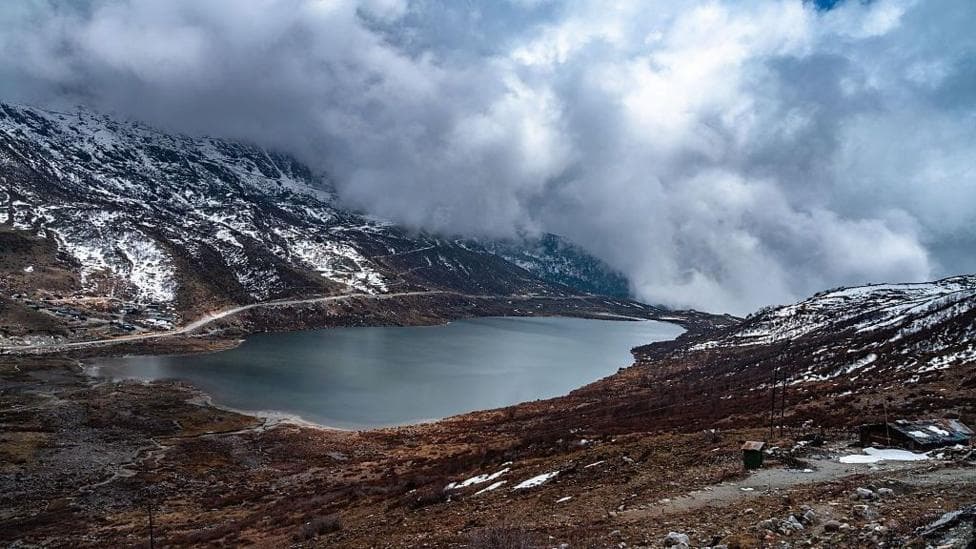
India's government has identified 56 glacial lakes as posing "very high risk" of catastrophic failure, underscoring mounting dangers as Himalayan glaciers accelerate their retreat and destabilise the mountain landscape that underpins the livelihoods of hundreds of millions across South Asia.
Fresh research reveals that Himalayan glaciers are now shedding mass at a rate 65% faster than a decade ago, while simultaneously only about 21 of an estimated 40,000 glaciers across the Himalaya-Karakoram region receive sustained, detailed monitoring. This critical gap in observation capacity comes as the physical environment transforms at an unprecedented pace, with retreating ice leaving behind unstable lakes, thawing permafrost, and destabilised high-altitude slopes that can trigger cascading hazards.
The findings emerge from a report by global consultancy Systemiq, developed alongside the Integrated Mountain Initiative and with technical input from the International Centre for Integrated Mountain Development (ICIMOD) and GB Pant National Institute of Himalayan Environment. The work gains urgency from recent catastrophic events: a glacier-triggered flood on the Nepal-Tibet border on 26 August 2026 killed more than 1,300 people and left nearly 1,500 missing, with reports indicating the total dead and missing across the region climbed above 1,500.
Why are glacial lakes becoming more dangerous?
As glaciers retreat, they leave behind expanding bodies of water held back by unstable natural dams composed of rock and ice. Simultaneously, warming temperatures are destabilising permafrost—permanently frozen ground that thaws as the climate warms—and steep mountain slopes, multiplying the risk of complex, cascading disasters. These hazards do not unfold in isolation; a single trigger can unleash multiple secondary events across vast downstream areas.
India already possesses stark evidence of the scale of this threat. Although only 18% of Indian territory lies within the Himalayas, the region accounts for approximately 35% of all disasters across the country. In July, the government informed parliament that 56 glacial lakes had been classified as "very high risk" following a 2025 scientific assessment of 189 high-risk lakes in the Indian Himalayan region. The Central Water Commission is actively monitoring 2,485 glacial lakes larger than 10 hectares across India's Himalayan river basins.
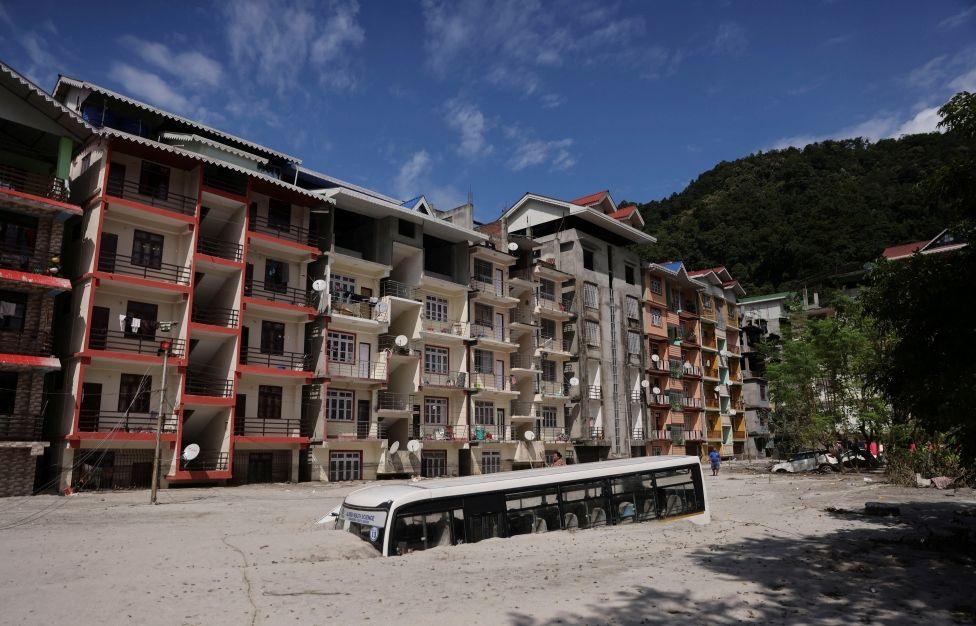
The region has already witnessed the catastrophic consequences of glacial lake failures. In 2023, a glacial lake outburst flood in Sikkim killed at least 70 people and inflicted widespread damage on roads, bridges and hydropower infrastructure. In 2021, a comparable disaster in Uttarakhand claimed more than 200 lives when a massive flood swept through the Rishiganga and Dhauliganga valleys. More recently, the 26 August 2026 flash flood in Nepal's Rasuwa district was the deadliest disaster in that stretch of the Himalaya in a generation, with satellite imagery analysis indicating an ice-and-rock avalanche struck the Lhende River approximately 20 km northeast of the Nepal-China Rasuwagadhi border crossing.
How does glacier loss threaten India's economy?
The Himalayas function as a vast natural water system sustaining rivers that support hundreds of millions of people throughout South Asia. The new research quantifies this dependency with an unusually large economic figure: Himalayan water underpins roughly 20% of India's gross domestic product, sustaining wheat, rice, tea production, hydropower generation and pilgrimage economies. Yet mountain states capture only about 5% of that value, concentrating economic benefits in the plains while bearing disproportionate climate risks.
ICIMOD projects that "peak water"—the point at which glacier runoff reaches its maximum before declining as glaciers lose mass—is expected around mid-century in most Hindu Kush Himalayan river basins. Beyond that threshold, the volume of water flowing from the mountains will diminish, threatening agricultural productivity, energy generation and water security across the subcontinent.

The Himalayas are the Third Pole. Unlike the Arctic or Antarctic, this pole has hundreds of millions of people living beneath it.So said economist Lord Nicholas Stern, chair of the Grantham Research Institute on Climate Change and the Environment at the London School of Economics, emphasising that the ecological system underpinning this "national and international infrastructure" is "approaching a tipping point".
A senior United Nations official reinforced these warnings on 1 September 2026, stating that the Himalayan region faces severe future glacial flood risks as the Nepal death toll from the prior week's glacier-triggered flood surpassed 1,000.
What role does air pollution play in glacier melt?
Not all forces driving glacier loss lie beyond regional control. The Systemiq research estimates that roughly one-third of Himalayan glacier melt is driven by black carbon—soot particles originating largely from brick kilns in the plains. When deposited on snow and ice, black carbon absorbs additional sunlight and accelerates melting. Unlike global greenhouse-gas emissions, black-carbon pollution represents a lever that India and neighbouring countries can act upon directly through targeted industrial and environmental policies.
What solutions are being proposed?
The report proposes 10 priority transitions to address the mounting crisis. These range from reducing black-carbon emissions and expanding glacier monitoring networks to improving disaster early-warning systems and fundamentally reshaping how tourism develops in the mountains.
Strengthening disaster preparedness ranks among the top priorities, requiring governments to agree in advance on coordinated responses—from evacuation protocols to protection of vulnerable infrastructure—when hazards emerge. Another critical focus involves rethinking tourism development. The Indian Himalayan region receives roughly 400 million tourist visits annually, and researchers argue the objective should shift from maximising visitor numbers towards generating economic value that is retained and reinvested locally, building community resilience rather than extracting wealth.
Glaciers are melting faster than they were a decade ago.So stated Arushi Chopra, Systemiq's senior director and lead author of the report, capturing the accelerating pace of change.
Pema Gyamtsho, director general of ICIMOD, emphasised that risks are becoming increasingly complex and transnational.
Glaciers are retreating, permafrost and high-mountain slopes are becoming increasingly unstable, and communities and infrastructure downstream face growing risks from complex and cascading hazards.He stressed that such hazards "do not respect national borders, and no single country can address them alone", making cross-border monitoring, shared risk information, joint early-warning systems and coordinated investment in resilience increasingly urgent.
What is the scale of glacier loss across the region?
Assessment data underscores the accelerating pace of ice loss. A 2026 evaluation found that glaciers across the Hindu Kush Himalaya lost approximately 12% of their area between 1990 and 2020, with the pace of ice loss doubling since 2000. Nepal's Himalayas alone contain an estimated 2,069 to 2,174 glacial lakes, with ICIMOD classifying 47 as potentially dangerous. The region's vulnerability is compounded by the frequency of repeated events: the Lhende Khola flooded twice in 14 months, demonstrating how the same corridors face mounting exposure to successive high-altitude flooding.
What happens next?
Following a 3 September 2026 review by India's Home Secretary of Himalayan states' preparedness for glacial lake outburst floods and snow avalanches, the affected states and Union Territories are expected to continue follow-up work on monitoring and early-warning planning. The review pushed for stronger systems across the region, signalling government recognition of the urgency. Cross-border coordination mechanisms and joint investment frameworks will be essential to translate these priorities into action before the next major disaster strikes.
Key Facts
- Himalayan glaciers are losing mass 65% faster than a decade ago, with only 21 of approximately 40,000 glaciers receiving sustained monitoring
- India's government has classified 56 glacial lakes as "very high risk" following assessment of 189 high-risk lakes in the Indian Himalayan region
- Himalayan water underpins roughly 20% of India's GDP, yet mountain states capture only about 5% of that economic value
- Roughly one-third of Himalayan glacier melt is driven by black carbon from brick kilns, a pollution source that regional action can directly address
- A glacier-triggered flood on 26 August 2026 killed more than 1,300 people and left nearly 1,500 missing across Nepal and Tibet