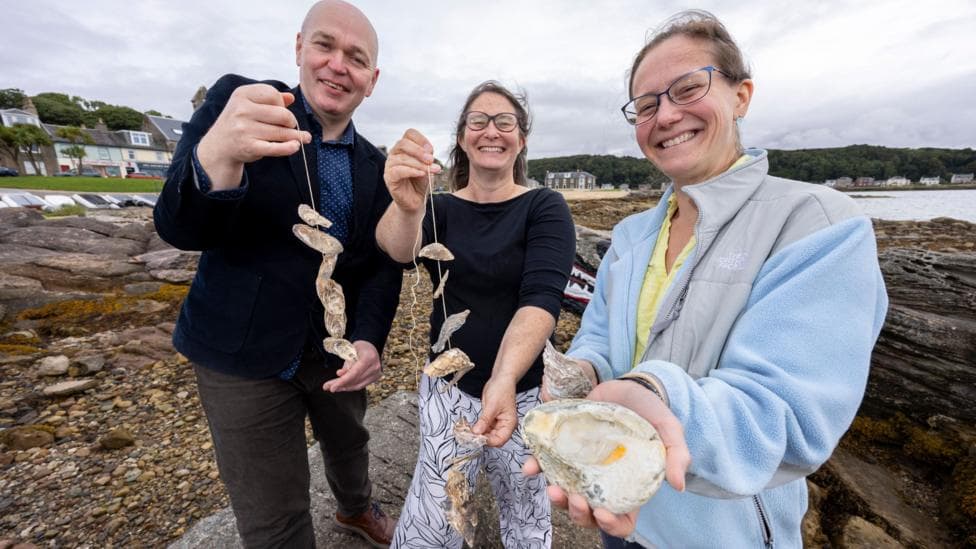
Researchers have rediscovered long-lost oyster beds on Scotland's West Coast by mining Gaelic and Scots place names for clues about where the shellfish once thrived. The breakthrough, achieved through Project Eisirean, has identified previously undocumented oyster habitats and confirmed the presence of oysters at multiple sites on Mull and Islay, offering hope for restoring populations that have dwindled to near extinction across Europe.
The investigation centred on searching for Gaelic terms for oyster—eisir, eisirein and eisirean—as well as habitat-related words such as sandy banks or tidal causeways embedded in coastal place names. Scientists then applied ecological fieldwork to verify whether oysters could genuinely have inhabited those locations based on seabed conditions and water flow patterns.
Native oysters once carpeted coastal European waters, including Scotland's shores, but overharvesting and disease have reduced them to scattered remnant populations. The rediscovery of these historical sites opens possibilities for targeted restoration efforts in areas where communities once harvested oysters as a dietary staple.
How did researchers identify the oyster beds?
Dr Anna McGregor, a coastal ecology lecturer at the University of Glasgow, conceived the idea of using traditional place names as a window into oyster distribution. Her team, working across several years, first located two areas with oyster references on Mull, then expanded their search after discovering a third site on Lewis roughly two years into the project. The group broadened their approach to include habitat-related names such as sand banks, examining each location for physical factors that would support oyster populations.
"This is a really exciting outcome, for a project that started off looking for the historic distribution of oysters along the West Coast. We thought that as native oysters are now really rare throughout Europe, is there a way to look where they used to be, using people's memory and understanding - that can come through place names. We found two areas with oyster in the name, both on Mull, and after about two years we found another one on Lewis. Then we broadened the search to look for habitat related names, like sand banks."
Project Eisirean represents a collaboration between ecology and environment researchers, Gaelic and education specialists at the University of Glasgow, and local community organisations along Scotland's west coast. The initiative has been recognised for its innovative approach: the University of Glasgow's 2026 Knowledge Exchange & Innovation Awards honoured the project for its "Positive Contribution to Place-Making".
Beyond fieldwork, the project has developed low-cost citizen science tools and a primary schools workbook linking science lessons with outdoor learning, songs and stories. The collaboration involves partners including NatureScot, Bunessan Primary School, Salen Primary School, Mull & Iona Gaelic Partnership, the Native Oyster Restoration Alliance, and Blas Festival, with funding of £42,644 distributed across the Arts and Humanities Research Council, Biotechnology and Biological Sciences Research Council, and Economic and Social Research Council.

What restoration work is now underway?
Ecology experts intend to leverage these discoveries to rebuild oyster populations in suitable coastal locations. A mobile hatchery is currently being trialled in Millport, designed to supply oyster larvae to coastal communities while simultaneously supporting oyster bed restoration across multiple areas.
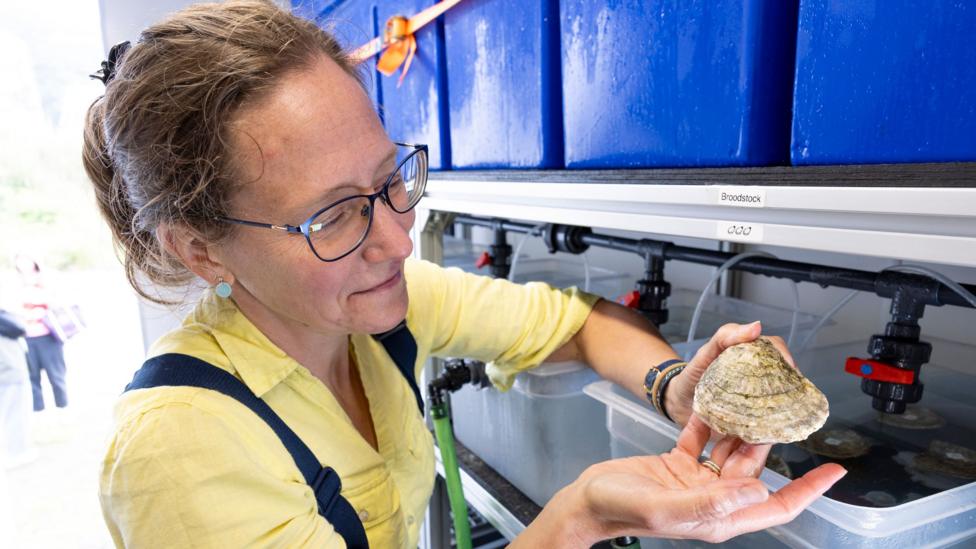
Dr McGregor outlined the vision for this restoration work:
"What we are hopping is to connect knowledge of the past, where shellfish was an important part of people's diets, to future improvement. We want to look where shellfish used to be, where communities had a connection with them, and develop that again. A small scale hatchery like this [on Millport] can be sustainable on an island, and really help people to connect with them. Seeing oysters life cycle can help people understand why it's important to keep them in the wild, and then get the numbers back up to levels where we can harvest them for lots of purposes."
The team plans to build on their findings through continued collaboration with local communities in Islay and Mull, alongside oyster bed restoration and protection initiatives in priority areas. This work aligns with broader Scottish restoration efforts: native oysters have recently returned to the Firth of Forth for the first time in a century under the Restoration Forth programme, while the Dornoch Environmental Enhancement Project is investing £6.4 million to restore 40 hectares of native oyster reef.
What international recognition has the project received?
The Native Oyster Restoration Alliance (NORA), which coordinates oyster enhancement projects across Europe, has highlighted the Eisirean approach as a model for other restoration initiatives. Hein Sas, NORA's secretary, stated:
"The Eisirean project can serve as an example for other projects on how cultural heritage can help to identify suitable restoration sites."
The project's methodology—combining linguistic and ecological expertise to uncover historical oyster distributions—offers a replicable framework for restoration work elsewhere in Europe, where native oyster populations have similarly declined.
What happens next?
The University of Glasgow indicates that the team will continue developing low-cost citizen science tools and educational materials, suggesting the project remains active rather than concluded. Further restoration and community engagement activities are planned across the partnership, with the mobile hatchery trials in Millport serving as a proof-of-concept for potential expansion to additional locations.
Key Facts
- Project Eisirean identified previously undocumented oyster beds and confirmed oyster presence at multiple sites on Mull and Islay using Gaelic and Scots place names
- A mobile oyster hatchery is being trialled in Millport to supply larvae for restoration and help communities reconnect with native oyster populations
- The project received recognition in the University of Glasgow's 2026 Knowledge Exchange & Innovation Awards for its contribution to place-making
- Native oyster restoration efforts across Scotland include the Firth of Forth programme and the £6.4 million Dornoch Environmental Enhancement Project
- The Native Oyster Restoration Alliance has identified the Eisirean methodology as a model for identifying suitable restoration sites across Europe