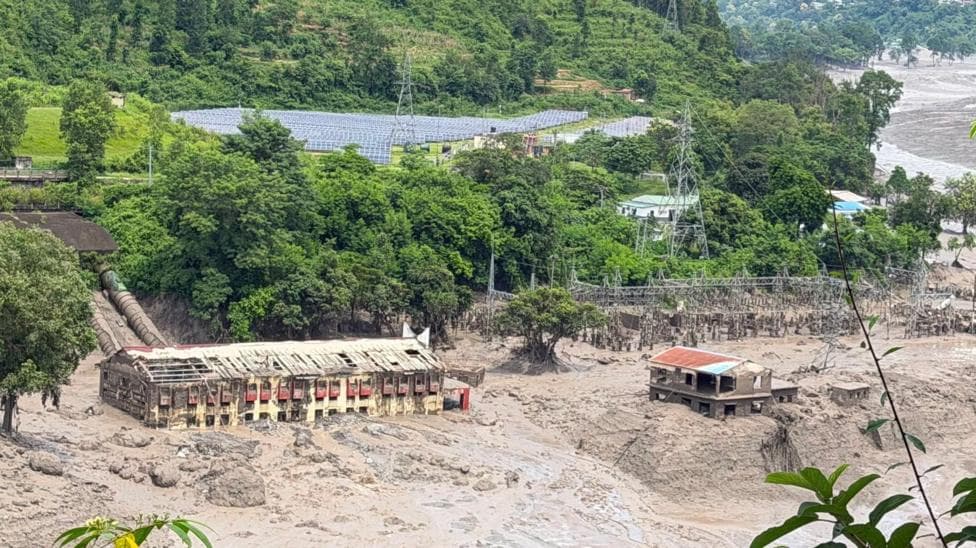
A catastrophic flash flood has swept across northern Nepal early on Wednesday, destroying villages and critical infrastructure in the Himalayan border region. Officials fear the scale of destruction will surpass a deadly flood that struck the same area just twelve months earlier, killing 18 people.
The deluge struck Rasuwa district, located north of Kathmandu and bordering Tibet, around 9:00 a.m. According to , the flood inundated Syapru Besi and Timure, while the Kathmandu Post reported the flood had reached Galchhi in Dhading by Wednesday afternoon. The surge then moved downstream into the Trishuli River toward Nuwakot.
Twelve people have been rescued so far, though search and rescue operations continue. Authorities reported that 13 officers from the armed police force are missing from two posts in Rasuwa district, and contact has been lost with dozens of other police officers stationed in the affected area.
What caused the flood?
Officials initially attributed the flood to melting snow that had accumulated in the Bhote Koshi river, which flows from Tibet into Nepal. However, hydrological experts quoted by Nepal News suspected a glacial lake outburst flood in Tibet rather than local rainfall, suggesting the water surge originated from a sudden release of meltwater across the border.
Which areas have been affected?
Around a dozen settlements across multiple districts face severe damage. According to the Kathmandu Post, affected communities include Syaphrubesi, Betrawati, Mailung, Salletar, Shantibazar, Pairebesi, Khalti Basti, Sole, Trishuli and Battar. The flood also destroyed a hydropower dam and caused extensive infrastructure damage. Critically, the flood washed away a 42-kilometre road linking Betrawati in Nuwakot with the Rasuwagadhi border crossing, severing Nepal's main trading route with China.

What is the current alert status?
Five districts remain on high alert following the disaster. Nepal's disaster management authority has urged residents living near river banks in vulnerable areas to remain vigilant and take immediate precautions. High-risk advisories cover Rasuwa, Nuwakot, Dhading, Gorkha and Chitwan, with high water levels projected to reach the Marshyangdi confluence at Mugling by Wednesday evening.
Rasuwa chief district officer Narendra Pariyar stated that while officials expect the damage to be severe, it remains too early to estimate the full scale of destruction.
What response has been mobilised?
Work has started to take necessary steps in coordination with the medical team, scouts, and Red Cross,Prime Minister Balendra Shah announced in a social media post following an emergency meeting to assess the situation.
Army spokesman Rajaram Basnet confirmed that rescue teams are actively searching for survivors and missing persons across the affected region.
How does this compare to previous disasters?
Rasuwa, which sits along Nepal's critical trading corridor with China, experienced devastating flooding last year when a glacier burst on the Chinese side of the border. That 2025 disaster killed 18 people and caused widespread damage. Officials have now told media outlets that they believe Wednesday's flood exceeds the scale of last year's catastrophe, suggesting this event may rank among the most severe natural disasters to strike the region in recent years.
Key Facts
- The flood struck Rasuwa district early Wednesday morning around 9:00 a.m., destroying villages and a hydropower dam
- Twelve people rescued so far; 13 armed police officers missing and dozens more unreachable
- A 42-kilometre road connecting Nepal to its China border crossing was washed away
- Five districts placed on high alert: Rasuwa, Nuwakot, Dhading, Gorkha and Chitwan
- Officials believe the 2026 flood exceeds the scale of a deadly 2025 glacier-burst flood that killed 18 in the same area