

Firefighters tackling a peatland wildfire at Holme Fen Nature Reserve, near Peterborough, are working in conditions so intense that one commander compared them to being cooked in a "boil in the bag" meal. Area commander Wayne Swales said roughly half of the reserve's 660-acre (270-hectare) site had burned by Tuesday, with internal temperatures reaching as high as 60C (140F). The blaze, which began on Saturday, is the second to hit the site within a fortnight, and crews are expected to remain there for the rest of the week.
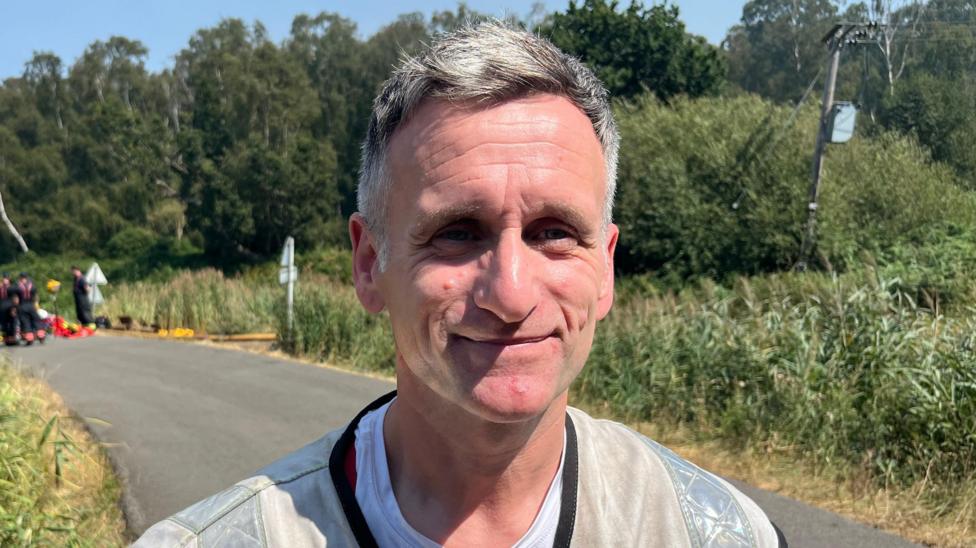
What conditions are firefighters facing?
Crews are dealing with extreme heat, falling trees and thick smoke while wearing protective gear designed to shield them from external temperatures, all while the fire itself burns at scorching levels underfoot. Swales described the scene at the heart of the blaze in stark terms.
It's indescribable in the centre: you've got peat on fire, you've got trees falling down around you, so we've not only got to try and deal with the fire, we've got to make sure our people are safe.
He said the combination of heat and physical danger made this one of the toughest operations his crews had faced, adding that the protective clothing itself becomes part of the problem.
It is boiling in the bag I would suggest on our crews.
Why is this fire proving so hard to put out?
Peat forms over millions of years from partially decomposed vegetation, and fires that take hold within it can smoulder underground for extended periods, making them notoriously difficult to detect and extinguish. Because such fires often produce little visible flame or smoke, they can spread unnoticed long before crews are able to respond.
Swales explained that firefighters are effectively battling two blazes simultaneously — one above ground in the vegetation and another burning through the peat itself.
Peat fires, by their nature burn into the ground, as you have the vegetation above the ground and that burns as well so we're working on two fires at once.
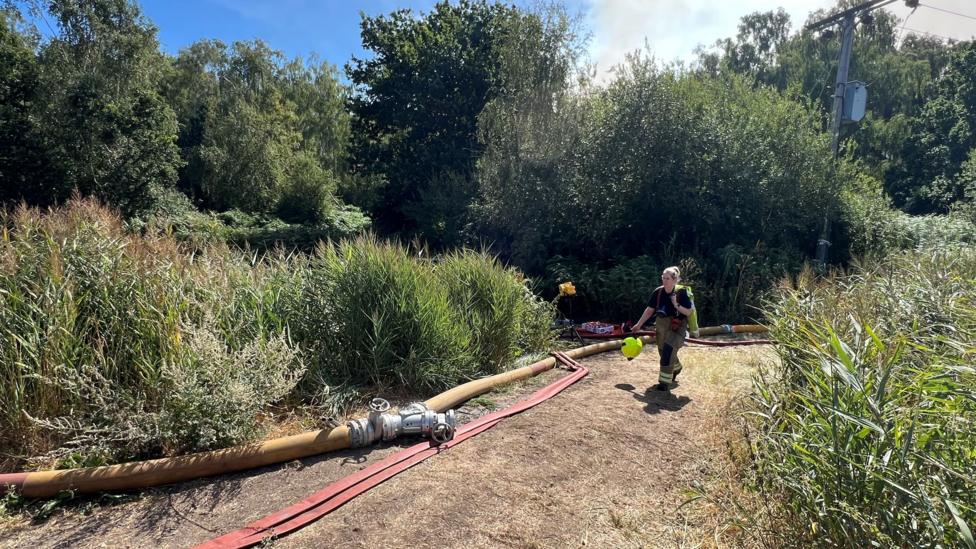

On Tuesday, fire chiefs adjusted their approach in an effort to conserve resources and give exhausted crews a chance to recover ahead of further callouts expected during the ongoing hot weather.
It will allow us to get the rest [and] the breathing space for the inevitable more shouts and more calls that are going to come with that hot weather through the week.
What new tactics are being used to fight the blaze?
Helicopters have been drawing water from Crown Lakes in Farcet to douse sections of the reserve considered too hazardous for ground crews to approach, according to a live coverage report. Incident commander Vicky Best said the operation was expected to continue for at least the remainder of the week, with around 14 firefighting units reported at the scene as crews worked to contain the fire.
How does this connect to earlier fires at the site and beyond?
This is the second blaze to strike Holme Fen in as many weeks, following an earlier fire on 27 July that drew more than 40 firefighters and was described as "deep seated" within the peat, making it likely to burn for an extended period. That initial fire is being treated as suspected arson, and Cambridgeshire Police has appealed for information from the public. Our earlier coverage detailed how more than 80 firefighters tackled the second blaze at the reserve as investigators continued looking into the cause of the first.
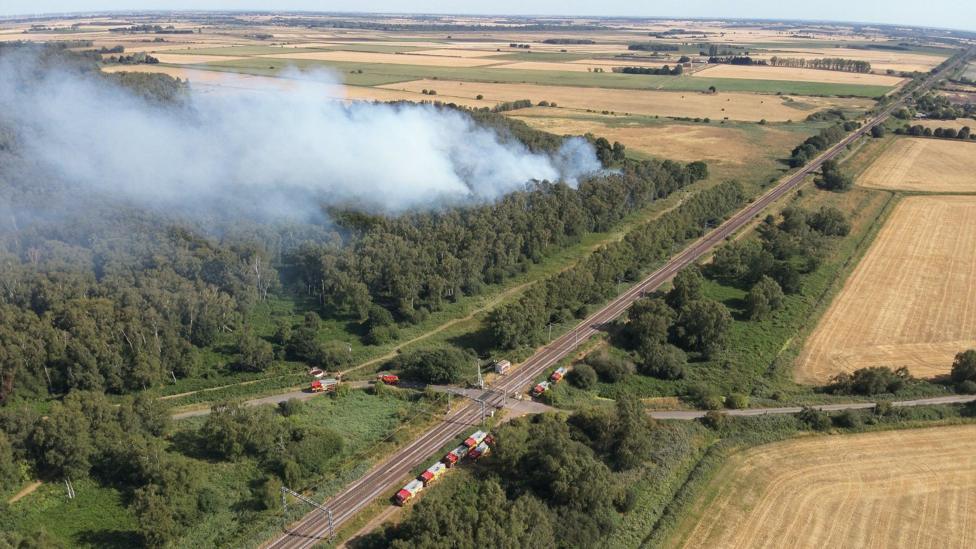
The Holme Fen fires form part of a wider pattern of wildfire activity across the region this summer. Southern Great Britain was placed in the highest-risk band for wildfire danger in a European forecast covering 6 to 12 August 2026, according to the EU's Joint Research Centre. The same source reported that the total area burned by wildfires across Europe had reached 542,926 hectares as of 10 August 2026.
How is the fire service managing the strain on resources?
Brigades from across the East of England — including Cambridgeshire, Norfolk, Suffolk, Northamptonshire, Bedfordshire, Hertfordshire and Essex — have joined forces to fight the flames, and extra crews have been called in from Merseyside to help. Swales said the sustained response had placed enormous strain on personnel and their families.
We've got our whole-time crews here who are full-time firefighters, we've got our on-call crews here who are doing their normal day jobs, and in the background we've got all their families that are not seeing their loved ones.
He thanked crews, support staff and volunteers for keeping the operation running under demanding circumstances.
This is a massive operation to keep going, and to keep people rested and relaxed as well as working really hard, and that keeps that machine going.
What happens next?
Fire crews are expected to remain on site at Holme Fen for at least the rest of the week, according to incident commander Vicky Best, as suppression and monitoring work continues across the affected peatland.
Key Facts
- About 50% of the 660-acre (270-hectare) Holme Fen Nature Reserve had burned by Tuesday.
- Internal fire temperatures reached up to 60C (140F).
- Helicopters are drawing water from Crown Lakes in Farcet to reach inaccessible areas.
- Around 14 firefighting units were at the scene, with brigades from seven counties and extra crews from Merseyside assisting.
- The earlier 27 July fire at the same site is being investigated as suspected arson.


