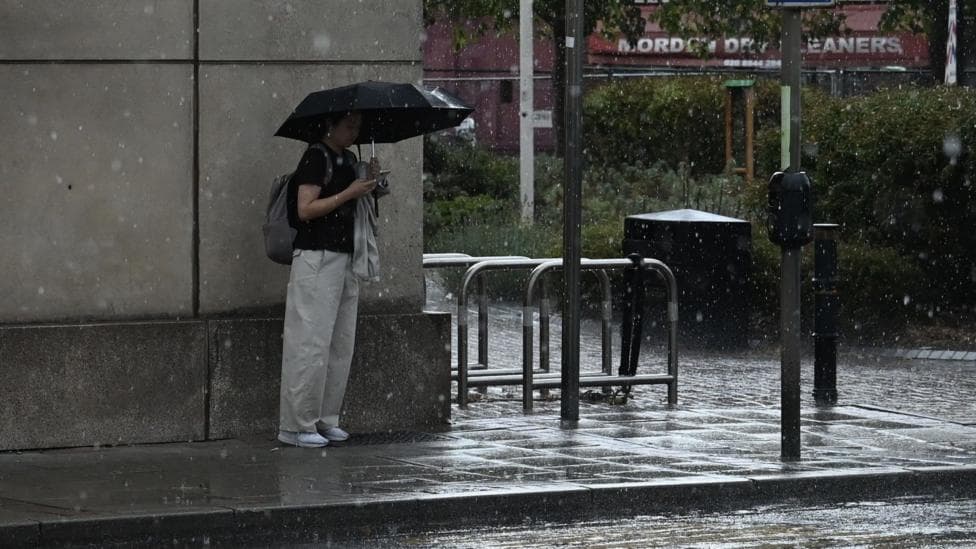
During Britain's record-breaking hot summer of 2026, a dispute erupted on social media over the true drivers of global warming. Reform's deputy leader Richard Tice shared an article suggesting that falling air pollution, rather than carbon dioxide, was responsible for rising temperatures. While his core claim was incorrect, the underlying science he distorted reveals something far more significant: our planet may be heating considerably faster than climate models have long predicted.
The burning of fossil fuels produces two distinct forms of pollution with opposing effects on temperature. Carbon dioxide traps heat in the atmosphere, warming the planet. Sulphur dioxide, by contrast, forms tiny particles that reflect sunlight back into space, partially offsetting that warming. As governments worldwide have implemented clean-air policies—such as the US Acid Rain Program launched in the early 1990s—sulphur emissions have plummeted while carbon dioxide levels remain near record highs. Scientists increasingly suspect that the loss of this cooling effect is subtly accelerating global warming.
The past three years have been the three warmest ever recorded. According to reporting on Met Office forecasts, 2027 is very likely to replace 2024 as the warmest year on record, driven by a combination of a strong El Niño and ongoing human-caused warming. Yet away from social media, the debate over Tice's claims has raised an even more troubling question: is the climate actually more sensitive to greenhouse gases than scientists have assumed, and might it be changing more rapidly than feared?
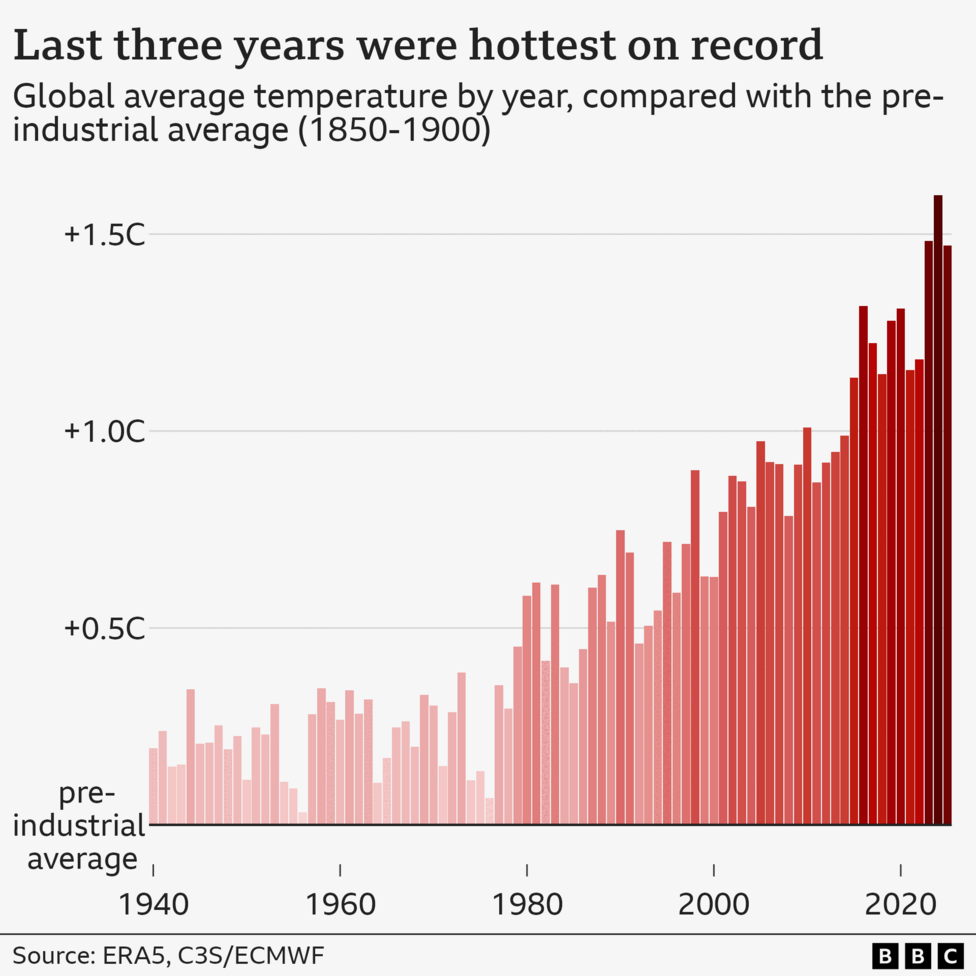
Has the underlying rate of warming accelerated?
Global temperatures fluctuate naturally from year to year due to phenomena like El Niño, a periodic warming of the Pacific Ocean. A sequence of record-hot years does not automatically indicate that the fundamental pace of warming has increased. To identify the true trend, researchers must filter out these natural variations.
Reto Knutti and colleagues at ETH Zurich have developed methods to strip away the effects of El Niño and other natural oscillations to reveal the underlying warming trajectory.
It's pretty clear that the rate of warming has accelerated,says Knutti, a professor of climate physics at the Swiss institution and a former coordinating lead author for the IPCC, the UN-backed body responsible for the world's most authoritative climate assessments. A separate study published in 2026 reached an identical conclusion after accounting for several major natural influences.
Aerosols appear to be playing a significant role in this acceleration. When coal and oil burn, they release sulphur dioxide, which transforms into tiny particles called sulphate aerosols. These particles are highly reflective and bounce some sunlight away before it can reach and warm the planet's surface. According to a 2026 analysis of aerosol cooling effects, roughly 75 million tonnes of sulphur are emitted annually from fossil-fuel burning, and this aerosol cooling currently masks about 0.5°C of warming.
How do aerosols cool the planet?
Sulphate aerosols function somewhat like dust accumulating on greenhouse windows. The more dust gathers on those panes, the less sunlight penetrates inside, and the slower the greenhouse warms initially. Dr Øivind Hodnebrog, a principal researcher at Cicero, the Norwegian climate research institute, has investigated how declining aerosol pollution influences the climate.
Sulphate aerosols, they are really small particles, but they are bright particles,he explains.
Beyond reflecting sunlight, aerosols cool the planet by altering cloud formation. Aerosols function as microscopic seeds around which water vapour condenses, making certain clouds brighter or more persistent. Maritime pollution can even generate bright trails through marine clouds visible from satellites. Consequently, more aerosols produce brighter clouds and greater reflection, resulting in reduced warming.
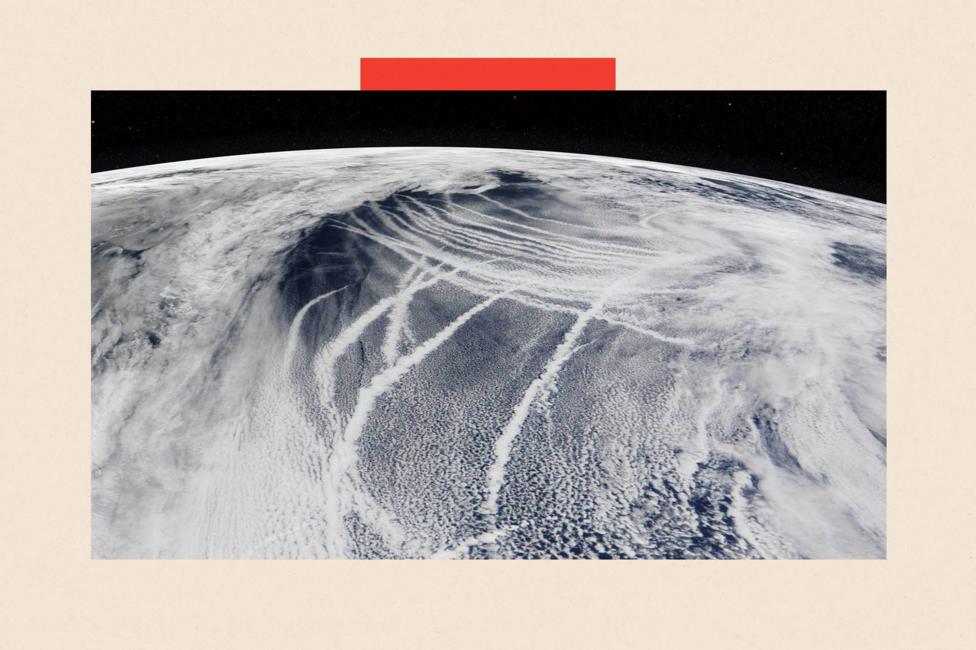
Yet sulphur pollution carries severe consequences for human wellbeing—it infiltrates lungs and impairs breathing—and generates acid rain, which devastates forests and aquatic ecosystems. Nations have therefore invested decades in reducing it. Emissions have declined substantially across Europe, North America, and China, while new maritime regulations have also curtailed sulphur pollution from shipping.

In the greenhouse analogy, this resembles wiping dust from the windows, permitting more sunlight to enter. Critically, while carbon dioxide persists in the climate system for centuries, sulphate aerosols remain in the atmosphere for merely days or weeks. When sulphur emissions fall, their cooling effect vanishes almost instantaneously.

How much warming is the loss of aerosol cooling adding?
The effect is most pronounced in regions where sulphur pollution has declined most sharply. One investigation estimates it has contributed roughly half a degree to summer warming in western-central Europe since 1980. Prof Piers Forster, a climate scientist at the University of Leeds and a senior author of the IPCC's most recent assessment, calculates that declining aerosol pollution may currently be contributing approximately 0.05°C to 0.1°C of warming annually.
However, aerosols account for only part of the recent acceleration in warming. Greenhouse gases remain far more consequential. Forster estimates they are presently contributing around 0.2°C of warming globally per decade.
It is a very significant contribution,he states regarding the aerosol effect,
but it is not as important as the greenhouse gas contribution by quite a long way.
The aerosols have masked some of the greenhouse gas warming from earlier,is how Hodnebrog characterises it. The term "masked" carries particular significance. Cleaner air is not generating the underlying warming; rather, it is eliminating some of the cooling that had previously restrained that warming. If cleaner air explains only part of the recent acceleration, what other factors are at work?

What else is driving the acceleration?
To investigate further, scientists examine the Earth holistically: the energy it absorbs from the Sun versus the heat it radiates back into space. Scientists term this difference Earth's energy imbalance. Cleaner air constitutes part of this picture. Fewer sulphate particles mean less sunlight is deflected—the greenhouse windows are cleaner. For an extended period, the Earth has absorbed more energy than it loses, and that surplus drives planetary warming. Knutti reports that this imbalance has roughly tripled over the past two decades, though the precise magnitude depends on which years are compared.
Greenhouse gases function primarily by obstructing heat's escape into space. Yet when examining Earth's energy imbalance, scientists discover that more sunlight is also entering—and therefore more heat available for absorption. What else might be permitting additional sunlight to penetrate?
Much of that change appears connected to clouds, which have already featured prominently in this narrative. Sulphur pollution can render certain clouds brighter and longer-lived, reflecting more sunlight away. Yet global warming itself modifies clouds. As ocean regions warm, low cloud cover can diminish. This matters because clouds are reflective while the ocean beneath is dark. Removing cloud cover allows more sunlight to reach the sea, where much is absorbed as heat. This generates a feedback loop: warming reduces cloud cover, permitting more sunlight entry, producing additional warming.
Oceans are unquestionably heating. The World Meteorological Organization reports that oceans have warmed more than twice as rapidly over the past two decades compared to the period between 1960 and 2005. Dr Paulo Ceppi, a climate physicist at Imperial College London, contends that his research indicates this feedback mechanism between climate change and clouds is more significant than sulphur pollution in explaining the recent decline in low clouds.
Could climate sensitivity be higher than thought?
Substantial uncertainty persists. Scientists acknowledge that the impacts of cleaner air, natural variations, and warming's own effects are deeply intertwined. When asked how much of the cloud change originated from each factor, Knutti's response was direct:
We don't know.
This uncertainty becomes particularly consequential because clouds represent one of the most challenging phenomena to simulate in the computer models scientists employ to project future warming. Different models produce varying warming predictions for identical greenhouse gas emissions. Scientists designate this variability "climate sensitivity"—the degree to which climate responds to gases like carbon dioxide.
Recent observations provide Knutti and colleagues with a novel approach to evaluate these models. They discovered that models most accurately predicting recent warming and the rise in Earth's energy imbalance are also those incorporating greater climate sensitivity. In other words, models forecasting more warming appear most accurate. Their analysis proposes that equivalent emissions could generate approximately 25% more warming than previously calculated.
A study published in the journal Science last year points toward comparable conclusions. Models projecting relatively modest warming struggled most to reproduce the observed increase in Earth's energy imbalance. Under current government policies, the world is projected to experience roughly 2.8°C of warming by century's end. Forster suggests that if this emerging evidence proves accurate, the identical emissions trajectory could instead produce warming approaching 3.5°C.

According to a recent peer-reviewed paper in Earth System Dynamics, transient climate response was estimated at 1.81 K, with a very likely range of 1.28 to 2.33 K, marginally exceeding estimates derived from data only through 2019. Additionally, Columbia University material from 2026 argued that climate sensitivity may reach 4–5°C for doubled CO2, with aerosol cooling having diminished more rapidly since 2015.
Should we be alarmed by these findings?
These conclusions warrant serious consideration, yet important reasons for restraint exist. Warming appears to have accelerated, but Forster cautions that this does not guarantee continuation. He emphasises that the recent observations underpinning these estimates span a relatively brief timeframe.
We have to be very cautious of how we go about interpreting observations that last for one or two decades,he states. The satellite record remains short, natural variations are substantial, and these recent studies do not overturn prior estimates. Nevertheless, certain scientists express concern.
Summer 2026 was confirmed as the UK's hottest on record, with provisional Met Office data revealing an average of 16.5°C and the top six warmest UK summers all occurring this century. Met Office scientists determined that this summer's record-breaking heat was rendered approximately 130 times more probable by human-induced climate change.
What are the implications for future climate impacts?
In a narrow sense, yes—cleaning the air is making global warming marginally worse. Eliminating sulphate pollution removes some cooling that had counteracted greenhouse warming, genuinely contributing to recent acceleration. However, cleaner air has not caused climate change itself. The aerosol narrative may partially explain that acceleration, yet the broader evidence raises a more troubling prospect: that climate responds more powerfully to greenhouse gases than central estimates have presumed. If accurate, equivalent emissions could generate greater warming than anticipated. Climate risks intensify with every fraction of a degree of warming, with potential for increasingly severe heatwaves, floods, droughts, and wildfires as temperatures climb.
Some of the science examined here is intricate and significant questions remain unresolved. On the fundamental point, however, the science is unambiguous: the more greenhouse gases humanity emits, the warmer the planet becomes. If climate truly proves more sensitive than previously believed, reducing emissions rapidly becomes even more imperative.
What happens next?
The Met Office has indicated that 2027 is very likely to become the warmest year on record. Later 2026 publications and climate assessments are anticipated to further refine estimates of climate sensitivity and aerosol-driven warming, incorporating the implications of record 2026 temperatures. These refinements will be crucial for understanding whether the acceleration observed over recent years represents a temporary anomaly or a fundamental shift in how rapidly Earth's climate is changing in response to human emissions.