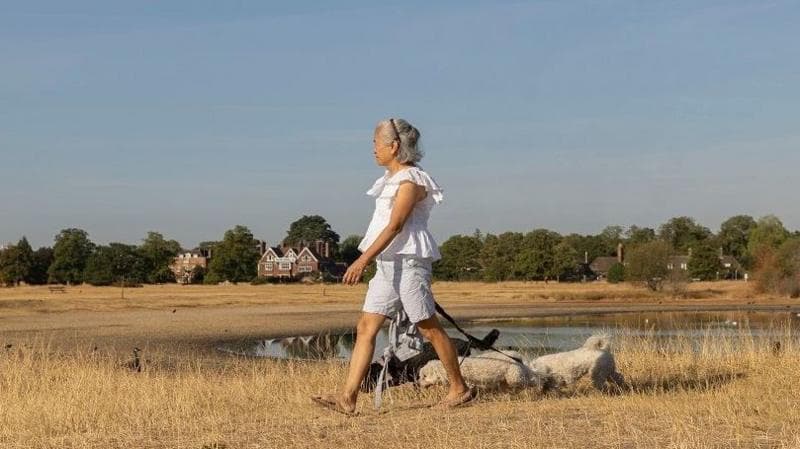
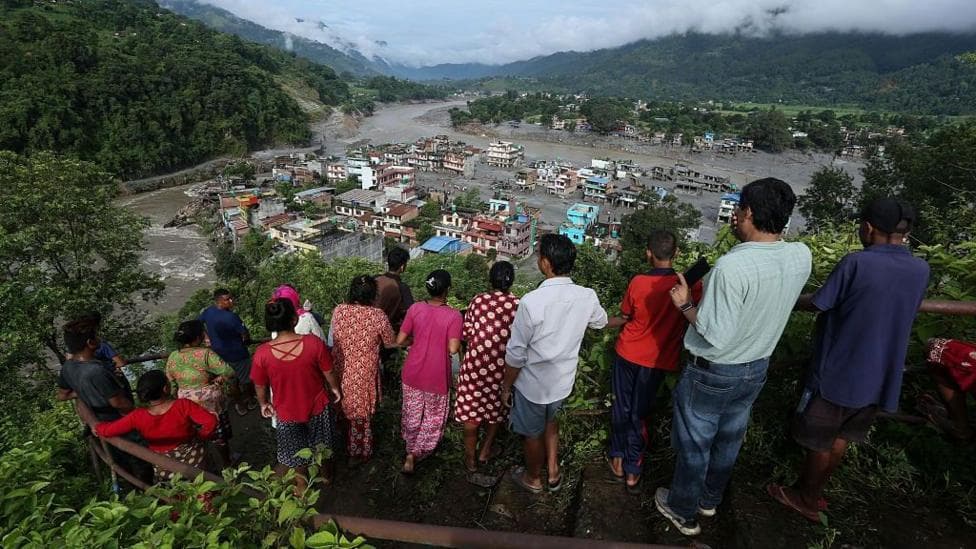
England and Wales are on course for their driest July on record, according to the Met Office, after relentless heatwaves and very little rain left large parts of the UK in drought. England has seen just 5.6mm of rainfall up to 30 July, equivalent to 8% of its long-term meteorological average for the month and less than half of the previous record of 13.4mm set in 1911.
Wales has recorded 7.9mm of rainfall, also 8% of its long-term average for the month and almost a third of the previous record of 22.6mm, also set in 1911. The UK as a whole is currently on course for its third driest July, and its driest nationally since 1868.
Why are drought and wildfire risks rising?
Dry conditions have worsened after an official drought was declared across more than half of England and parts of Wales. On Wednesday the Environment Agency declared a "flash drought" across more than half of England, where water is being used up much faster than nature can replenish it.
Half of England and the whole of Wales are officially in drought, and the announcements this week by England’s Environment Agency and Natural Resources Wales mark the third such event over the past five years. They came after a spell of prolonged hot weather, which has fuelled huge wildfires and left farmers, wildlife and protected habitats running out of water.
England had just 7% of the long-term average rainfall for July, and southern England just 1%, according to the second report. It said the dry spell has damaged greenery in parks, protected land and sports fields, while shrinking rivers and lakes. The Thames at Reading has recorded its lowest ever level.
Wisley in Surrey has gone 44 consecutive days without recording any rainfall as of 30 July. Drought conditions had already been declared across North Wales and the Upper Severn river basin, according to Natural Resources Wales.
Scotland does not declare drought but monitors "water scarcity". Some parts of eastern Scotland are in the most extreme category of "significant scarcity", according to the Scottish Environment Protection Agency.
The drought conditions have caused significant impacts, including low river flow and early harvests. More than 20 million people are already under hosepipe bans in a bid to conserve water, while the second report said approximately 23 million people across England and Wales are affected by water restrictions.
Water companies are not currently expecting a threat to drinking water supplies, as record winter rainfall means reservoirs are still close to expected levels.
The hot weather and lack of rainfall have created tinder-dry conditions, which have exacerbated the risk of wildfires spreading.
A major incident was declared in Suffolk on Wednesday as firefighters tackled a wildfire "the size of 200 football pitches".
Firefighters responded to 393 wildfires across England and Wales in July, making it the busiest month on record and placing significant pressure on crews and resources, according to the second source. The same report said several people have already been evacuated owing to the threat of fire, compared with approximately 50 in 2025, which it described as the worst year for wildfires on record so far.
In Scotland, a wildfire in the Cairngorms burned for two weeks, destroying 10 sq miles (25 sq km) of moorland. The second report also said Cairngorms National Park had suffered the worst wildfire in living memory, while smoke from fires in the Rhinogydd mountains in north Wales could be seen from space.
Northern Ireland is not currently in drought.
Temperatures climbed to 35.5C in July, as several areas experienced their fourth heatwave of the year.
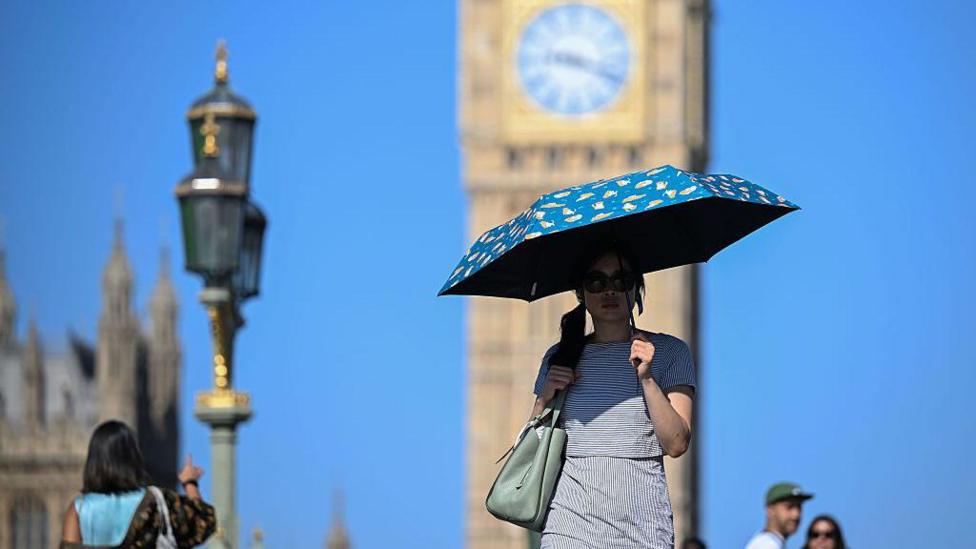
How severe has the heat been this summer?
The last week of June 2026 saw record-breaking temperatures across parts of the UK and Europe. While some people enjoyed the sunshine, the heat caused trains, schools and emergency services to buckle.
England is on track this year for the highest number of heat-related deaths since records began, according to estimates by the UK Health Security Agency (UKHSA).
In a preliminary assessment, the agency said there were an estimated 2,877 heat-related deaths during the May and June heatwaves, almost double the figure for the whole of last year.
The summer so far has also seen temperature records tumble.

There have now been seven days with temperatures over 35C, beating the previous record of five set in 1976 and equalled in 2020.
There have been 31 days with temperatures over 30C, not far off the record of 34 days set in 1995 and comfortably ahead of 1976, which had 24 days.
There is still plenty of time left this summer to equal or beat that mark.
What are farmers and climate scientists saying?
Farmers across the country have been forced to harvest early or are worried about losing crops if they run out of water. Riverford Organic Farmers in Buckfastleigh, Devon said this growing season has been one of the hottest and driest the business remembers in the last 40 years.
Luke King, the farm’s supply chain and technical director, said: "Scarcity of water has become a big challenge for us, but what has compounded this has been the heat stress on plants. All but one of our [four] reservoirs have now run dry, which is something we’d never normally expect so early in the season. What we currently have is no longer sufficient."
The team has begun harvesting earlier in the day to protect crops and pickers, and dedicate lots of time and resources to irrigation.
"Even with irrigation, you can’t water everything at once," said King, "so difficult decisions have to be made about prioritising crops and, even with water, if the temperature is too high the water can evaporate very quickly."
Climate scientist Dr Chloe Brimicombe of the University of Oxford said both adaptation to and mitigation of the effects of a warming planet are urgently needed.
"This summer has been a compounding of dry weather, leading to droughts and hot weather and high temperatures leading to heatwaves with these conditions also leading to wildfires. It is a strong indication that we need better long-term planning. Climate change is not a future problem; it’s a challenge for right now."
The second source said the Met Office predicts the climate crisis will make UK summers 1C-6C hotter and up to 60% drier by 2070, compared with 1990. It also said the pattern of wet-then-dry weather is encouraging vegetation to grow and then dry out, creating ideal fuel for fires.
What other impacts are being reported?
The dry weather has also revealed archaeological remains in dried-out crop and grassland around the country, including Neolithic, Bronze and Iron Age structures and practice trenches from the First World War.
Roman-era buildings have been uncovered at Caerhun Roman fort in Conwy, while the outline of an ornate 17th-century garden at Chatsworth House in Derbyshire is visible once again after first being revealed by dry weather in 2018 and 2022.
In London’s parks — important green spaces in a densely populated city — people have still tried to enjoy the summer sunshine despite the parched conditions. The Royal Borough of Greenwich, which includes Greenwich Park and open spaces such as Blackheath and Woolwich commons, is hoping normal rainfall will rehydrate its parched green spaces.
Councillor Adel Khaireh said: "We’re particularly grateful to local people such as the network of Friends of Parks groups who help us water trees and plants across the borough, and support our iconic parks on a voluntary basis."
You can read the latest monthly outlook from BBC Weather here.
Get in touch
Do you live in one of the affected regions? Do you have any questions about the drought?

More than half of England in drought, Environment Agency declares
Are 'heat spikes' becoming more common?
Bumblebees are struggling in UK heatwaves - but you can help them
Key Facts
- England and Wales are on course for their driest July on record, according to the Met Office.
- Half of England and the whole of Wales are officially in drought.
- Firefighters responded to 393 wildfires across England and Wales in July, according to the second source.
- Temperatures climbed to 35.5C in July, as several areas experienced their fourth heatwave of the year.