

Daniela Largo Sánchez, a 32-year-old woman, was rescued alive on 12 August 2026 after spending roughly 36 hours trapped beneath a collapsed building in Pereira, western Colombia, following the magnitude-7.4 earthquake that struck the region two days earlier. Firefighters freed her after a rescue operation lasting about ten hours, digging a tunnel beneath four concrete slabs to reach her.
According to the Straits Times, Largo was taken by ambulance to San Jorge Hospital for treatment after being freed, and her arm had been pinned by a metal door inside the wreckage of what the outlet described as a four-story building that had pancaked to the ground.
How was she found and freed?
A local resident heard Largo calling for help from beneath the debris, according to her mother, who spoke to AFP news agency. Once emergency crews arrived, they located her precise position using a small camera lowered into the rubble, though her rescue was complicated by four heavy concrete slabs blocking the way to her.
Local firefighters worked alongside colleagues sent from the capital, Bogotá, and the national police force's disaster response team to dig two separate tunnels. One tunnel, dug from above, allowed rescuers to supply Largo with oxygen while work continued; a second tunnel, dug from below, was ultimately used to pull her free. The Straits Times reported that the operation involved roughly 50 volunteers working alongside dozens of specialist rescue personnel.
What did officials and family say?
Colombian President Abelardo de la Espriella marked the rescue on social media, calling it:
news which fills us with hope
Largo's mother said the family had been desperate for word of her daughter, adding:
at home, her 12-year-old son is waiting for her
How many people have been affected overall?
Official figures cited in the original reporting put the national death toll at 241, with 3,700 people injured and hundreds still unaccounted for. Pereira, in Colombia's coffee-growing region, had recorded 79 deaths, the second-highest total behind Cali's 95, according to the Association of Colombian Capital Cities (Asocapitales).

Those figures have since shifted. According to G1, authorities in Cali later revised the city's death toll down from 95 to 74, which in turn cut the national earthquake death toll from 254 to 233. The discrepancy between the earlier count of 241 nationally and the revised figure of 233 reflects ongoing changes to casualty figures as authorities continue verifying records.
In Pereira specifically, at least 92 buildings collapsed, with 15 people still known to be trapped and 37 more reported missing, according to Asocapitales. The Straits Times reported that rescuers believed another person remained trapped in the rubble in Pereira as crews continued searching the damaged building.
What is happening in Cali?
In Cali, Colombia's third most populous city, more than 200 people remained trapped as of 16:00 local time on the Tuesday following the quake. Eighty-seven people had been rescued in the city by that point.
Cali's mayor imposed a night-time curfew and ordered soldiers to patrol the worst-affected areas, saying:
We need to ensure that the rescue work can be carried out safely
He added that there was still hope of finding more survivors and that authorities would do everything possible to free those still trapped.
Where and when did the earthquake strike?
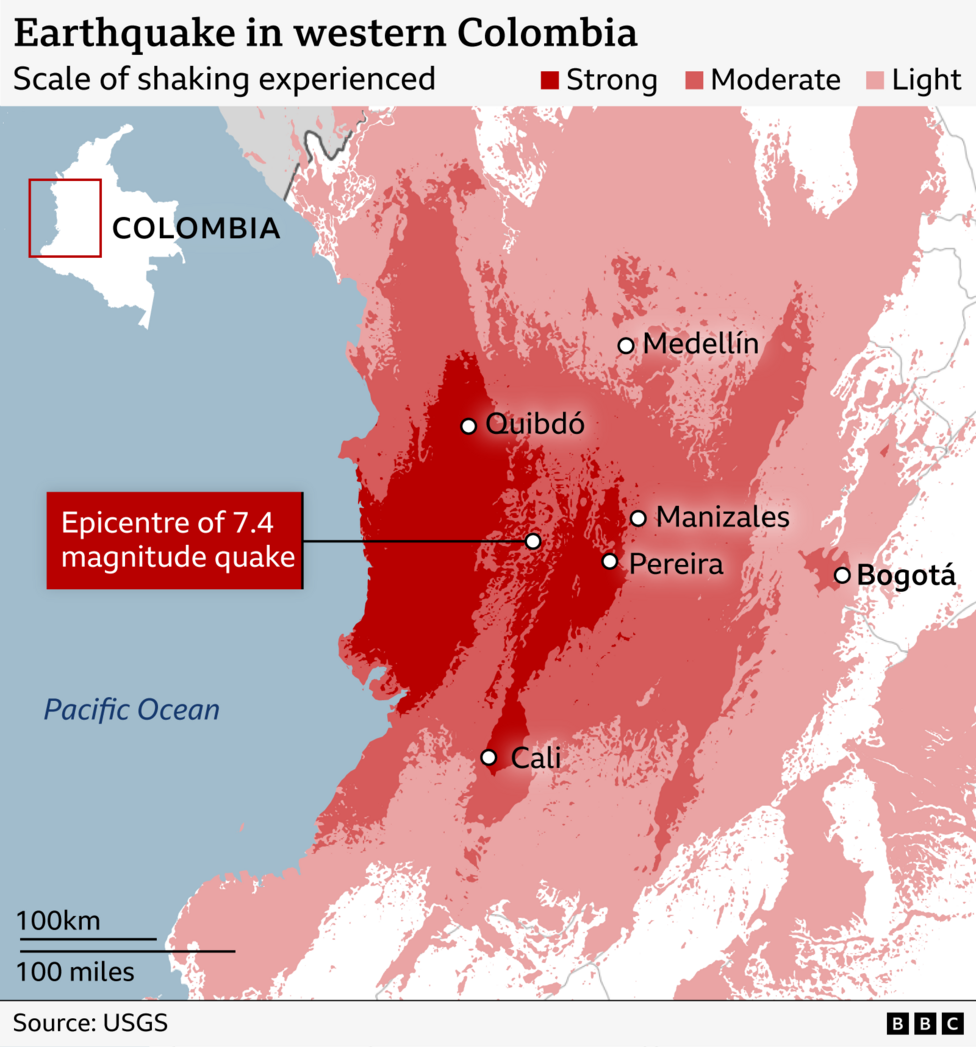
The magnitude-7.4 earthquake struck at 07:34 local time (12:34 GMT) on Monday, 10 August 2026, with its epicentre near the village of San José del Palmar in Chocó province. Tremors were felt across a wide area, and seismometers closest to the epicentre recorded shaking that lasted between 90 seconds and two minutes. More than 100 aftershocks have been recorded since the initial quake.
The disaster follows an earlier report of the same earthquake, which noted that the magnitude-7.4 quake collapsed buildings in Cali and Manizales and suspended operations at six regional airports, in addition to the damage later confirmed in Pereira.
France24 reported that the building in which Largo was trapped was a hotel in central Pereira, and that her family waited for news throughout the 36 hours as rescue teams continuously cleared rubble at the site.
What happens next?
Doctors at San Jorge Hospital were expected to assess Largo's condition following her rescue, according to France24. In Pereira, search efforts were continuing for the person still believed trapped in the collapsed building, while rescue and recovery operations remained under way in Cali and other affected areas as authorities continued to verify casualty figures.
Key Facts
- Daniela Largo Sánchez, 32, was rescued after roughly 36 hours trapped in Pereira on 12 August 2026.
- The rescue operation lasted about ten hours and required two tunnels dug through four concrete slabs.
- Authorities revised Cali's death toll from 95 to 74, lowering the national toll from 254 to 233, according to G1.
- At least 92 buildings collapsed in Pereira, with 15 people still trapped and 37 missing.
- More than 200 people remained trapped in Cali as of 16:00 local time the day after the quake.


