

A wildfire tearing through Belgium's largest nature reserve has more than doubled in size within 24 hours, officials confirmed on 16 August 2026, making it the country's biggest blaze on record. Hundreds of emergency personnel have spent a third consecutive day battling the flames in the High Fens natural park, with two nearby villages already evacuated as a precaution.
According to , the fire had consumed roughly 3,000 hectares by Sunday morning and was continuing to advance toward the German frontier. The province of Liège reported that the flames were spreading at an estimated rate of 5 to 10 kilometres per hour, with unpredictable shifts in wind direction complicating firefighting efforts, according to a statement from the provincial governor's office.
How bad has the damage been?
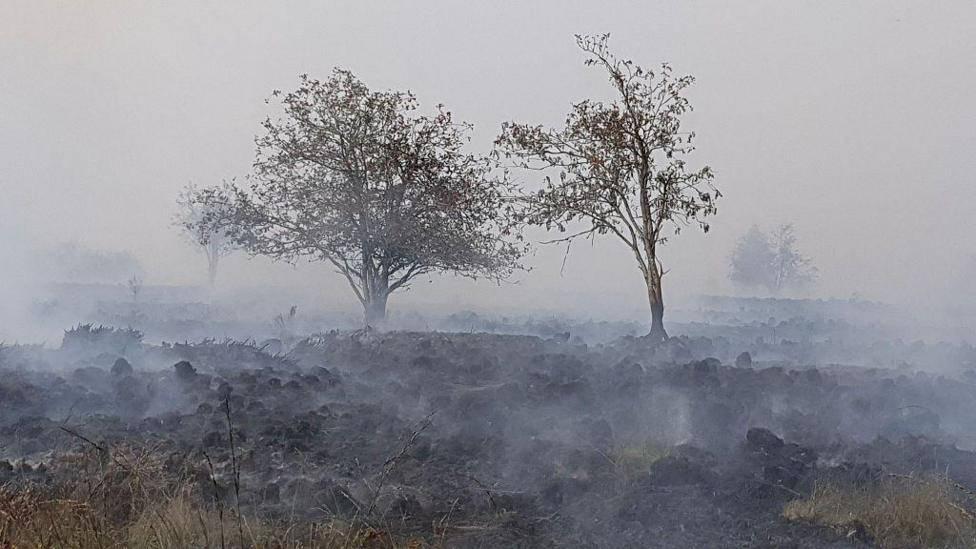
The fire's growth has been dramatic and rapid: it covered just 80 hectares (200 acres) on Friday, expanded to 850 hectares by Saturday morning, and had reportedly reached around 2,700 hectares by Saturday evening, according to an earlier report, before local officials cited by AFP put the figure at 3,000 hectares early Sunday. Despite the scale of destruction to the landscape, the governor of Liège said no homes had been affected as of Sunday morning, though residents in the surrounding area were contending with significant smoke, per the account.
Who is fighting the fire?
The response has drawn personnel and equipment from across the region. Local farmers drove water tankers into the park near Belgium's eastern border with Germany, working alongside firefighting aircraft and helicopters dispatched from Sweden and the Netherlands. Two water-bombing planes arrived from Sweden on Sunday afternoon to reinforce four helicopters already stationed at the site — two Belgian and two Dutch.
More than 250 emergency workers from Belgium, Germany, Luxembourg and the Netherlands have been deployed to the reserve, according to Al Jazeera. Belgium's military has also joined the operation, sending three Panther fire engines and an additional helicopter to support crews on the ground, according to the Brussels Times. Luxembourg has also sent firefighters to assist, as smoke from the blaze has begun drifting across the border into Luxembourg territory, according to RTL Luxembourg.

Belgian Interior Minister Bernard Quintin said that two fronts of the fire — those advancing toward Jalhay and Monschau — had been brought under control. Even so, authorities cautioned that conditions on the ground remain difficult and that aerial support continues to be essential in containing the blaze.
Why is the fire so hard to contain?
Officials have pointed to a combination of intense heat and unforgiving terrain as the central obstacles facing crews. The reserve's mix of bog-like ground, moorland and dense forest has made it especially difficult to access and extinguish. Nicolas Yernaux, spokesman for the regional authorities in Wallonia, said on Saturday that the fire ranked as the country's worst in modern memory.
Firefighters had "allowed parts of the heathland to burn because the area is very difficult to access."
Because rescue teams have been unable to reach the point where the fire originated, its cause has not yet been established. The blaze first broke out on Friday, 14 August 2026, within the High Fens park — a sprawling expanse of woodland and heath near the German border that is notoriously hard for ground crews to penetrate, according to Le Monde.
Is this part of a wider pattern across Europe?
Belgium's fire is one of several major blazes reported across the continent over the weekend. At least two people died in forest fires on a Greek island off the coast of Athens on Sunday. Additional wildfires have been reported in Croatia, Spain and Serbia since Friday, following a summer marked by extreme heat that has left large areas of Europe either burning or scorched.
In south-western France, local officials in Landes said a wildfire forced the evacuation of 650 residents on Saturday. That blaze began on Thursday and reignited on Saturday, prompting the deployment of more than 500 firefighters. Separately, the European Union's climate monitoring service, Copernicus, has confirmed that western Europe just experienced its hottest June-to-July period on record.
What happens next?
Authorities say the fire in the High Fens remains uncontrolled in parts and will continue to depend heavily on aerial firefighting support as crews work through the coming days, according to Le Monde. The province of Liège has urged residents to continue avoiding the affected sector while emergency operations are ongoing, according to the provincial governor's office. Further updates on containment are expected as international crews continue their response near the German border.
Key Facts
- The fire has grown from 80 hectares on Friday to roughly 3,000 hectares by Sunday morning, per local officials cited by AFP.
- More than 250 emergency personnel from Belgium, Germany, Luxembourg and the Netherlands are involved in the response, according to Al Jazeera.
- Belgium's armed forces have sent three Panther fire engines and a helicopter to reinforce firefighting crews, per the Brussels Times.
- No homes have been affected so far, though smoke has drifted into neighbouring Luxembourg, according to RTL Luxembourg.
- The fire's cause remains unknown because rescue teams have been unable to access its point of origin.


