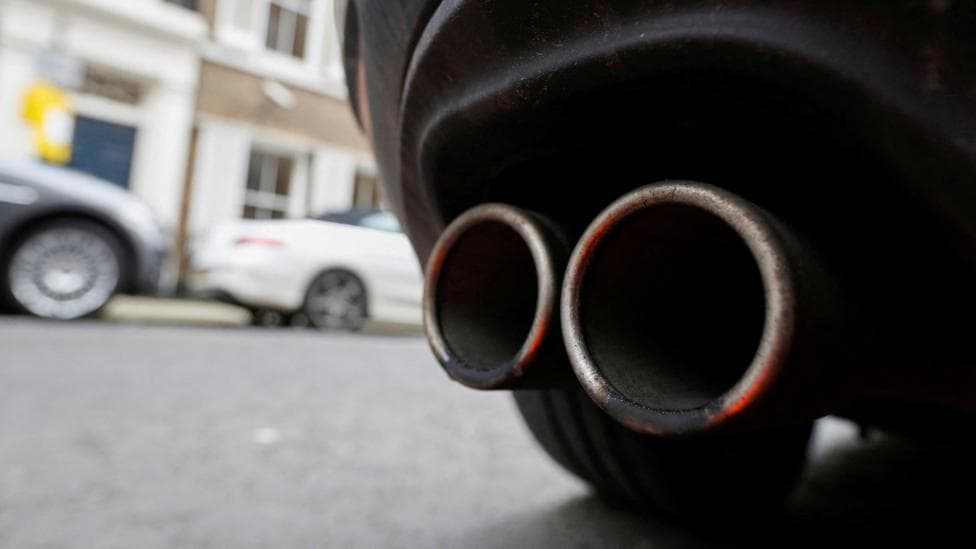
Drivers in Wales who leave their vehicle engine running while parked will face fines ranging from £75 to £150 from 30 September 2026, marking a significant increase from the £20 penalty that has been in place since 2003. The Welsh government introduced this measure to reduce harmful air pollution and protect children's health, particularly in areas around schools and hospitals where vulnerable people spend time.
The previous fixed penalty for idling—the practice of leaving an engine running unnecessarily—had remained unchanged for more than two decades. Under the new regulations approved by the Senedd in March, the Welsh government hopes the substantially higher fines will deter drivers from the habit. The vote passed with 37 politicians supporting the change and 12 opposing it, with no abstentions.
Llyr Gruffydd, cabinet minister for rural resilience and sustainability, described the original £20 fine as "insufficient" and said it was not being used "in the way everyone might envision it". He argued that increasing the available penalty range would serve as a "stronger deterrent" and help protect public health.
"We really do feel we need to step up here, clamp down on this as a problem and make sure we protect people's health and generally it will make communities a better place to live in," Gruffydd said.
The cabinet minister expressed hope that the higher fines would "change the habits of people who are polluting communities and are putting children and vulnerable people's health at risk".
How will the new fines work?
According to Welsh government guidance for local authorities, a fixed penalty notice is not automatic. An authorised local authority officer must first ask the driver to switch off the engine, and the offence only arises if the driver refuses to comply. This means enforcement requires active intervention rather than automated detection.
Each council must set and publish its penalty amount or amounts before issuing notices. According to local authority guidance, councils can choose one amount for their area or vary the penalty depending on the circumstances of the offence. The new fixed-penalty powers apply specifically to emissions offences; guidance clarifies that notices cannot be issued solely for noise associated with idling.
Where are the highest-risk areas?
Areas outside schools have been identified as high-risk sites where emissions pose particular concerns for public health. Hospitals, GP surgeries, care homes and other healthcare facilities are also classified as high-risk locations where vulnerable populations are concentrated.

Professor Isabel Oliver, chief medical officer for Wales, emphasised the serious public health implications of air pollution. She noted that the condition contributes to a range of diseases including heart and lung disease, with children, older people and those with existing health conditions being particularly vulnerable.
"Idling may seem like a small, everyday habit, but it adds up. Every time an engine is switched off rather than left running, we reduce the amount of harmful pollution in the air we all breathe, particularly around schools, hospitals and other places where vulnerable people spend time," Oliver said.
What do parents at schools think?
Reactions from parents collecting children from schools in Wales have been mixed. Anna, who collects her children from Treganna school in Cardiff, welcomed the new measure. She lives close to the school and described the area as "really, really busy because cars are everywhere around here", noting that congestion sometimes took her 45 minutes to travel a short distance.
"For us it's kind of good because it will stop a lot of these cars from parking here," she said.

Wendy Vernon-Fulook, another parent who frequently collects her children on foot, believes the higher fine is beneficial. She acknowledged that leaving engines running harms the environment and said the measure might discourage the practice, though she recognised it may not eliminate it entirely.
"You shouldn't be leaving the car running, obviously it's not good for the environment and it might stop people from doing it. It might not, people might keep doing it unfortunately, but we're trying to encourage people to walk as much as possible, so it can only be a good thing," Vernon-Fulook said.
However, not all parents are convinced the policy will be effective. Chiara Rinaldi expressed scepticism about enforcement, suggesting that police presence at schools during busy periods is unlikely.
"I think they probably have a good principle behind them but I think the reality is nobody is going to enforce them. School runs are chaotic as it is but you're never going to get the police out here are you enforcing fines. It's a great idea but never going to happen," Rinaldi said.

Rhiannon Simmonds questioned whether a "mandatory solution" was the right approach, though she acknowledged the logic behind the policy.
"I'm not sure I agree with it, if a mandatory solution is the way to go about it, but I completely appreciate the logic of what they're trying to do for sure," Simmonds said.
What are the legal rules on idling?
Under rule 123 of the Highway Code, drivers must not leave a parked vehicle unattended with the engine running or leave a vehicle engine running unnecessarily while that vehicle is stationary on a public road. The existing regulations date from 2003, when the £20 fixed penalty was first introduced. If a £20 notice was not paid within the specified period, the amount rose to £40 under the previous system.
When do the new rules take effect?
The amended regulations come into force on 30 September 2026, giving local authorities time to prepare their enforcement procedures and publish their chosen penalty amounts. This follows the Senedd vote in March that approved the change to the fixed-penalty regime for unnecessary engine idling.