Halloween doesn't require a brand new costume or mountains of sweets to be enjoyable. According to The Guardian, experts say you can still create a memorable outfit using materials already at home, avoiding the environmental and financial costs of single-use fancy dress.
The genuine appeal of Halloween lies in the creativity and community experience, not in purchasing new items. Cat Sewell, artistic director and co-CEO of Polyglot Theatre, which specialises in participatory, immersive theatre for children, emphasises that the real value comes from carving out time to play, assembling ridiculous outfits, and experiencing the thrill of moving through the neighbourhood as a family unit.
The value is the community connection, and the risk and scared-ness of knocking on doors, and doing that in a community. And the takeover of the streets again for families.
The environmental stakes are significant. Resource Recycling reports that Americans are expected to spend $4.4 billion on Halloween costumes in 2026, with an estimated 35 million costumes discarded annually—and four in 10 worn only once. Additionally, a 2026 survey of costumes from major retailers found polyester in 96% of sampled items, highlighting the synthetic material problem in mass-produced fancy dress.
What makes a costume work without buying new?
A successful costume depends on imagination and commitment rather than expense, according to Kristen Ahern, founder of Conscious Costume. The trap many families fall into is purchasing plastic dress-ups that are worn once and discarded.
The commodification of Halloween is where the real problems lie. Thinking outside of franchises and characters that someone else has created really can open up a sense of freedom.
Instead of being confined by existing characters, you can invent your own creation from materials already in your home. You don't need premium craft supplies—use what you already possess. Consider the core qualities of what you want to represent, then assemble those elements from your existing wardrobe and household items.
A nature spirit costume requires only green clothing with leaves glued or taped on. An animal costume can be built from a single colour outfit plus a tail and ears fashioned from a wire coat hanger and construction paper or a brown grocery bag. The style trend known as DisneyBounding offers another approach: wearing garments that match the colour and style of a favourite character without a full costume. For example, an all-green outfit with a baseball cap reading "Lost Boys" evokes Peter Pan.
Simple concepts can be surprisingly effective. Ahern describes attending a costume party where someone wore a plain T-shirt decorated with fake blood created using a permanent marker or acrylic paint. This required no purchase and minimal effort. She recommends contacting friends to borrow costumes, accessories or props.
Swap a couple of pieces and now everybody has something new and is happy and excited – it's very simple, sustainable, fast.
How can everyday household materials transform into costumes?
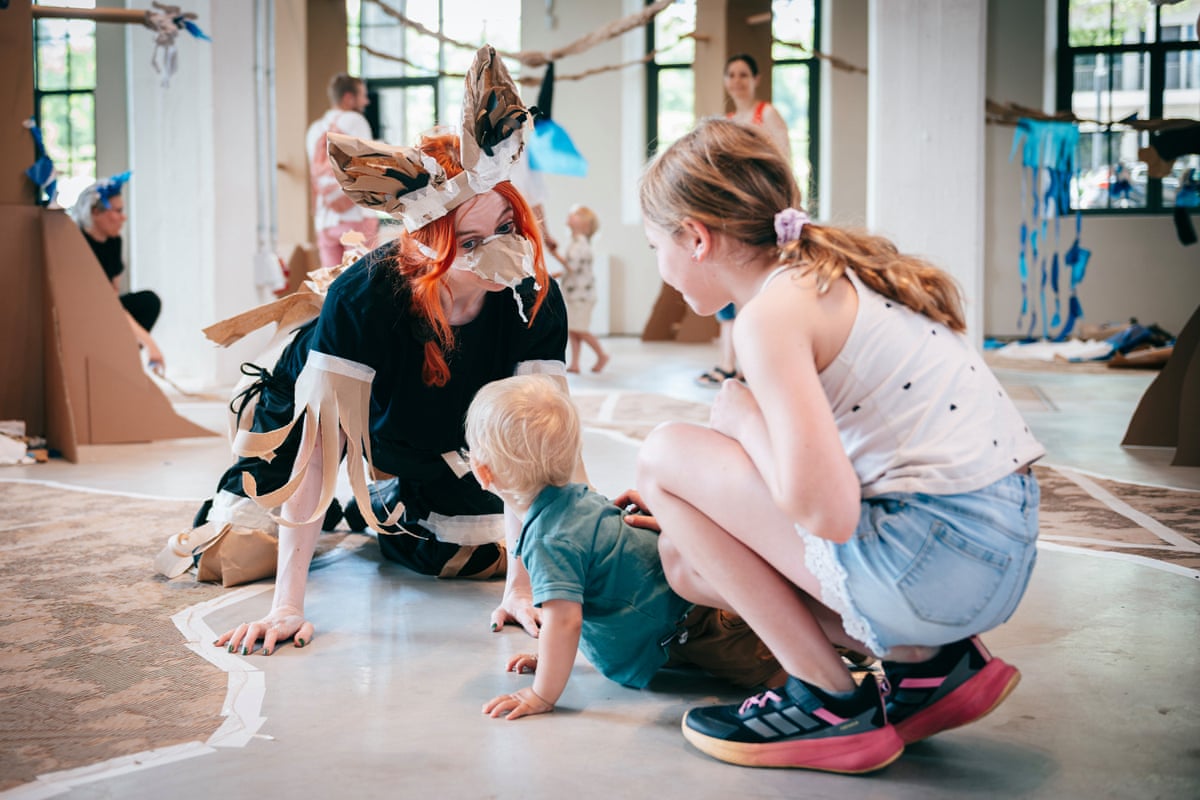
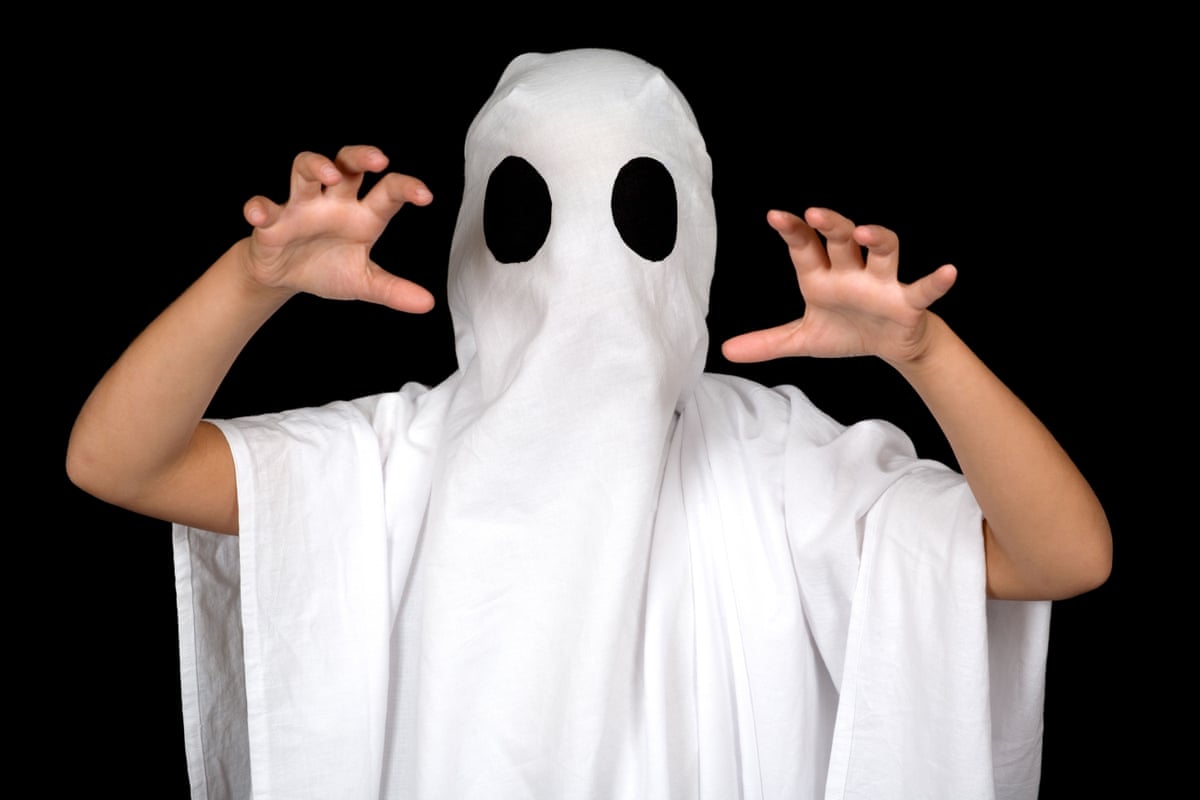
Polyglot Theatre deliberately incorporates everyday materials into its performances to encourage families to continue creative thinking in their daily lives. Simple, open-ended items such as paper, scrap fabrics, scarves and tea towels are ideal for costume-making, according to Sewell. These materials allow for quick ideas and rapid creation without overthinking.
Paper offers remarkable versatility. It can be folded, twisted and scrunched to form ears, tails or other shapes. Different paper weights produce varied effects—tissue paper adds colour and volume, while thicker cardboard creates structure and sculptural form. Packaging and recycling materials work equally well. Paint cereal boxes or attach aluminium foil and old wrapping paper to create a robot head or wild hat. Cut fangs to stick on your chin or make claws for your fingertips. Masking tape, rubber bands and safety pins serve as excellent fastening tools.
There's so much you can do with what's lying around in your house. That has more heart and more humanness to it.
What role do layers and accessories play?
Building character depth requires layers, props, accessories and makeup. For children, consider adding an oversized jacket or large hat borrowed from a parent's wardrobe. A pirate costume might begin with a white shirt, fitted trousers and boots, but adding a bandana, eye makeup, multiple necklaces and fingerless gloves transforms the overall effect and makes the wearer more closely resemble the character.
Unexpected items can serve creative purposes. Umbrellas can be adapted—one person attached dangly objects to an umbrella's edge to become a jellyfish. A black hooded cloak works for numerous characters, but adding round black glasses creates one character while a scythe creates another entirely. Nick Wakerley, a costume designer, notes that scarves function as headbands or sashes, and belts can alter the shape of existing clothing.
Hair and makeup can do a lot of the work too. Most households have a few makeup and hair products around and getting creative with those can help turn ordinary clothes into a costume.
Movement and performance matter significantly. A white shirt, black trousers, slicked-back hair and a small amount of red lipstick at the mouth corner creates a vampire with minimal alteration.
You don't need to cut up or ruin the clothes. How you move and act can do a lot of the work too.
How can household items create grotesque effects?
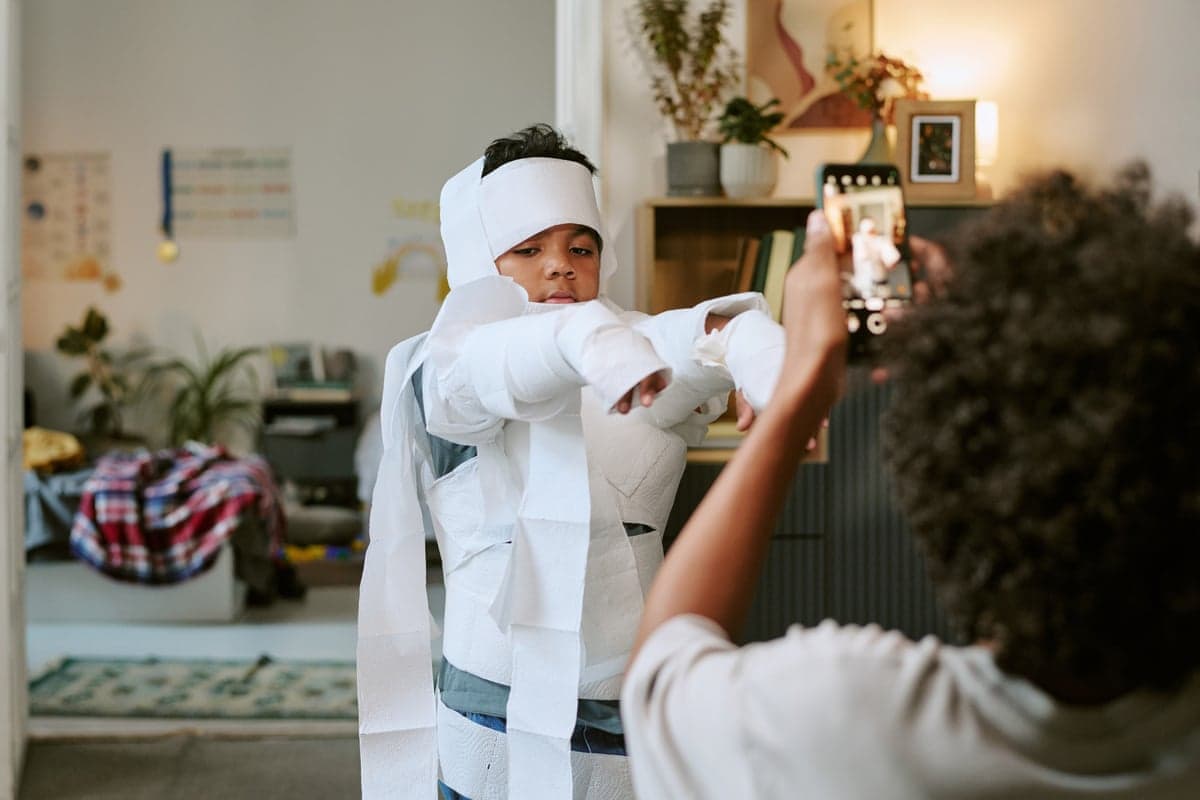
Paula Levis, a costume designer, demonstrates that combining dress-up box items with household materials produces striking results. Old medical bandages transform a child into a mummy. An orange jumper with eyes, nose and mouth created from electrical tape becomes a creepy jack-o'-lantern. Black clothing with white masking tape forms a skeleton or skull face. Lipstick or food dye serves as blood or bruising effects. Eyeshadow covering the face combined with an oversized or adult-sized shirt creates a zombie.
Levis emphasises that creativity isn't an innate trait.
People label themselves as either creative or not from a very young age. I think a lot of parents think: we're not creative so let's go to Big W or Kmart. But I think they've just got to believe that they can be creative with what they've got.
Sewell reinforces this perspective, noting that adults often seek perfection in their creations.
Just reusing what you've got is the best option for your child's brain, their wellbeing and development, your connection with them and the planet.
Why should families consider costume swaps and community alternatives?
Beyond individual household creativity, broader community initiatives support sustainable costume practices. Greensboro, North Carolina operates a Costume Comeback program where residents donate used costumes and accessories, which are then offered free at a pop-up store. Similar schemes have emerged elsewhere, with families discovering that costume swaps and charity shop purchases significantly reduce both spending and waste.
Environmental concerns extend beyond costume disposal. Fake Halloween spiderweb decorations can entangle birds and other urban wildlife, with research indicating that approximately 30% of birds' nests may contain human-made materials. This underscores how Halloween consumption affects ecosystems beyond textile waste.
The shift toward DIY and reused costumes represents both practical economy and environmental responsibility. By embracing creativity with existing materials, families reduce their carbon footprint, save money and foster genuine connection—the elements that make Halloween memorable for children and communities alike.