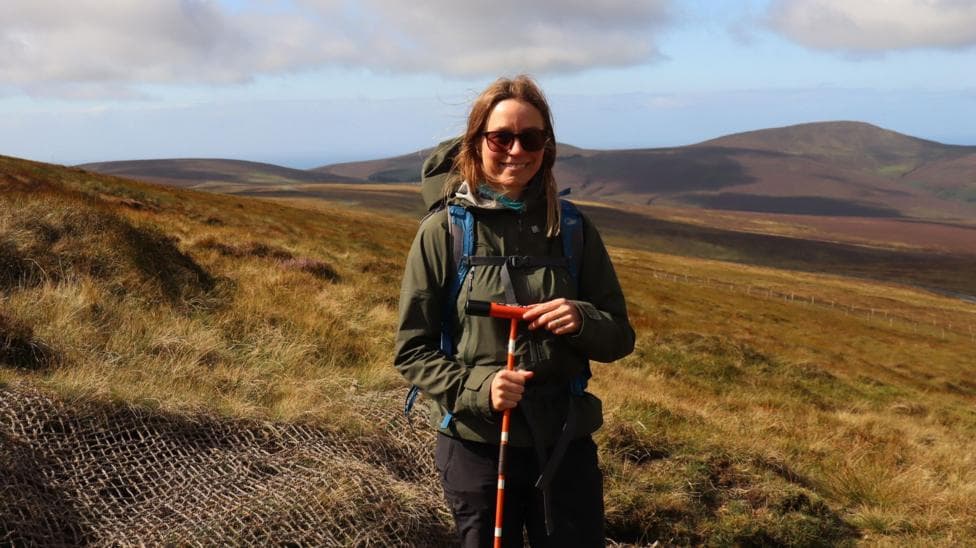
High on a Manx hillside, Sarah Hickey drives a metre-long metal rod deep into waterlogged ground with minimal effort, watching it sink almost to her hands. The markings on the probe reveal what lies beneath her boots: peat, accumulated over millennia from partially decayed plants and organic matter compressed into a carbon-rich layer.
As the island's Peatland Officer, Hickey leads an Uplands team of three people responsible for managing approximately 8,000 hectares of the Isle of Man's hill country. Her mission centres on identifying degraded sections of this landscape and restoring them to ecological health.
Peat forms from partially decomposed vegetation that accumulates in waterlogged conditions across centuries. It represents the most carbon-dense soil type on Earth, storing more of the element than any other land-based habitat. Keeping that carbon sequestered rather than released into the atmosphere remains crucial for climate stability.
How did the island's peatlands become damaged?
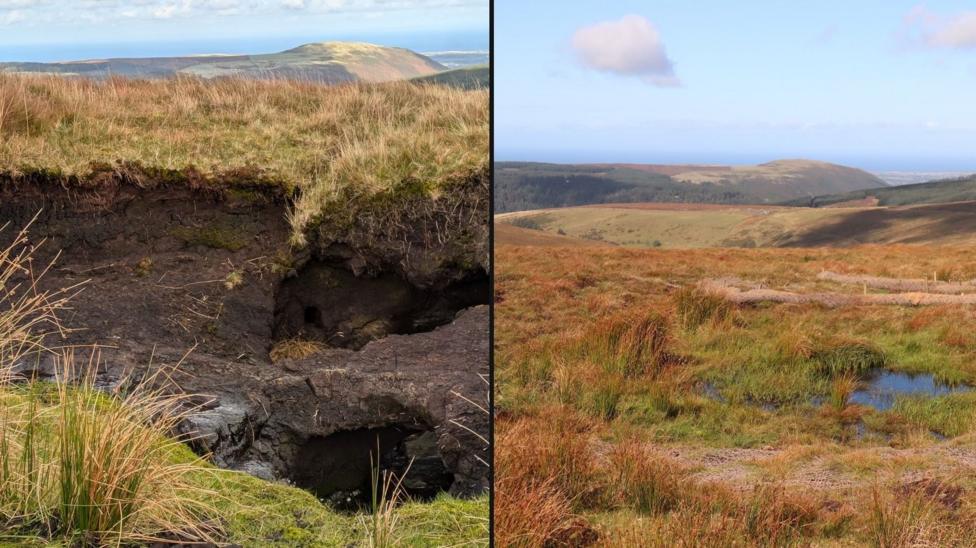
Much of the carbon locked within Manx peat has remained stable for centuries, but extensive damage occurred following deforestation. By the 17th century, islanders had stripped nearly all trees from the uplands, forcing them to seek alternative fuel sources. They turned to the hills themselves, cutting peat into blocks, drying them, and burning them for heating and cooking. The fuel burned slowly and reliably, sustaining Manx households for generations until the practice faced prohibition in 2020.
The bare faces left by centuries of cutting continue to collapse and erode today, washing sediment downslope into reservoirs and degrading water quality. These scars remain visible across the landscape, evidence of historical extraction that continues to damage the ecosystem.
What does restoration involve?
Repair work begins with lightweight diggers that avoid causing additional damage. Operators pull back exposed peat to create gentler slopes and fold existing vegetation over the disturbed ground. Exposed surfaces receive protection through bio logs—biodegradable logs made from coconut fibre—held in place with netting that maintains shade and moisture, allowing new plant growth to establish.

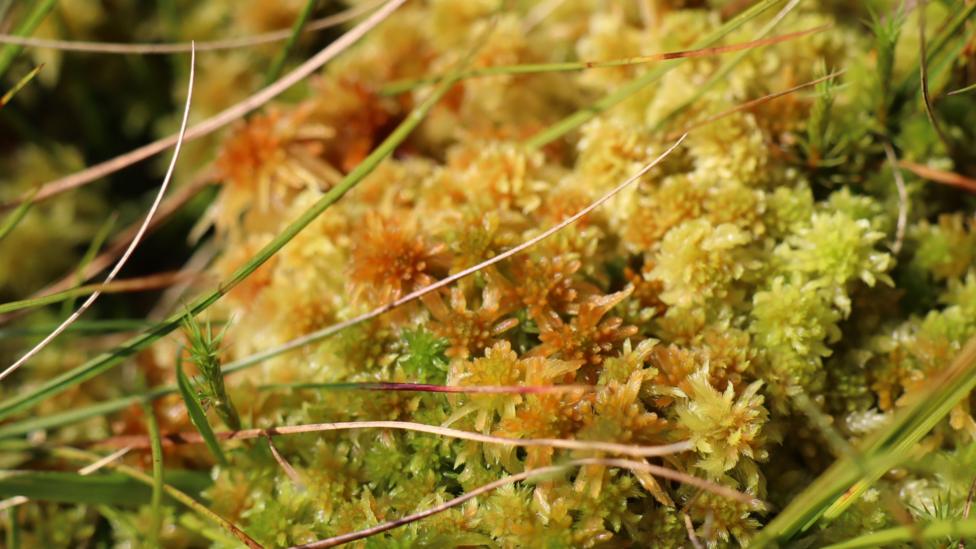
The true architect of a thriving bog ecosystem, according to experts, is sphagnum moss.
It grows in peatland habitats, but it also creates them,Hickey explains. This moss absorbs enormous quantities of water, slowing rainfall as it moves downhill, which reduces flooding risk and filters sediment before it reaches water supplies. Additionally, healthy sphagnum-dominated peat can contain up to 90% water content, making it significantly more fire-resistant—an increasingly important characteristic as summer wildfires become more frequent.
What wildlife benefits from restored peatlands?
Ecological recovery extends beyond carbon storage and flood prevention. Ground-nesting birds including hen harriers depend on open, treeless bog habitat where they remain safe from predators that would otherwise perch above and hunt for prey. The wet ground supports abundant invertebrate populations that provide essential food for chicks during breeding season.
Results from restoration efforts can emerge rapidly. After installing coir logs at one site during the previous year, Hickey and her colleagues observed immediate colonisation.
Straight away there were dragonflies in that pool laying eggs,she recalls.
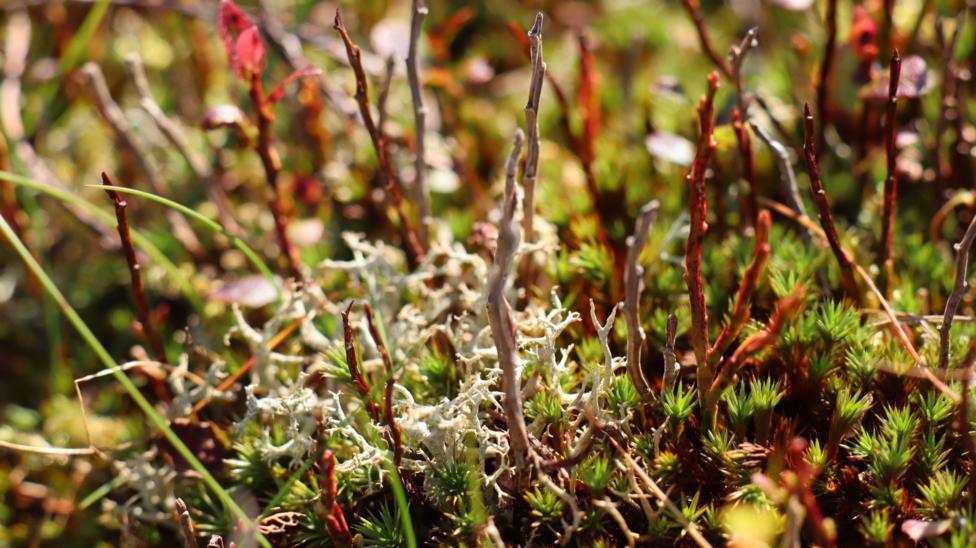
It was amazing to see what a difference these little features are making.A single square metre of healthy bog can harbour thousands of microscopic invertebrates, supporting the entire food web that depends on peatland ecosystems.
What broader initiatives support this work?
The restoration efforts led by Hickey's team form part of a larger coordinated strategy. According to the Manx Peat Partnership, a Biodiversity Action Plan now guides protection and restoration of peatland habitat across the island, running alongside the hands-on repair work. This partnership framework emerged from the Isle of Man's Peatland Restoration Project, which also established a Peatland Code of Practice governing land use and peat management.
The island's broader climate strategy incorporates these efforts as well. Peatland restoration features explicitly within the Climate Change Plan 2022-2027, which recognises nature-based solutions as essential to meeting environmental targets. The Biodiversity Strategy 2015-2025 set an ambitious goal to restore at least 16% of degraded ecosystems by 2025, with peatland restoration forming a central component of that commitment.
More recently, the Manx Peat Partnership published an Isle of Man Peat Condition Map in 2025, providing a detailed island-wide inventory of peat condition that enables more targeted restoration planning. Public engagement with the work continues as well—on 18 April 2026, Department of Environment, Food and Agriculture officers discussed their peatland restoration efforts at Beinn-y-phott during a Manx Wildlife Week event, bringing community attention to the ongoing recovery.
Key facts
- The Isle of Man's Uplands team of three manages approximately 8,000 hectares of hill country across the island
- Peat cutting was banned in 2020, but erosion from historical extraction continues to damage the landscape and contaminate water supplies
- Healthy peat can contain up to 90% water, making it increasingly fire-resistant as summer wildfires become more common
- A single square metre of healthy bog supports thousands of tiny invertebrates that form the foundation of the ecosystem food web
- Restoration work is guided by a Biodiversity Action Plan and supported by the Climate Change Plan 2022-2027 and the Biodiversity Strategy 2015-2025