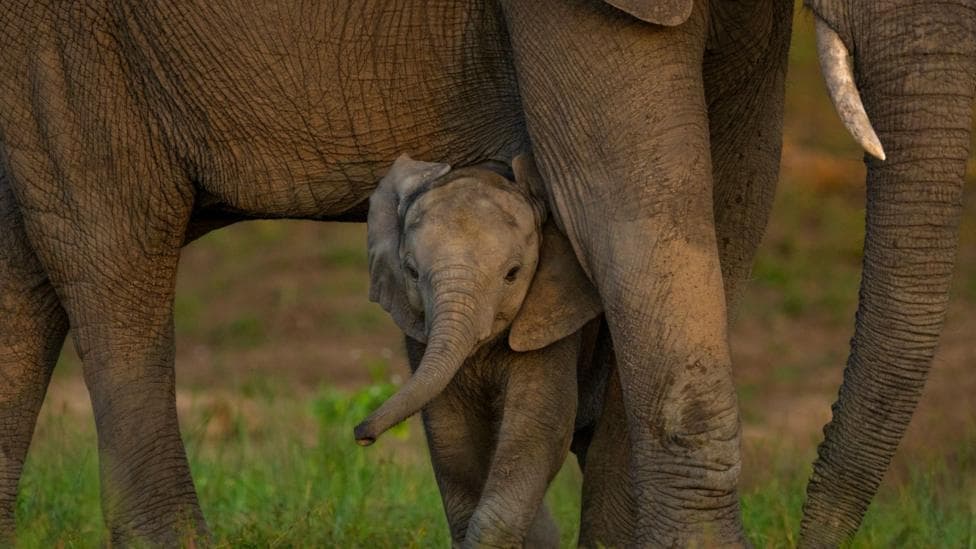
Elephants in Southern Africa are among species that have recovered following recent conservation efforts, offering a glimpse of what is possible when nations commit to protecting biodiversity.
In Armenia's capital this week, delegates from nearly 200 countries engaged in intense negotiations over a new global agreement on nature conservation. According to BBC News, early on Saturday morning, hours after talks were scheduled to conclude, representatives finally reached consensus on the key components of a new action plan. "And that's it. Perfect," declared Hambardzum Matevosyan, the meeting's president.
This agreement builds on a landmark commitment made four years earlier. In 2022, the same nations signed the Global Biodiversity Framework, pledging to "halt and reverse" nature's decline and establishing 24 targets, including the protection of 30% of the world's land and seas by the end of the decade. According to the Food and Agriculture Organization, COP17 brought together representatives from 196 parties and marked the first global review of collective progress under the framework.
Scientists warn that the world is currently experiencing a sixth mass extinction event, with species disappearing at 100 times the natural rate due to human activities. Yet according to the UN, the world is on track to achieve just one of the two dozen targets established in 2022. At this week's meeting, countries acknowledged they were falling significantly behind schedule.
Why is progress so slow?
Catherine Weller, from environmental charity Fauna & Flora, offered a cautiously optimistic assessment: "While not particularly exciting or detailed, it's good news that countries could reach agreement. We cannot just plod on to 2030 without a course correction; nature is critical to all life on Earth: to our economies, to our wellbeing."
Craig Bennett, CEO of The Wildlife Trusts, told BBC News:
We are still seeing an appalling loss, threatening the collapse of ecosystems globally. We run out of words really about how serious this is.However, he noted that
there are so many examples worldwide about how... to turn things around.
What conservation successes have been achieved?
Nations have placed 623 million acres (252 million hectares) of degraded land under protection—an area larger than Greenland. Last month, the WWF highlighted conservation achievements that had resulted in the recovery of key species including elephants, green sea turtles, and tigers. These examples demonstrate that nature can recover when given adequate protection and resources.
What is the main obstacle to faster progress?
Countries have identified funding as the critical barrier to accelerating conservation efforts. In 2022, nations committed to directing $30 billion (£22.4 billion) towards nature recovery by the end of the decade and mobilising a further $170 billion from private sources. However, many countries have since redirected international aid to defence budgets and to address repeated energy crises, meaning pledges are not materialising at the rate required to meet targets, according to the UN.
At this week's meeting, more than $1 billion was pledged, with half coming from philanthropists including Leonardo DiCaprio's Re:wild organisation. The European Union announced significant commitments: the EU said it was on track to double its international biodiversity funding from €3.5 billion to €7 billion, and proposed allocating 35% of its 2028–2034 budget to climate and environmental action.
How can harmful subsidies be reduced?
Anna Ducros, a researcher at the International Institute for Environment and Development who attended the talks, highlighted some progress on countries committing to reducing subsidies for industries harmful to the environment. The framework calls for cutting food waste in half and reducing harmful subsidies by $500 billion annually by 2030.
Ducros explained a concrete example: "Governments subsidise large-scale fishing that is especially harmful for nature—for example, trawling." She highlighted a paradox: "Right now, we have the situation where governments are paying twice. So they know that they need to increase spending on nature and climate, but at the same time, they're damaging nature."
What about genetic material and benefit-sharing?
A specific funding mechanism, the Cali Fund, was established to encourage private companies that profit from genetic material found in the environment to contribute to conservation. It was estimated that up to $3.6 billion could be raised annually, yet at the start of the meeting just $10,000 had been pledged. Little progress was made on this issue during the talks.
Craig Bennett stressed the importance of this mechanism: "When you have countries that have rich biodiversity in them and you have companies trying to make money out of the genetic material found in those countries they should be paying those communities. That should not be controversial." The voluntary nature of the fund makes it difficult to pressure companies to participate.
Why did scientific approval become contentious?
One of the agenda items expected to be straightforward—approval of scientific reports on nature's condition—became unexpectedly difficult. A small group of countries, including Saudi Arabia and Russia, reportedly obstructed this process.
French Ecological Transition Minister Monique Barbut expressed frustration, telling the AFP news agency: "The attacks on science have bothered me a lot." Prof David Lee from Manchester University, who has worked on previous reports, characterised the obstruction as problematic: "This is such a blatant political move...and the IPCC is no such place for such political manoeuvring since the outputs are in humanity's interest."
This mirrors challenges faced by the Intergovernmental Panel on Climate Change (IPCC), which will hold its own annual conference next month at COP31 and has encountered similar difficulties in recent weeks with passing scientific reports and securing funding.
What broader initiatives emerged from the talks?
Beyond the main agreement, Armenia launched the Yerevan Tech for Biodiversity Monitoring Hub during COP17, an initiative focused on biodiversity monitoring. The 2026 conference also included meetings of the parties to the Cartagena Protocol on Biosafety and the Nagoya Protocol on Access and Benefit-sharing, alongside the biodiversity convention's COP17, addressing multiple dimensions of nature protection and genetic resource management.
What happens next?
The next global review of progress under the framework is expected at CBD COP19 in 2030, giving nations five years to demonstrate meaningful progress toward the 2030 targets. The coming years will be critical in determining whether countries can translate these agreements into concrete action and secure the funding necessary to reverse biodiversity decline.
Key Facts:
- Nearly 200 countries agreed on a new nature recovery action plan at talks in Yerevan, Armenia
- The world is on track to achieve just one of 24 targets set in the 2022 Global Biodiversity Framework
- Nations have protected 623 million acres of degraded land, an area larger than Greenland
- More than $1 billion was pledged at the meeting, with the EU committing to double its biodiversity funding to €7 billion
- The next progress review is scheduled for CBD COP19 in 2030