

As restaurants across London prepare for the traditional opening of grouse season on 12 August 2026, environmental campaigners are calling for the shoot to be banned outright, arguing that moorland management practices are fuelling the wildfires currently sweeping across UK uplands. Wild grouse numbers are reportedly down this year, with chefs warning that record heat has left birds smaller, fewer and harder to source.
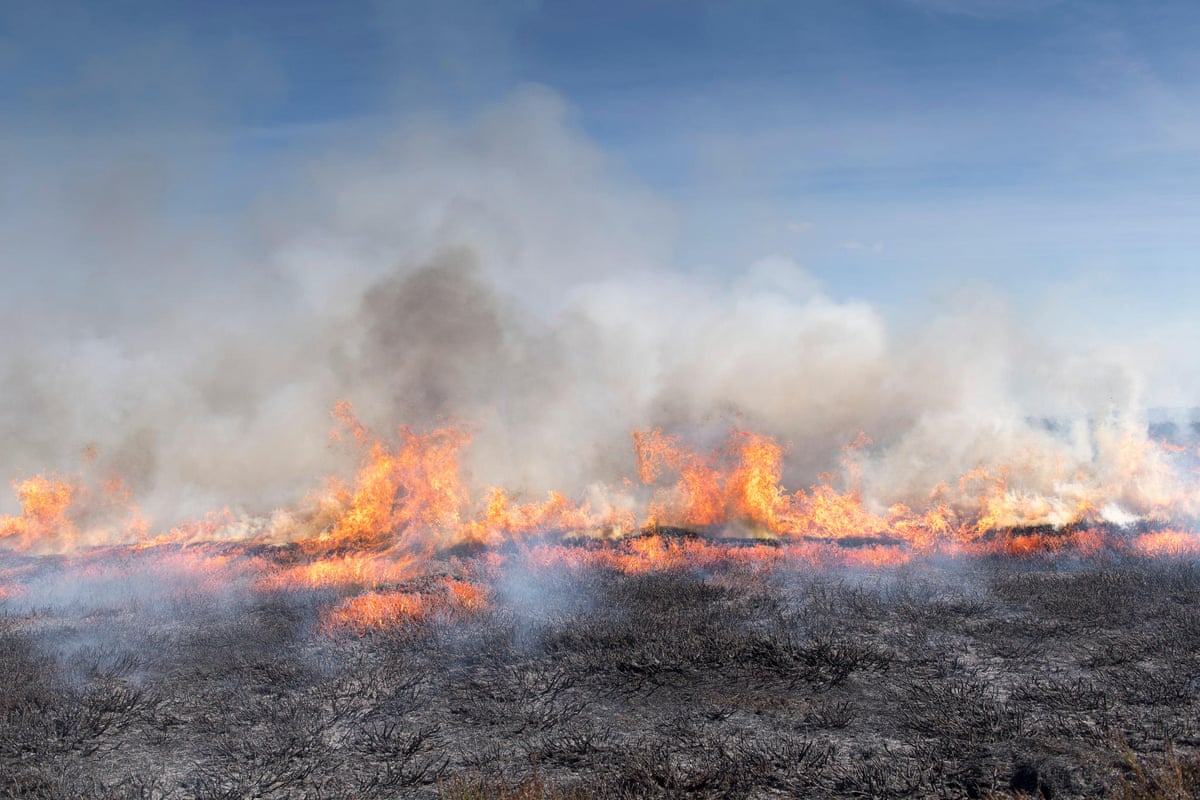
The row centres on how grouse moors are maintained: peatland is drained and vegetation is deliberately burned to encourage the young heather shoots that grouse feed on. Campaigners say this practice leaves peat dry and highly flammable, turning it into fuel that can smoulder underground for long periods and is notoriously difficult to put out once alight.
In response to these concerns, the UK government has already introduced restrictions on burning vegetation on deep peat in parts of England, aiming to protect these carbon-rich habitats. Separately, the government's official burning season for upland peat in England runs only from 1 October to 15 April, according to a review of current legal protections published by the Wildlife and Countryside Link.
Why are campaigners linking grouse moors to wildfire risk?
Campaigners argue that the intensive management practices used on grouse moors directly increase the likelihood and severity of wildfires. The Scottish Greens have called for the Glorious Twelfth — the date each year before which grouse cannot legally be shot — to be scrapped entirely, pointing to the large number of grouse shoots operating in Scotland. Ariane Burgess MSP, the party's rural affairs spokesperson, said the countryside should not be run as a space purely for field sports.
Scotland's land is one of our greatest assets. It should be supporting thriving rural communities, restoring nature and tackling the climate crisis, rather than serving as a private playground for the wealthy few.
The real glorious future for Scotland's moors would be seeing wildlife flourish on them, peatlands restored and rural jobs created through the recovery of our natural environment.
She also said moorland in the region is managed intensively purely so grouse can be shot for sport, rather than for conservation or community benefit.
How severe is the environmental damage from peat burning and wildfires?
Independent research suggests the ecological cost of both routine burning and wildfire outbreaks on peatland is substantial. A widely cited industry-linked report found that the Saddleworth wildfire alone stripped away seven centimetres of peat and could take up to 200 years to fully regenerate, according to the Game and Wildlife Conservation Trust. Separately, Natural England has estimated that rotational burning on peat in England releases roughly 260,000 tonnes of carbon dioxide every year, according to the same review from the Wildlife and Countryside Link. Campaign group Greenpeace's investigative unit, Unearthed, previously reported that 109 fires were recorded on carbon-rich peatlands across northern England in a single period in October 2021, with most occurring in national parks and on shallower peat that fell outside the partial burning ban then in force.
Scientists have repeatedly linked the wider heatwave conditions driving this year's fires to human-caused climate change, noting that fossil fuel pollution makes such extreme heat events both more frequent and more intense.
How is this affecting London's game restaurants?
Chef Richard Corrigan, who runs both Corrigan's and Bentley's in Mayfair and has served grouse throughout his decades-long career, said supplies this year are notably thinner than usual.

I was hoping to get something on the 12th, it's looking like it's running a week and a half late. They will be smaller and fewer, which is fine and it is a treat. We should treat them with the respect they deserve.
The hot weather hasn't helped everything this year, that's for sure.
Corrigan has become increasingly selective about his suppliers, favouring small estates over large commercial shoots.
We now insist [birds] come from small estates rather than the large shoots, where dozens are shot at a time. I am not too sure I agree with the large shoots. I would rather people shoot wild animals for the table rather than shoot for the sake of having a day out.
He has also taken a firm stance against buying from estates linked to raptor persecution — the illegal killing or poisoning of birds of prey used to inflate grouse populations.
Something that has really annoyed me is the killing of raptor birds on the estates. They are being poisoned by people on these estates. I would never buy grouse from those estates. We all know who they are.
Having grown up on moorland in County Meath, Ireland, Corrigan said he understands first-hand how poor land management leaves these landscapes vulnerable to fire.
I was brought up in moorland, I am very aware of the heather and the turf, they need the wetlands to be restored to keep the moors in good shape. Some estates have taken it all a bit too far and have turned it into factory grouse shooting operations.
On the menu this year, Corrigan is departing from tradition, opting for a lighter dish rather than the classic accompaniments.
They will be on the menu barbecued with peaches and jalapeno. There is nothing better to eat than peaches from Provence and little spatchcocked grouse.
Henry Harris, chef-owner of a restaurant in Farringdon, London, said he was still waiting to confirm whether his usual supplier would be able to deliver birds this week.
I will know today whether there's been a problem. If they fly, they will be shot. If it is too hot they will not fly. If the weather really is too hot, they tend to struggle to drive them up into the air which will mean there are less birds out there.
Harris also voiced concern about the broader impact of wildfires on moorland ecosystems and wildlife, including grouse populations themselves, while noting strong customer demand for the dish.
People do expect us to serve it, it is very popular. We had a queue for them last year.
Unlike Corrigan's experimental approach, Harris plans to stick closely to convention, albeit with a small twist.
Serving it very traditionally with a slight Gallic twist on a lovely piece of sourdough toast with a bit of pate, armagnac sauce, bread sauce and game chips.
Is this part of a wider pattern of extreme weather pressure on the UK?
This dispute over grouse shooting comes as pressure mounts on the UK government over its broader response to extreme heat and wildfire risk. Greater Manchester mayor Andy Burnham has said he is considering a ban on disposable barbecues as drought conditions and record temperatures drive a surge in wildfires nationwide, with all major supermarkets having already withdrawn the products from sale, according to earlier coverage of the proposed measures. Green Party leader Zack Polanski has separately accused the government of failing to act adequately on heatwave-related threats, describing the situation as a dereliction of duty regarding wildfires, droughts and water supply strain, as detailed in reporting on his criticism of the government's response. Elsewhere, the Cairngorms National Park introduced a by-law banning camp fires and barbecues until 30 September each year, with fines of up to £500 for breaches, following earlier wildfire damage in the area, according to coverage of the park's new fire-prevention rules.
What happens next?
The Glorious Twelfth remains fixed as 12 August each year, meaning birds cannot legally be shot before that date regardless of how supply issues affect restaurant menus this season. Whether the Scottish Greens' call for an outright ban gains traction will likely depend on how this year's wildfire season develops and whether further restrictions on peatland burning are introduced beyond the existing deep-peat rules already in place in England.
Key Facts
- Grouse shooting season traditionally opens on 12 August each year, known as the Glorious Twelfth.
- The Scottish Greens have called for the season to be banned over wildfire and peatland concerns.
- England's official upland peat burning season runs from 1 October to 15 April.
- Natural England estimates rotational peat burning releases around 260,000 tonnes of CO2 annually in England.
- The Saddleworth wildfire caused an estimated seven centimetres of peat loss, with recovery potentially taking up to 200 years.


