
Zack Polanski, leader of the Green Party, has called for a temporary moratorium on approving new data centres across England, citing worries about their consumption of water and electricity. During a visit to a proposed data centre site in East London, Polanski argued that the government must establish tougher environmental standards and grant local communities greater influence over whether such facilities are constructed in their neighbourhoods.
Data centres require substantial quantities of water to cool their computing equipment, yet the UK currently lacks official data on total water consumption by these facilities. The government has rejected the proposal, warning that a pause would damage the nation's economic competitiveness and leave Britain reliant on foreign companies for processing sensitive defence and health information.
How many data centres operate in the UK?
Hundreds of data centres already exist across the country, with many more in the planning pipeline. Precise figures are difficult to establish, though reporting indicates approximately 477 facilities were operational. A significant concentration of these centres is located around London and the south of England—regions currently designated as being in official drought conditions.
The clustering of data centres in water-stressed areas has intensified concerns about resource management. East London residents and local councils have already opposed a proposed Brick Lane facility, citing housing shortages, noise pollution, and energy concerns amid rapid UK data centre expansion driven by artificial intelligence demand. Meanwhile, the Scottish government is considering imposing a moratorium on new data centres, challenging the UK's AI strategy amid concerns over overdevelopment and renewable energy capacity.
How much water do data centres consume?
Water consumption varies significantly depending on facility size, design, and local climate conditions—warmer regions require more water for cooling systems. The Water Research Centre consultancy estimated in February that data centres in England currently use approximately 1.9 billion litres of drinking water annually, representing about 0.2% of the non-household market. The consultancy has identified a clear upward trend in water usage.
The Green Party cited research from Global Action Plan, an environmental charity, suggesting that large centres could consume 1.5 million litres per day. Polanski told the BBC:
We need to slam the breaks on these energy guzzling, water guzzling data centres. Essentially, we need basically a moratorium other than local scale data centres for the local community. At a time when three-quarters of the country are in drought, it is outrageous that these are being considered critical infrastructure. To most people critical infrastructure means hospitals, water, electricity. It doesn't mean Artificial Intelligence.
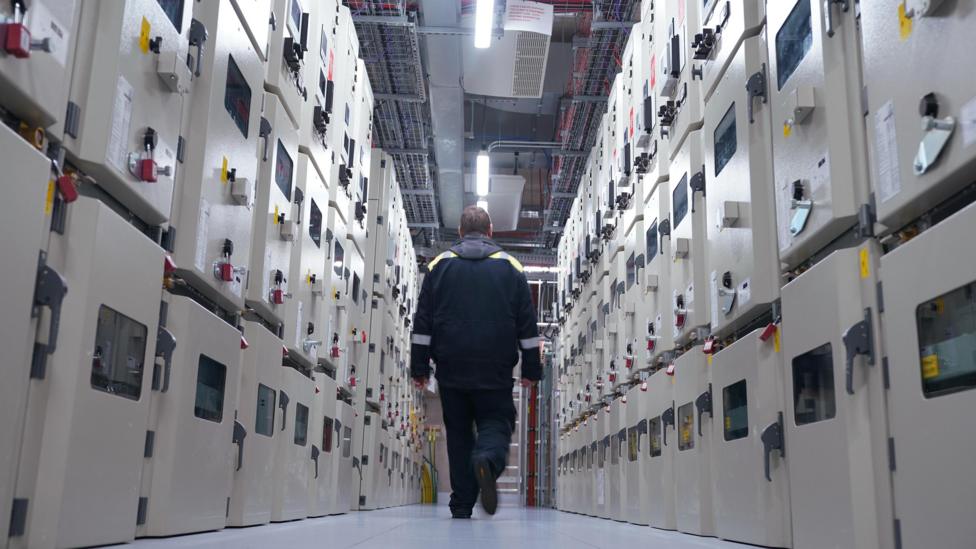
However, the government countered that water losses through leaks in the supply network account for roughly a fifth of total supply, a figure substantially larger than data centre consumption. A government spokesperson stated:
A pause on building new data centres would simply send investment and good jobs abroad, while leaving Britain dependent on overseas computing for the processing of sensitive health and defence data. Put simply: it would be a disaster for jobs and national security. That said, this does not mean a blank cheque for Big Tech or that every data centre should be approved. Developers must plan to use clean power, use water responsibly, create British jobs and supply chains, and provide investment to the communities in which they are built.

What is the government's AI Growth Zones strategy?
In 2024, the government designated data centres as critical infrastructure, granting them enhanced government support during incidents such as cyber-attacks or extreme weather. The Green Party contends this classification could allow data centres to receive priority access to water during shortages, though the government has stated that data centres would not automatically receive such priority.
The BBC has discovered that ministers have not conducted an environmental assessment examining the impact of their AI Growth Zones strategy. A government official characterised the paper as a statement of intent rather than a formal policy moving towards implementation.
According to the government's latest progress report, five AI Growth Zones have now been designated in Culham, the North East, North Wales, South Wales and Lanarkshire. The programme is designed to prioritise grid capacity and planning approvals for large compute sites. Government claims indicate the zones have generated £28.2 billion of investment and more than 15,000 jobs.
What environmental standards do the Greens propose?
The Green Party has outlined several requirements for data centre development. They argue that facilities should be constructed on brownfield sites located near renewable energy sources, allowing operators to utilise clean power when available. The party also demands that owners publish annual reports detailing water and electricity consumption—a transparency measure currently absent from UK regulation, as data centres are not required to disclose their water usage figures.
These proposals reflect broader concerns about the environmental footprint of AI infrastructure expansion. Water UK has warned that the government's AI plans ignore data centre water needs, cautioning that future growth could become impossible in water-stressed regions.
What regulatory changes are underway?
Beyond the environmental debate, the regulatory landscape for data centres is shifting. Ofgem has proposed upfront fees and financial security requirements for data centre projects seeking grid access, as Britain faces a queue of 315 sites and 73GW of electricity demand.
The government has indicated that data centres located within AI Growth Zones could benefit from electricity cost reductions beginning in April 2027, subject to legislative timelines. The AI Growth Zone Delivery Unit is expected to continue brokering power, planning and offtake arrangements to support facility buildout, with additional zones potentially designated in future phases.