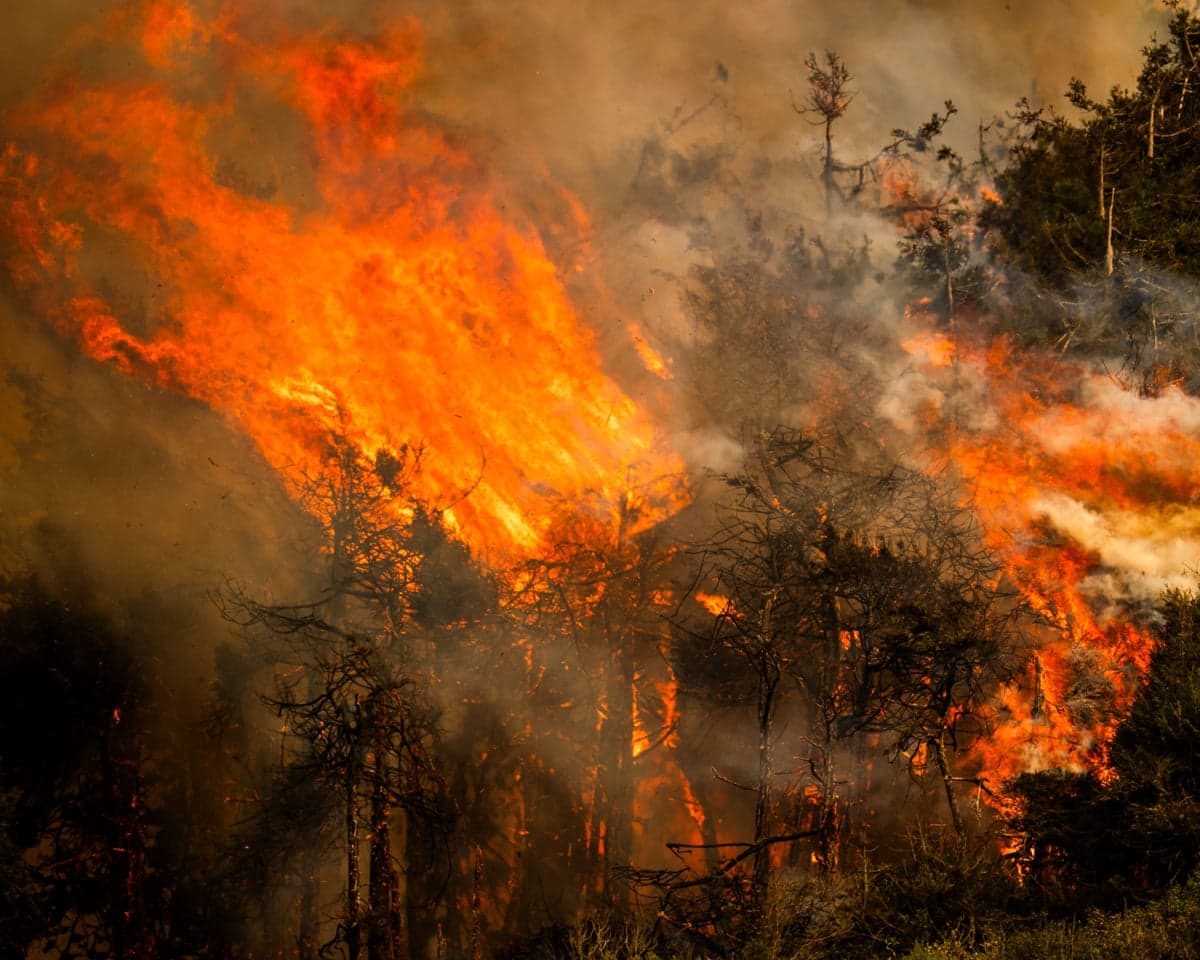
Firefighters battling massive wildfires across the United States are warning that the federal government has left them dangerously understaffed and under-resourced during an exceptionally severe fire season. Nine firefighters speaking anonymously, along with retired fire chiefs and safety experts, describe crews stretched to breaking point as climate-driven blazes grow more intense and unpredictable.
The shortage of federal firefighting personnel has reached critical levels, with essential management positions remaining unfilled across the country. According to Senate Democrats, the nation maintained its highest preparedness level for nearly seven weeks, indicating that all available resources were fully deployed. By mid-September, approximately 54,400 blazes had burned through more than 8.4 million acres—149 percent of the 10-year average.
The human toll has been severe. There have been 14 reported on-duty fatalities this year, including three firefighters who died in a single entrapment incident, with an additional crew member succumbing to injuries weeks later and another suffering severe burns. That entrapment marked the deadliest in 13 years. By mid-August, the nation had already experienced 12 entrapments—exceptionally dangerous situations when flames roar into pre-established safety zones or block escape routes—the highest number in two decades.
How are firefighters describing conditions on the ground?
Frontline personnel report that fatigue and safety incidents have reached alarming levels.
Accidents have been through the roof,one firefighter said, describing the toll of near-nonstop fire assignments since April. Another firefighter working with a specialized helicopter crew explained he had to decline assignments deemed too high-risk or poorly planned.
Dr. Timothy Ingalsbee, a fire ecologist and former wildland firefighter with the U.S. Forest Service who now directs Firefighters United for Safety, Ethics and Ecology, reported hearing from safety officers about a notable spike in burn injuries this year. He attributes this increase to
crews being pushed into aggressive direct attack in times when it is not effective.Long seasons of sleep deprivation, smoke inhalation, exhaustion and malnutrition compound the danger.
It impacts your ability to think clearly and act decisively to keep you and your crew members safe,Ingalsbee explained.
Ingalsbee warned that
there are some crews near the breaking point. Their roster is depleted and there doesn't seem to be any strategic prioritization where they are sent.
What staffing gaps exist in federal firefighting?
The shortage is most acute in specialized leadership roles that require decades of experience. Taskforce leaders, division supervisors and heavy equipment operators are essential to coordinate large firefighting operations, yet these positions have become extremely difficult to replace. Firefighters report that the federal government has failed to scale up overall staffing levels to meet rising demand, pushing resources to the brink season after season.
In a letter issued last week to the heads of the Department of the Interior and the Department of Agriculture, which oversees the U.S. Forest Service, five senators—Michael Bennet, Alex Padilla, Ron Wyden, Adam Schiff, and John Hickenlooper—documented how personnel have been forced into extended assignments, crew requests went unfilled across western communities, and agencies face depletion of their combined $6 billion suppression budget with weeks remaining before fire risks fully subside. The senators stated that
teams have worked more fires than is safe, using temporary supervisory structures because fully qualified personnel are not available.
One fire captain working in the Pacific Northwest offered a stark comparison:
Firefighting capacity is kind of like wages, and the fire environment is like inflation – it has not kept up.Bobbie Scopa, a retired fire chief now serving as vice-president for the advocacy group Grassroots Wildland Firefighters, added:
We have had shortages for 20 years – and it's only gotten worse.He explained that as the need for resources grew and qualified leaders became scarce, responsibilities were sometimes doubled up.
That sets everyone up for failure. It is not like we are trying to add bureaucracy – we are trying to keep people alive.

However, this assessment contrasts sharply with statements from U.S. Forest Service Chief Tom Schultz, who has repeatedly assured lawmakers and the public that the agency's firefighting workforce is at full capacity.
Our firefighting workforce is stronger than at any point in recent years. We are fully staffed and equipped to respond aggressively to every unplanned ignition,Schultz testified to Congress.
What policy changes have increased pressure on firefighters?
The Trump administration has pushed for more aggressive firefighting tactics, sometimes at the expense of firefighter safety, according to multiple firefighters interviewed. Brooke Rollins, the U.S. agriculture secretary, and Doug Burgum, the U.S. secretary of the interior, both issued directives this year prioritizing direct attack—a strategy that can carry greater risk. Officials have also mandated prescribed burns, shifting away from recent policies that took a more measured approach to containing flames in ways that could benefit landscapes long-term.
Agency leaders argue that aggressive tactics are necessary to protect firefighters and communities as conditions create potential for catastrophic fires. However, critics—including many fire ecologists and firefighter advocates—contend the approach perpetuates a cycle that contributed to the current crisis by leaving more vegetation on parched landscapes to burn in future years, while more quickly exhausting limited resources.
Scientists, forest managers and fire experts have advocated for allowing some fires to burn, particularly those distant from communities or in locations that are difficult or dangerous for firefighters to access. Firefighters already stop 98 percent of fires before they spread significantly. Scopa warned:
We're going to kill people trying to put out those last couple percent and we're going to spend a lot of money doing it.
How has the relentless fire season affected crew operations?
The destructive season has left minimal opportunity for rest. Crews have cycled from fire to fire for months without substantial breaks. The U.S. maintained preparedness level 5—the highest designation indicating all resources are fully deployed—for 48 consecutive days. According to the National Multi-Agency Coordinating Center, the agency could not
provide all requested resources for every fireand warned that there was
no immediate relief anticipated.
As of early September, firefighters were working on 78 large fires nationwide with nearly 17,812 firefighters and support personnel assigned. The preparedness level dropped to level 4 on 4 September and then to level 3 a few days later, but thousands of firefighters remain deployed across the country with potentially months remaining before the highest fire risks fully subside.
What do workforce numbers reveal about federal capacity?
According to a federal workforce update, the U.S. Forest Service had 11,745 wildland firefighters onboard as of 17 August 2026, representing 105 percent of its 2026 hiring goal. Yet this figure masks deeper structural problems. The National Federation of Federal Employees-International Association of Machinists reported in July that Forest Service cuts had already cost the agency approximately 5,800 employees, and that the Trump administration planned to reorganize the agency into a state-based model while relocating headquarters to Salt Lake City.
Some federal fire officials have estimated that agencies would need 30,000 to 40,000 additional firefighters to fully implement a comprehensive suppression strategy, a figure that underscores the magnitude of the gap between current capacity and operational demands.
What happens next for federal firefighting resources?
The Senate letter indicates Congress may continue pressing agencies over suppression funding as the fiscal year approaches its conclusion on 1 October. Senators suggested the possibility that agencies may need to borrow from other accounts to sustain suppression costs through the remainder of the fire season. The outcome of these budget negotiations could determine whether crews receive additional personnel and resources or continue operating under current constraints as fire season potentially extends into autumn months.