Archaeologists have identified the world's oldest shipwreck off the coast of Turkey, with evidence placing the vessel between 4,400 and 4,700 years old—a period contemporary with the construction of Egypt's Great Pyramid. The discovery, made near Kekova Island in Antalya, represents a significant advance in understanding ancient Mediterranean trade networks and maritime practices during the Early Bronze Age.
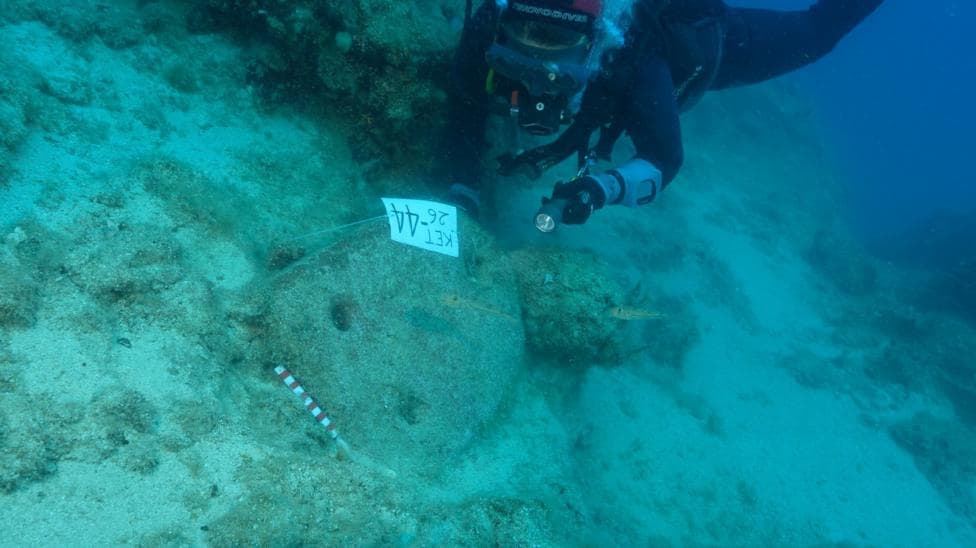
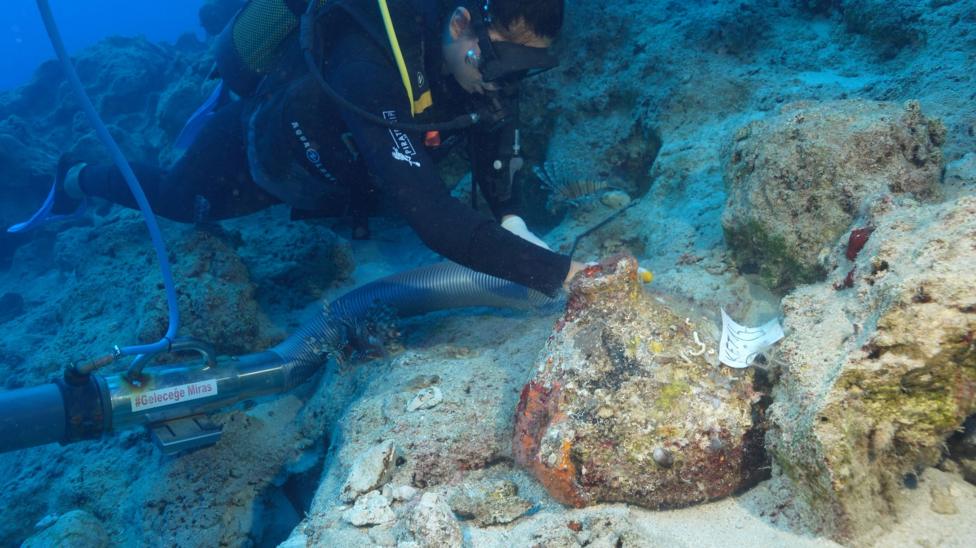
The vessel, approximately 10 metres in length, operated as a merchant ship transporting cargo across the Mediterranean Sea. Although the wooden hull deteriorated over millennia, the ceramic storage containers it carried—known as amphorae—survived intact on the seafloor, resting just 30 metres beneath the surface. Remarkably, some of these vessels still retain residual material from their original contents, offering an extraordinary window into ancient commerce and daily life.
"The shipwreck is a time capsule at the bottom of the sea,"said Prof Hakan Öniz from Akdeniz University in Turkey, who directed the Mediterranean Archaeology Association expedition that located the wreck.
How was the wreck's age determined?
The absence of preserved wood prevented the use of radiocarbon dating, a technique that measures organic carbon to establish age. Instead, archaeologists examined the distinctive shape and design of the amphorae recovered from the site. The Kekova ceramics display characteristic features: two handles, a central ridge, and a flat base—a design signature that matches amphorae unearthed in Egypt and the Middle East and definitively linked to the 4,400–4,700 year period.
"Comparing the decoration techniques… we can definitely say our wreck is Early Bronze Age. This is 100%."Öniz confirmed, based on stylistic analysis of the pottery.
What cargo did the ship carry?
Divers recovered more than 30 amphorae from the wreck site, along with three large stone anchors—spare equipment typical of vessels undertaking lengthy voyages. The contents of these vessels remain under investigation, though preliminary analysis has yielded surprising results.
Dr Karin Sowada, an archaeologist from Macquarie University in Australia, examined the amphorae after their recovery and discovered viscous, glossy residue coating the interior surfaces of several intact vessels.
"I looked inside and nearly fainted. I could not believe how much [residue] was visible. It wasn't just like spots…. a lot of this material was still remaining,"she recalled.
The material could represent olive oil, wine, or tree resins—all valuable trade commodities in antiquity. However, Sowada noted that the residue might also reflect the reuse of these large vessels over extended periods.
"It's possible that [the residue] could actually be the result of reuse of the jars. I mean, these jars are huge - they're not things that you just ship away and then never see again. People would have emptied these jars on arrival and potentially used them for many, many, many years."
Where was the ship travelling?
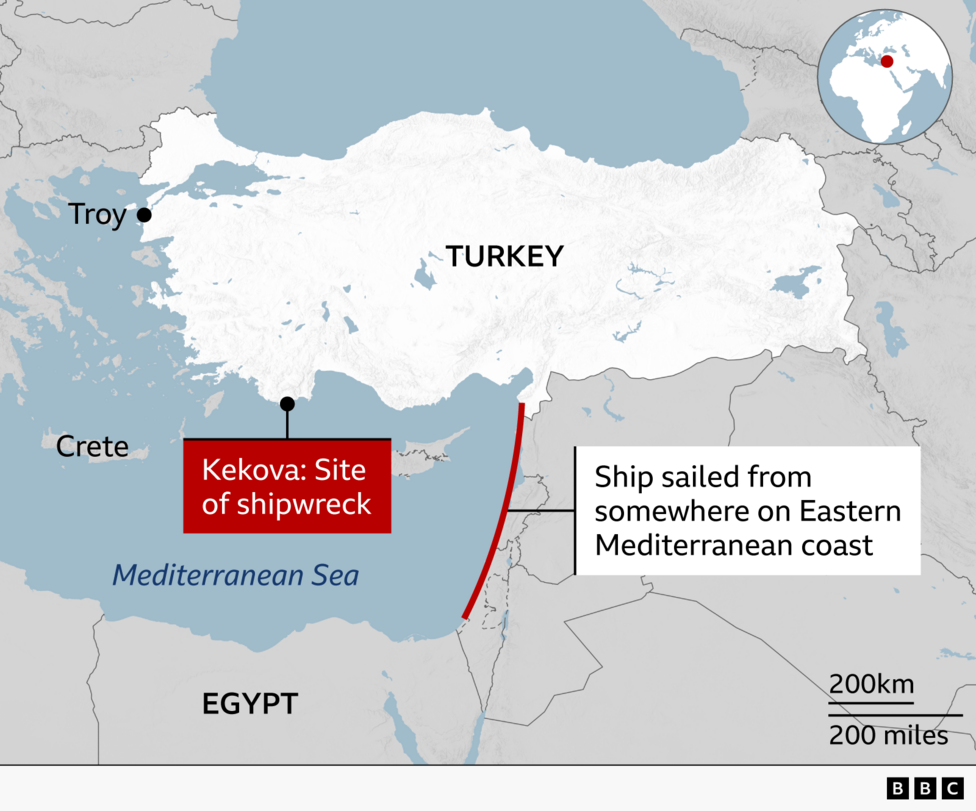
Evidence suggests the vessel embarked from somewhere along the eastern Mediterranean coast, with its destination being either the ancient city of Troy in what is now north-western Turkey or the Minoan civilisation in Crete. According to recent research on Türkiye's maritime heritage, researchers' current interpretation is that the small vessel sank while sailing from east to west, suggesting it may have encountered disaster before reaching its intended destination.
The wreck provides crucial evidence about Early Bronze Age commerce and the networks connecting distant regions. According to underwater archaeologist Hakan Öniz, the Kekova discovery and a companion wreck at Kumluca predate the better-known Uluburun and Cape Gelidonya Bronze Age shipwrecks, pushing back the known timeline of Mediterranean seafaring.
Why is this location significant for shipwrecks?
The waters surrounding Kekova Island have proven treacherous for maritime traffic throughout history. Strong currents and winds have claimed numerous vessels over millennia, creating what amounts to an underwater archaeological repository. According to documentation of Türkiye's maritime heritage, the Mediterranean coast contains more than 430 documented shipwrecks, with the Kekova wreck being investigated alongside two other significant sites in the Antalya region.
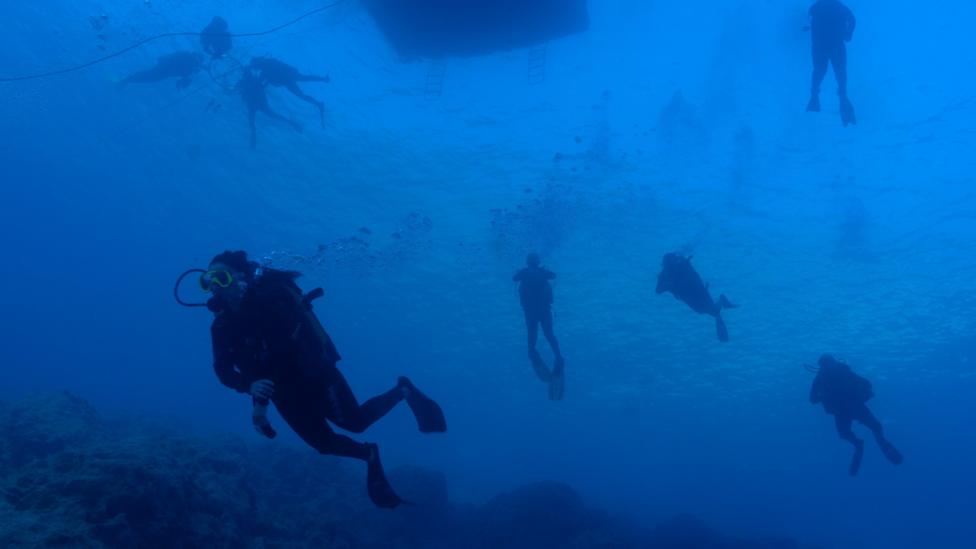
The Mediterranean Archaeology Association specialises in locating and studying these submerged vessels, with the challenging conditions at Kekova requiring divers to limit their underwater work to 30-minute intervals due to depth constraints.
How are the artefacts being preserved?
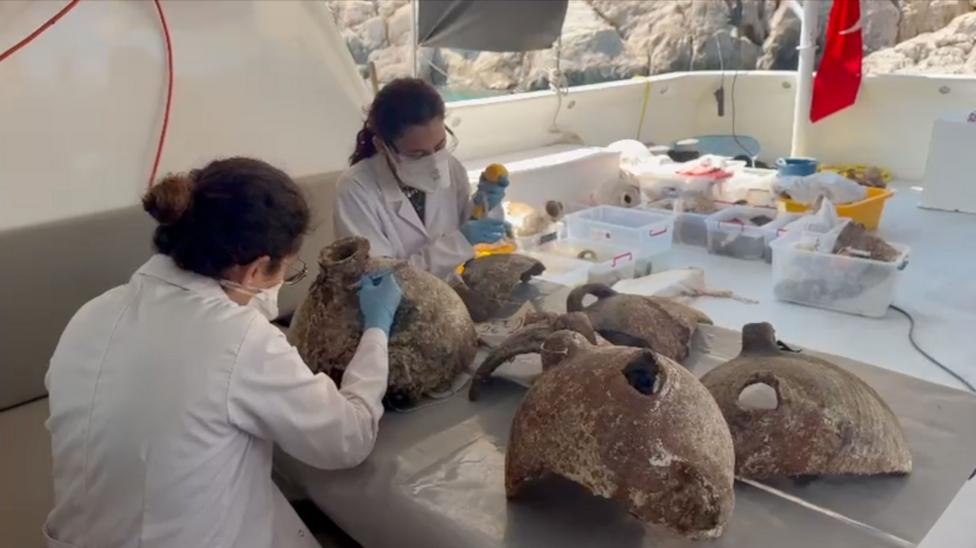
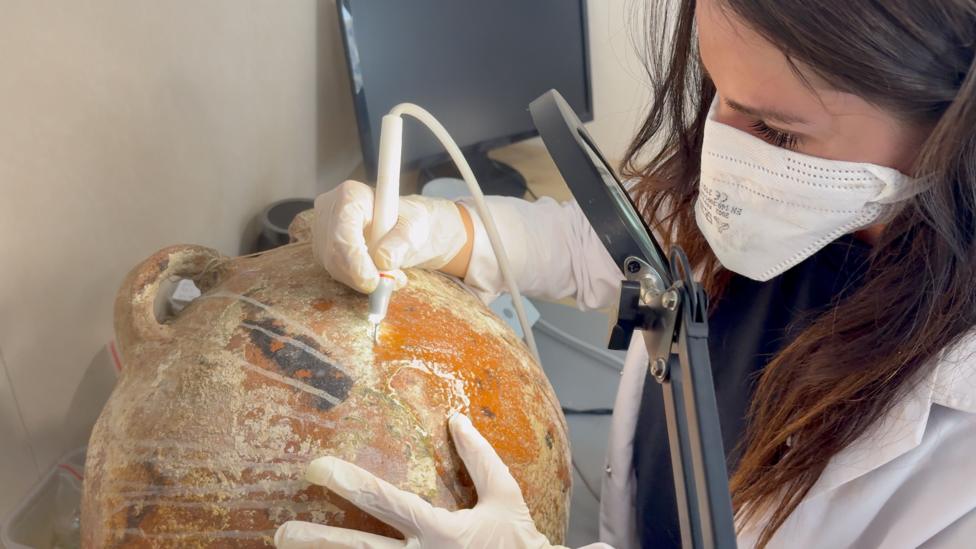
Following their recovery, the fragile amphorae underwent careful conservation to stabilise them after thousands of years in the marine environment. The delicate nature of these vessels, combined with the residual material they contain, demands specialised handling to prevent deterioration and preserve evidence for ongoing analysis.
How does this discovery compare to other ancient wrecks?
The Kekova shipwreck now holds the distinction of being the world's oldest known vessel to sink and leave archaeological remains. The previous record holder was a wreck discovered off Dokos, an island in southern Greece, which dates to approximately 4,200 years ago—making it roughly 200 to 500 years younger than the Kekova find.
The oldest shipwreck where wooden structural elements have survived is located in the Black Sea off Bulgaria's coast, dating to around 2,400 years ago. The preservation of wood in that case resulted from the Black Sea's unique anaerobic conditions, which inhibit the decay processes that destroyed the Kekova vessel's timber.
What does the wreck reveal about ancient seafarers?
For Öniz, the discovery carries profound human significance beyond its archaeological importance.
"We are the first humans who [have] touched these objects after 5,000 years. We are always thinking of the sailors... the producers of the amphora and the person who carried the amphora on their shoulders to the ship, and the women who were waiting for their husbands, and they unfortunately couldn't go back."
This perspective underscores how maritime trade in antiquity involved not merely the movement of goods but the lives, labour, and hopes of countless individuals whose stories remain largely untold. The wreck serves as a tangible connection to these ancient people and their world.
What happens next?
According to a 2026 preliminary research report, planned excavations in 2026 are expected to investigate seabed areas both shallower and deeper than the currently documented wreck site, with the potential to uncover additional remains. Researchers recovered one amphora in 2024 and another in 2025, with their technical characteristics, clay composition and likely uses differing from one another, suggesting the site may contain material from multiple periods or contexts.
The three stone anchors found around the site comprise two with three holes and one with a single hole; researchers do not yet know whether any belonged to the wreck itself or arrived at the location through other means. Continued investigation promises to refine understanding of the vessel's origins, cargo, and the circumstances of its loss.
Key Facts
- The shipwreck dates to 4,400–4,700 years ago, making it the oldest known vessel to sink and leave archaeological remains.
- More than 30 ceramic amphorae and three stone anchors were recovered from the site, located 30 metres beneath the surface near Kekova Island in Antalya, Turkey.
- Some amphorae still contain residual material from their original contents, offering rare direct evidence of ancient Mediterranean trade goods.
- The vessel likely sailed from the eastern Mediterranean coast toward either Troy or Crete before sinking while travelling east to west.
- Further excavations planned for 2026 may uncover additional remains at the site.