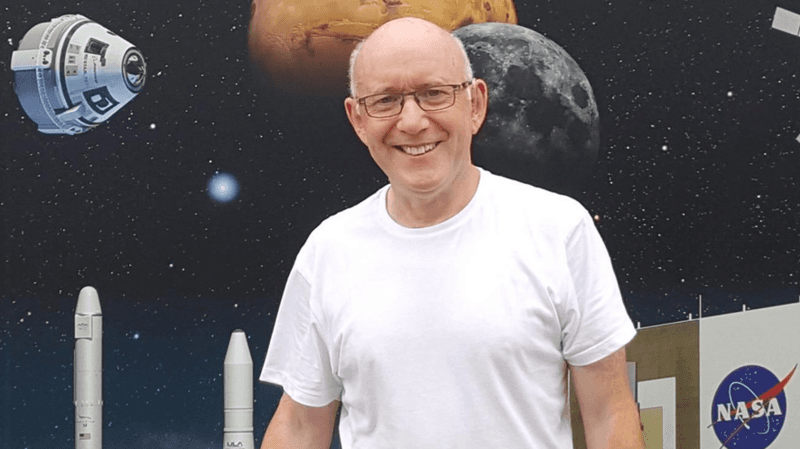
Dermot Gethings, now vice chair of the Preston & District Astronomical Society, was selected as one of just 80 young people worldwide to witness the final crewed lunar mission. At 16 years old, the Preston schoolboy travelled to Florida on an all-expenses-paid trip organised by Nasa and the United States Embassy to watch Apollo 17 lift off on 7 December 1972 — an experience that would define his lifelong passion for astronomy.
Growing up in Frenchwood, Gethings was captivated by the Space Race during the Cold War era. Television broadcasts of Nasa missions, combined with science fiction programmes like The Thunderbirds, fuelled his fascination with space exploration. The pivotal moment came at age 10 when he observed the Milky Way stretching across the night sky.
"It hit me straight away - that was where I wanted to be,"he recalled of that transformative night.
His enthusiasm led him to establish an astronomy club at the former St John Fisher's School in Preston, where he delivered talks and organised public exhibitions. By age 16, he had achieved an O-Level qualification in Astronomy through self-directed study at home.
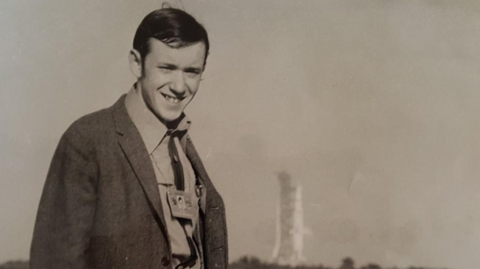
When photographs of his exhibitions appeared in the Lancashire Evening Post, an unexpected opportunity emerged.
"A few months after the photographs were published I received a letter out of the blue from the United States Embassy in London,"Gethings explained. The letter invited him to interview for a place on Nasa's first and only International Youth Science Tour. Sixteen UK students were considered, but only one would be selected for the prestigious journey.
The selection process took weeks.
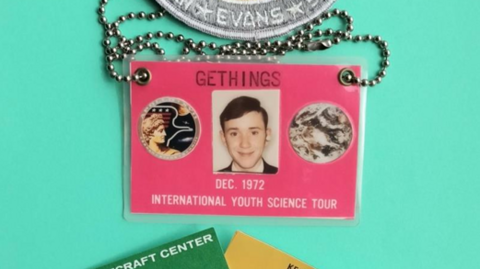
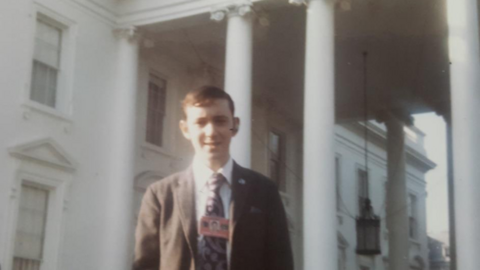
"I didn't hear anything for a couple of weeks. When I got the letter of congratulations inviting me on the trip I couldn't believe it - it was amazing!"After boarding his first aeroplane at Manchester Airport, Gethings embarked on a 19-day tour across a dozen American states. The itinerary included visits to multiple Nasa facilities, dinners with senators at the White House, and encounters with some of history's most celebrated astronauts.
How did Gethings meet Neil Armstrong?
The most memorable encounter occurred by pure chance on launch day.
"On the day of the launch I stepped out of my motel room and clumsily walked into a tall gentleman. I stood on his foot by accident and I was really embarrassed. I looked up and the man smiling down at me was Neil Armstrong!"The pair descended to the lobby together, discussing the impending launch. Armstrong then invited his wife to photograph them standing beside his car, creating an image that would become one of Gethings' most treasured possessions.
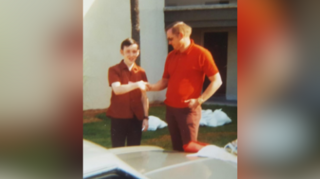
Gethings also received a signed photograph from Armstrong featuring the student representatives from the tour.
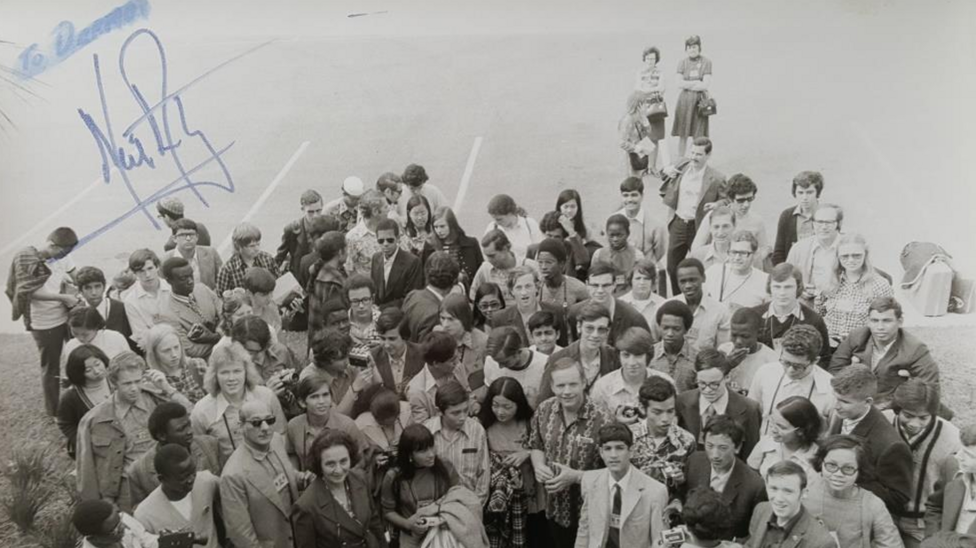
What was the launch experience like?
In the early hours of 7 December, Gethings sat just three miles from the launchpad in the VIP viewing box alongside Armstrong and other dignitaries. Apollo 17's crew comprised commander Eugene Cernan, command module pilot Ronald Evans and lunar module pilot Harrison Schmitt, the first trained geologist to travel to the Moon. The mission was notable as the first nighttime launch of the American human spaceflight program, though a launch sequencer malfunction caused a 2-hour, 40-minute delay.
When the rocket finally ignited at 00:33 local time, Gethings experienced sensations he had only imagined.
"My heart was pumping in my chest. And when the vehicle cleared the tower suddenly you got punched in the chest by a shockwave. The ground beneath your feet was like an earthquake and the stands were rattling. And then you got hit by this incredibly painful crackling staccato snapping sound against the skin on your face. Minutes later Apollo 17 became a bright star moving across the sky and away from us. The experience was something one never forgets or can be equalled."
What happened during the mission?
Over the following 14 days, the Apollo 17 astronauts conducted three moonwalks on the lunar surface. The landing site was Taurus–Littrow, selected to investigate lunar terrain and collect samples from both highlands and valley areas. The third and final moonwalk, on 13 December, marked the last time any human has walked on the moon — a record that stands more than 50 years later.
Gethings was present at the Space Center in Houston, Texas, when the astronauts on the lunar surface spoke directly to the group of international students. During this transmission, they collected a moon rock from the surface, which would become the centrepiece of Gethings' extraordinary journey.
Gethings met mission commander Eugene Cernan and later received a postcard from him.
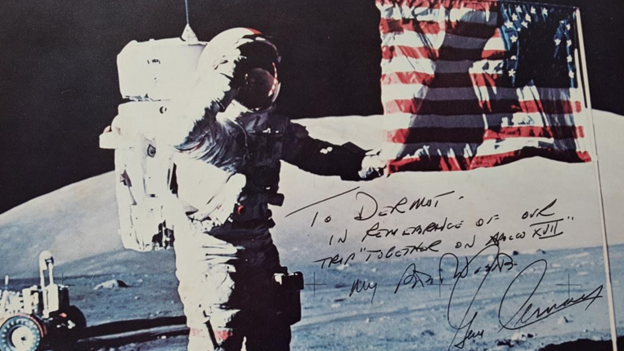
What became of the moon rock?
The lunar sample collected during the mission was divided into 80 pieces, with each student receiving one as a goodwill gift. Gethings became the custodian of the UK's Apollo 17 Goodwill Moon Rock — a responsibility he took seriously. In July 1973, he presented the rock to Prime Minister Edward Heath at 10 Downing Street, where he was photographed alongside the Prime Minister, Brigadier Jim McDivitt and Walter Annenberg.
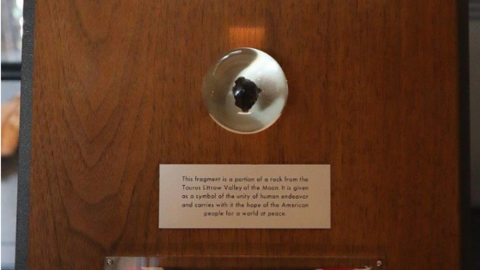
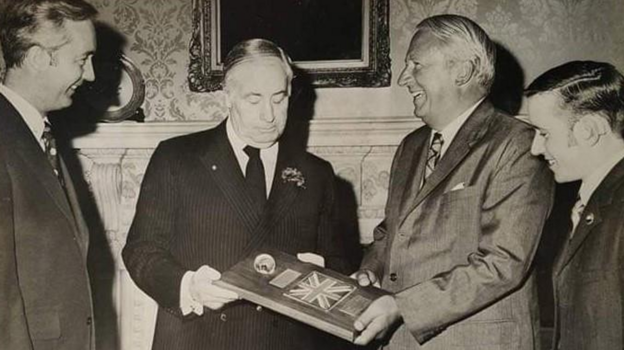
The moon rock now resides on permanent display at the Natural History Museum in London, where it remains a tangible connection to humanity's greatest space exploration achievement.
What has Gethings done since?
Gethings has maintained his dedication to astronomy throughout his life. He became a fellow of the Royal Astronomical Society and currently serves as vice chair of Preston & District Astronomical Society. He also collaborates with the Jeremiah Horrocks Institute at the University of Central Lancashire, delivering lectures on astronomical topics.
His remarkable story is now being documented in a 30-minute film titled "The Custodian of the Goodwill Moon Rock," produced by University of Lancashire graduate Sarah Bullough. Reflecting on the opportunity to see his journey on screen, Gethings said:
"Space had been a passion all my life. To be brought over there to see places and meet people that you have only ever read about or seen on TV - it was the stuff of dreams. I knew what a privilege it was - even at the time. It will just be fantastic to see that journey on the big screen."
The documentary screened at the University's Preston Campus on Wednesday 14 October, offering audiences a glimpse into one teenager's extraordinary encounter with history.