

David Olusoga, the historian and broadcaster, reveals in a first-person account why A House Through Time has become one of British television's most enduring documentary hits, nearly a decade after it first aired on BBC Two. The sixth series, filmed in Edinburgh and centred on an 18th-century tenement on Calton Hill, is due to broadcast this month, continuing a format that traces the lives of ordinary residents who occupied a single house across generations.
Olusoga admits that when the first series was being filmed almost ten years ago, he doubted whether the concept would resonate beyond a niche audience of historians. He had studied urban history for his master's degree and was drawn to the idea of tracing a city's broader story through the residents of one building, but worried the narrow focus of a single address would alienate viewers unfamiliar with the subject.
How did the first series set the template?
The debut series focused on 62 Falkner Street in Liverpool's Georgian Quarter, a house whose history mirrored the city's own fortunes. Olusoga writes that the property's story tracked Liverpool's rapid rise as an imperial port, its destruction during the Blitz, a steep post-war decline into slum housing slated for demolition, and its eventual rescue through early 21st-century gentrification. He says he feared audiences would question why the production had confined itself to such a tight lens on the past, yet the format's popularity proved him wrong.
Why has the show endured for six series?
Olusoga now believes he underestimated what old houses mean to the people who inhabit them, describing houses with long histories as "magical places." He suggests that anyone who has lived in an old home has, during a sleepless night, wondered who else once gripped the same banisters or knew the location of the same creaky floorboard. The series, he argues, surfaces the kind of hidden human stories that could be uncovered in almost any home, given enough time and research, and serves as a reminder that houses outlast the individual chapters of the people who pass through them.
He also credits the format's survival to the fact that it could only be made by public service television, given the resources and specialist staff required. Teams of researchers, assistant producers and series producers have tracked down thousands of archival documents across six series, with breakthroughs often arriving in the final weeks of filming when a researcher uncovers a missing document or detail that resolves a long-standing question.
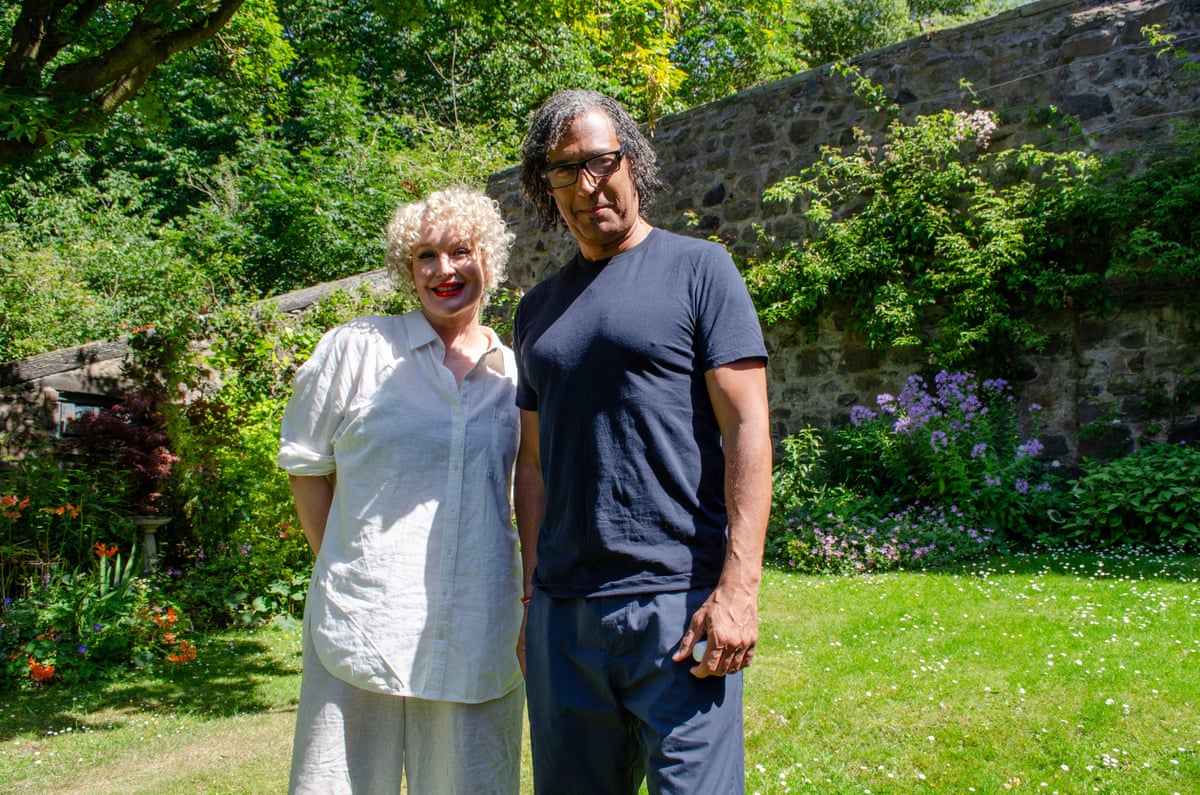

Why move the series to Edinburgh?
Olusoga says he had long wanted to bring the format to Scotland, and the new series is set in a five-storey stone tenement on Calton Hill in Edinburgh. He describes the Scottish capital as one of the few cities that is both architecturally and topographically dramatic, built around a castle atop an extinct volcano and ranking alongside Cape Town, Hong Kong and Rio de Janeiro for the drama of its setting. Because Edinburgh's city walls once restricted expansion outward, the city grew upward instead, producing tenements rising ten storeys or more, a pattern of vertical density Olusoga compares to Prague and Stockholm rather than most English cities, describing Edinburgh as a kind of medieval Manhattan.
The residents uncovered in the Calton Hill house include a man at the centre of one of Edinburgh's strangest criminal trials, whose case was infamous enough to be depicted in engravings sold on the city's streets, and another who joined a volunteer regiment during the politically fraught years following the French Revolution. One Victorian-era resident, a woman who proved unusually difficult for the production team to trace, was later found in Edinburgh police records to have converted the property into what those records describe as "a house of ill-fame." Another nineteenth-century occupant was a sculptor whose public monuments remain scattered across Edinburgh today, work Olusoga says he has walked past since childhood visits to the city in the 1970s.
How does the show fit into wider trends in history?
Olusoga situates the programme's appeal within a broader shift in historical study away from a narrow focus on "great men" toward social history, working-class history, women's history and imperial history. He points to the growth of genealogy research as evidence that ordinary ancestors are now widely regarded as worthy of study and remembrance, a shift he believes has fed directly into the popularity of a format built entirely around the lives of previously unrecorded residents.
How big has the show's audience actually been?
According to the BBC's own commissioning announcement, the programme's third series drew more than three million viewers, with the consolidated audience for the run at the time also exceeding three million. The broadcaster's programme listings, reviewed via the official BBC programme page, show five seasons catalogued in its metadata, while IMDb's listing records the show as an ongoing television mini-series since 2018, carrying an audience rating of 8.3 out of 10.
What is the show's history, and what else has Olusoga presented?
The series first aired on 4 January 2018, according to an episode guide, and has remained a BBC Two production throughout its run, per the broadcaster's own programme page. Before taking on the series, Olusoga presented Black and British: A Forgotten History in 2016, according to an IMDb credit listing, a project that similarly explored overlooked historical narratives.
The programme's focus on domestic history sits alongside other home-centred television that has found sustained audiences in recent years, including Scotland's Home of the Year, now in its eighth series, which similarly seeks out properties that feel "lived in and loved" rather than simply well-designed.
What happens next?
Listings from Radio Times show the new series airing on Thursday 6 August at 9pm on BBC Two, a date that differs from the 13 August broadcast referenced elsewhere in coverage of the series; both dates are reported here given the discrepancy between sources. The broadcaster's programme page also confirms that episodes remain available to stream afterward through BBC for viewers who miss the original transmission.
Key Facts
- Series six of A House Through Time is set in an 18th-century tenement on Calton Hill, Edinburgh.
- The show has produced 24 hour-long episodes across cities including Liverpool, Newcastle, Bristol, Leeds, London and Berlin.
- According to the BBC, series three drew more than three million viewers.
- The series debuted on 4 January 2018 and is a BBC Two production.
- Radio Times lists the new series airing on Thursday 6 August at 9pm, though other listings cite 13 August.


