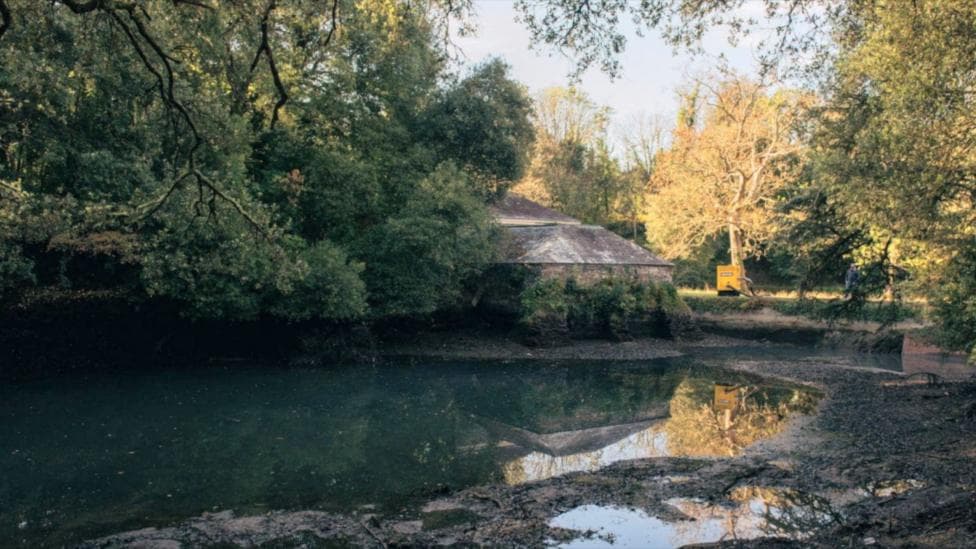
A partnership of three organisations has launched plans to restore a historic swimming pond on the Antony Estate in Cornwall, with funding from the National Lottery Community Fund. The initiative aims to return the 18th-century bath house pond to active use and establish it as a community resource for swimming, nature connection and environmental education.
According to BBC News, the Carew Pole Garden Trust, Torpoint Artists Collective and Rooted Futures are collaborating on the project. The three organisations said they were "taking the first steps" towards restoration, with specialists beginning to assess how the pond could be cleared, identify tree maintenance requirements and understand the tidal inlet and water movement across the site.
The bath house and its associated pond date to the late 18th century. Historic records show the Bath House was designed by Devonport architect Thomas Parlby between 1788 and 1790, while the pond itself appears to have been constructed earlier by Humphry Bowen. Reginald Pole Carew, who had inherited Antony, commissioned the structures to provide a swimming location within the stretch of woodland bordering the tidal River Lynher.
When first constructed, the pond served as a functional swimming facility. The associated bath house contained a sunken pool fed by the pond, where women would bathe. However, over successive decades the site's purpose shifted. As surrounding trees shed leaves into the water and organic matter accumulated at the bottom, the pond became increasingly unsuitable for swimming and evolved into a decorative garden feature instead.
Sir Tremayne Carew Pole, the current resident of the estate, expressed his long-standing desire to reverse this decline. "I've always wanted to restore it to be swimmable and to share the benefits with those in the local community," he said.
How will the restoration work?
The three partner organisations have defined distinct roles in the project. The Carew Pole Garden Trust will lead the physical restoration work, Torpoint Artists Collective will focus on creative learning programmes, and Rooted Futures will coordinate the partnership while assessing its impact.
The initial assessment phase will inform the next stages of restoration and help shape a long-term vision. The partners stated their aim was to "create a welcoming community resource where people can connect with green and blue space, discover the natural environment and contribute to the long-term care of a valued local landscape". Education, creativity and community participation will be central to the project's design.
Torpoint Artists Collective will develop a programme of artist-led workshops including wildlife recording, photography and nature journalling. The collective's gallery on Fore Street is planned as a town-centre hub for project updates, discussions and creative events. Rooted Futures will gather participant feedback and monitor biodiversity to track changes in wildlife and habitats as the restoration progresses.
When will swimming resume?
No confirmed timetable has been set for the pond to reopen for swimming. The restoration process will depend on completing assessments of water quality, safety and environmental conditions. Workshops, volunteering opportunities and an exhibition are planned, but these will proceed alongside the technical work rather than before it.
How can people get involved?
Open-water swimmers, nature lovers and anyone interested in the pond's future have been invited to share feedback and volunteer. A Friends of the Pond group will be established to "help shape the next steps, bringing together local knowledge, practical skills and ideas for the site's long-term care and use". Those wishing to participate can contact Antony Woodland Garden by email to express interest.
What is the wider context?
The Antony Estate has a much longer history of water features than the 18th-century pond. Richard Carew's mid-16th-century salt-water fishpond was designed to trap sea fish, and he described it in his 17th-century account of Cornwall. The National Trust acquired Antony in 1961, though the Carew Pole family continues to reside at the estate.
This restoration project reflects a broader revival of interest in historic water features across Britain. Similar initiatives have demonstrated the cultural, health and environmental benefits of restoring such sites. The project aligns with growing enthusiasm for outdoor swimming and community access to natural spaces.