The sale of the unwanted cement sculptures from Alan Carr's castle in the Scottish Borders meant more to Clare Stephens than most. The Branxton Menagerie has special meaning for the descendants of James "Pim" Beveridge, who was involved in its creation.
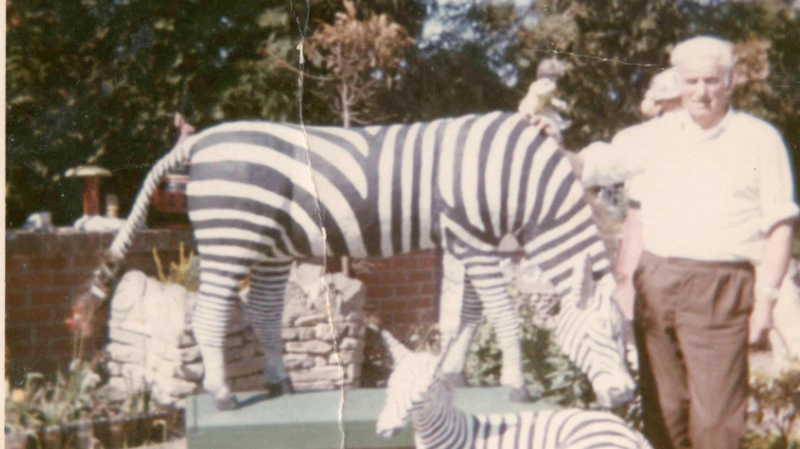
Some of Clare's fondest memories are of visiting the creations at their original home in Branxton in Northumberland. That is because her grandfather, James "Pim" Beveridge, helped his boss John Fairnington to make them for his disabled son Edwin.
And, although she was unable to secure any of them at auction, Clare said her family had been proud of the level of interest they attracted when they were sold earlier this summer.
Family photos capture Beveridge with some of the creatures he helped to create
The Branxton Menagerie was a popular visitor attraction for decades before it was sold to the previous owners of Ayton Castle in 2021. It was originally intended it would go on display at its new Borders home but that never happened.
Then the castle was sold to the TV comedian and Celebrity Traitors winner earlier this year. Neither he, nor the previous owners, wanted to keep the cement creations - along with many other items - so they ended up in a "residual" sale.
They all found a buyer - apart from one badly damaged cow.
Carr offered it recently to fellow comedian Johnny Vegas, external during The Sara Cox Breakfast Show on BBC Radio 2 but he would not take it either.
Clare Stephens - pictured with children George and Ella - said she tried to bid for some items but was unsuccessful
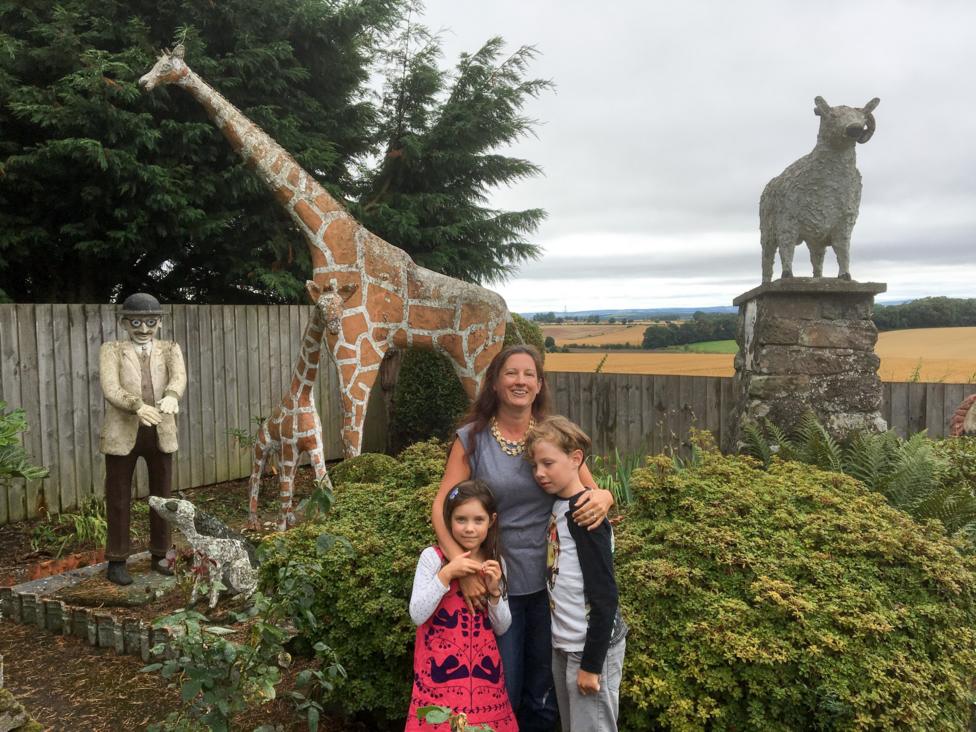
Clare, from Kendal, Cumbria, said that all the coverage had brought back a lot of family memories.

"We're very fortunate that we've recently, just this year, gone through a box of things that my mum had that shows the gardens in various stages," she explained.
"Mr Fairnington was my granddad's employer - he was a builder and my granddad was a joiner.
"Mr Fairnington would say what he liked and he'd pay for all the equipment and grandad would make them."
They also found newspaper articles from the 1970s reporting how popular the attraction had become with up to 2,500 visitors a year.
Beveridge helped to bring John Fairnington's ideas to life
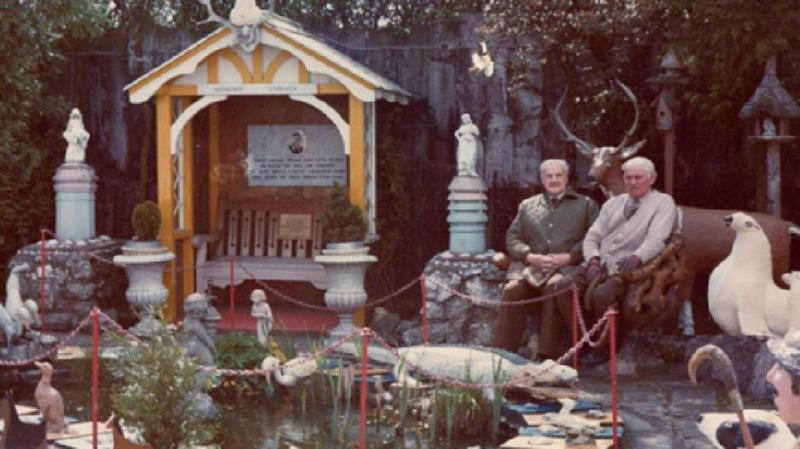
It was a favourite place for Clare and her sister Julie Fish to visit.
"My sister and I can remember going up to the gardens and going pretty much every day when we used to go and visit him to work on sculptures and make more," she said.
"He made a few for us when we were younger as well."
She followed their story when they were sold to Ayton Castle.
"I got in touch with them to give them some information and they had planned to restore them, but obviously that's not been possible," she said.
Clare said she would be intrigued to find out what had happened to the menagerie
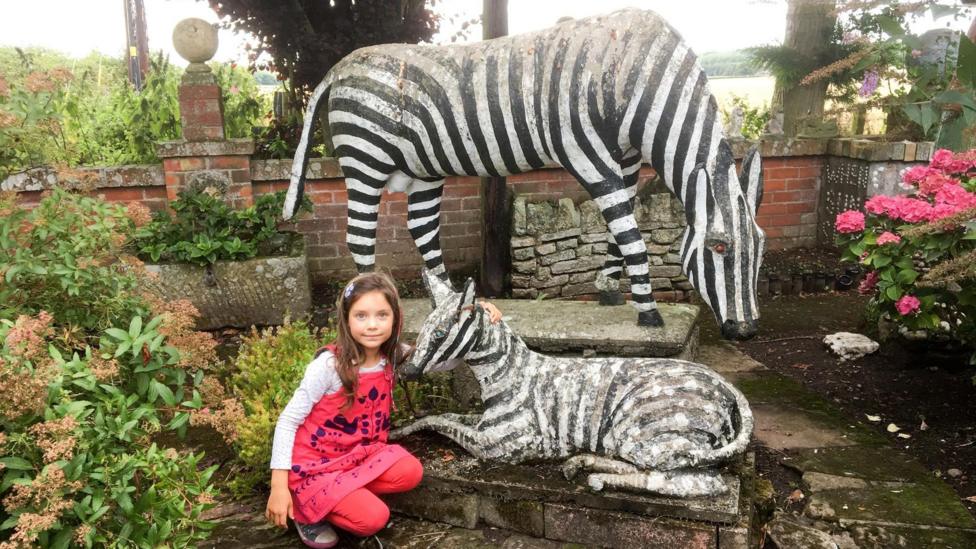
The next phase of their life was the auction at the beginning of July where, despite some attempts to keep them together, they sold to a number of bidders.
"They do seem to have gone off to various places," said Clare.
"I was bidding on a couple and I didn't manage to get any but my niece managed to get some frogs and my mum's managed to get some squirrels.
"So we have got some and I have still got a tortoise from when I was little that he made for me - it's only a tiny thing."
She admitted she would be intrigued to find out what has happened to them all.
"It'd just be nice to know where they've ended up and what people are doing with them," she said.
"The idea was they'd go on display - it was all about children and for people's enjoyment."
Get in touch
Did you buy a piece from the Branxton Menagerie? What have you done with it?
She said they were pleased they had been saved and sold on and gained wider attention.
"It's become quite a big story, which has been quite surprising," she said.
"It was nice to see that quite a lot of them went for quite a good price and it seems that a lot of people have got really fond memories."
She said it was something her family was quite proud of.
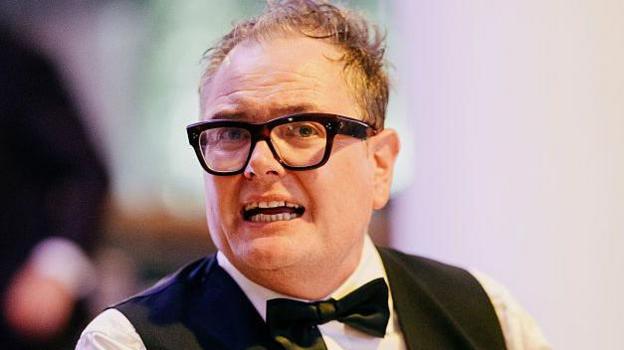
Carr, pictured, recently offered the one item which did not sell at auction to comedian Johnny Vegas
"It's a quirky thing, isn't it?" she said.
"I suppose when you're young, you just take that as normal - that's what everybody's grandparents do - it just becomes kind of a normal thing.
"But it definitely is quite an achievement.
"It's lovely to think that was something that so many people have enjoyed and want to have a part of."