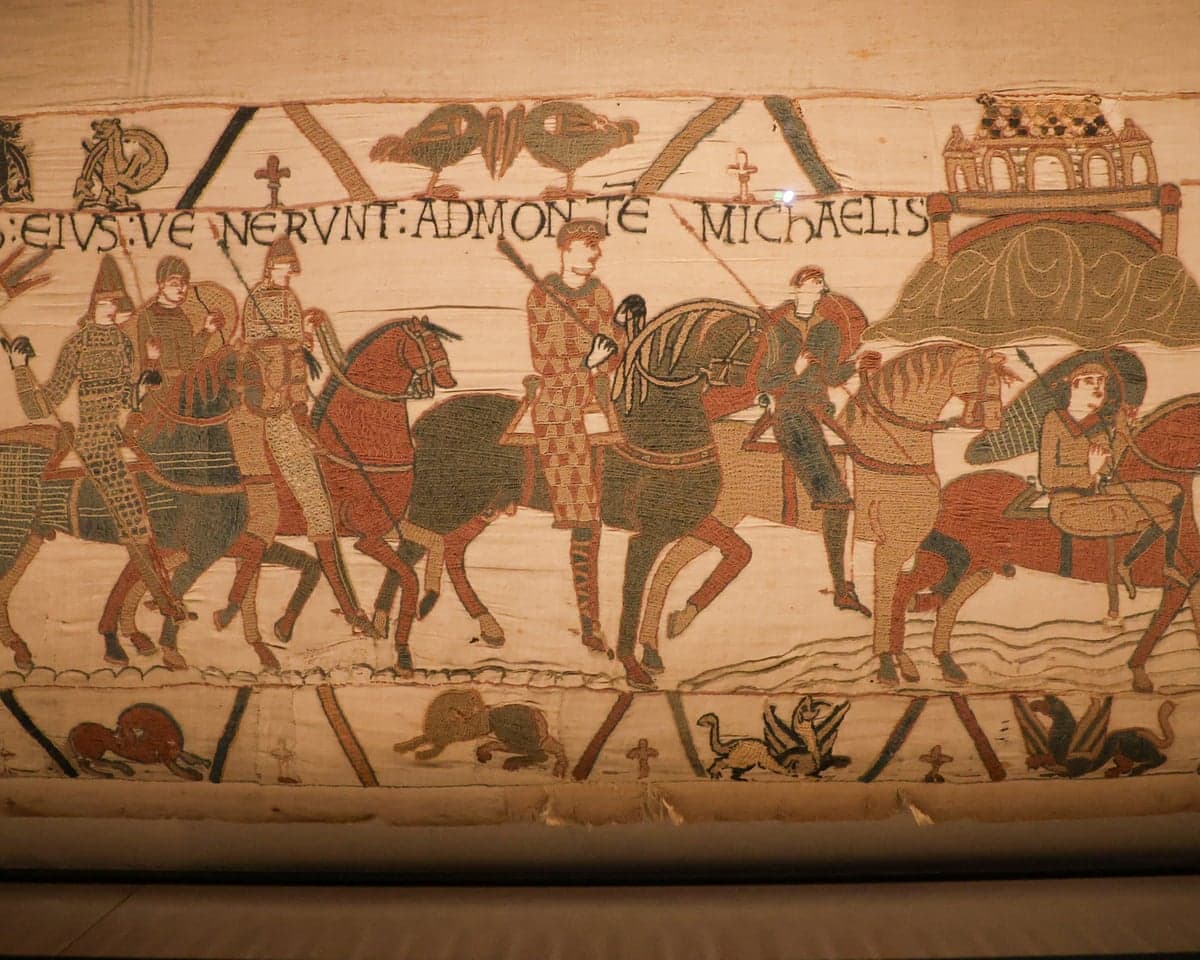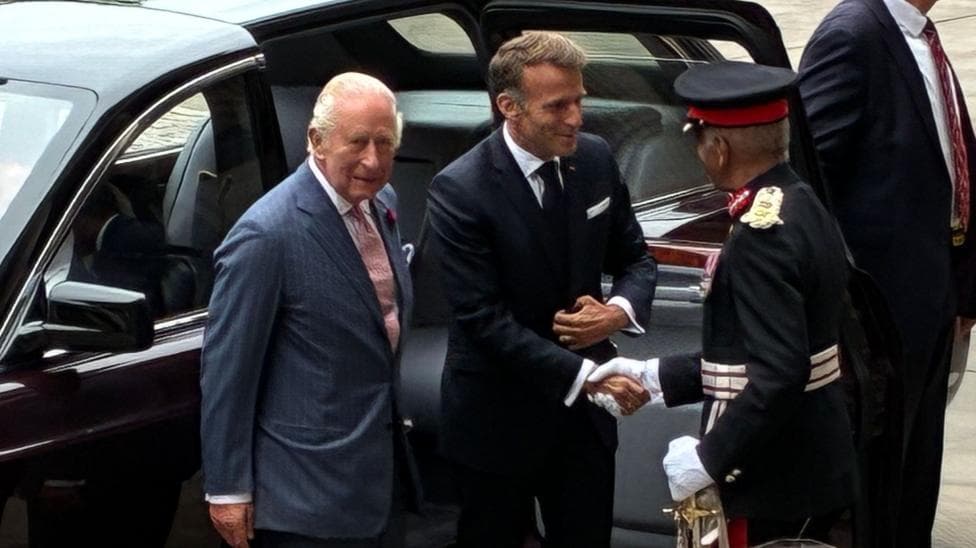
King Charles, French President Emmanuel Macron and UK Prime Minister Andy Burnham gathered at the British Museum on Wednesday evening for an exclusive preview of the Bayeux Tapestry, ahead of one of the year's most anticipated cultural exhibitions opening to the public.
The medieval tapestry, a 70-metre (230-foot) work originally embroidered in England but housed in France for centuries, will go on display from 10 September 2026. The exhibition marks the first time the artefact has been shown on British soil and is expected to run for 10 months, until 11 July 2027.
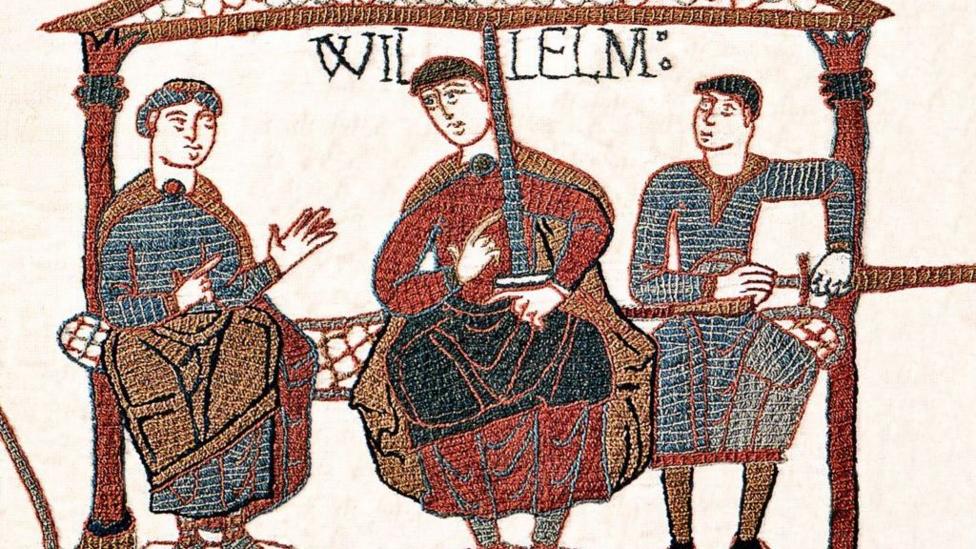
The loan of this national treasure until July 2027 represents what President Macron described as a "powerful symbol" of the enduring partnership between the United Kingdom and France. The tapestry chronicles the Norman Conquest and the Battle of Hastings in 1066, when William of Normandy defeated King Harold to claim the English throne.
During the preview, King Charles and Queen Camilla, Prime Minister Burnham and his wife Marie-France van Heel, and President Macron alongside his wife Brigitte were guided through key scenes, including the Coronation of King Harold and his death in battle. School children from both nations attended the event, with the King and French president delivering speeches to mark the historic loan.
The decision to send the tapestry to the British Museum had been announced by Macron during a French state visit to the UK in July 2025, symbolising the strong bilateral relationship between the countries. Concerns about potential damage to the fragile medieval work during transport were addressed by French government sources, who confirmed that "the display conditions at the British Museum are ideal."
French and British conservators have confirmed that the tapestry is in a "wonderful state" after its journey to London and are conducting checks before the display opens. The museum's decision to display the tapestry lying flat rather than upright is expected to benefit the conservation of the fibres, which were sewn more than 900 years ago.
The tapestry's final scenes are believed to have been lost or destroyed over the centuries. During the French Revolution in the 18th century, it narrowly escaped being cut up to provide covers for soldiers' carts. At a state banquet hosted by King Charles in Windsor, Macron reflected on this missing ending, saying it was a symbol that "in the great mural of Franco-British history, the end is yet to be written - it is up to us to do it".

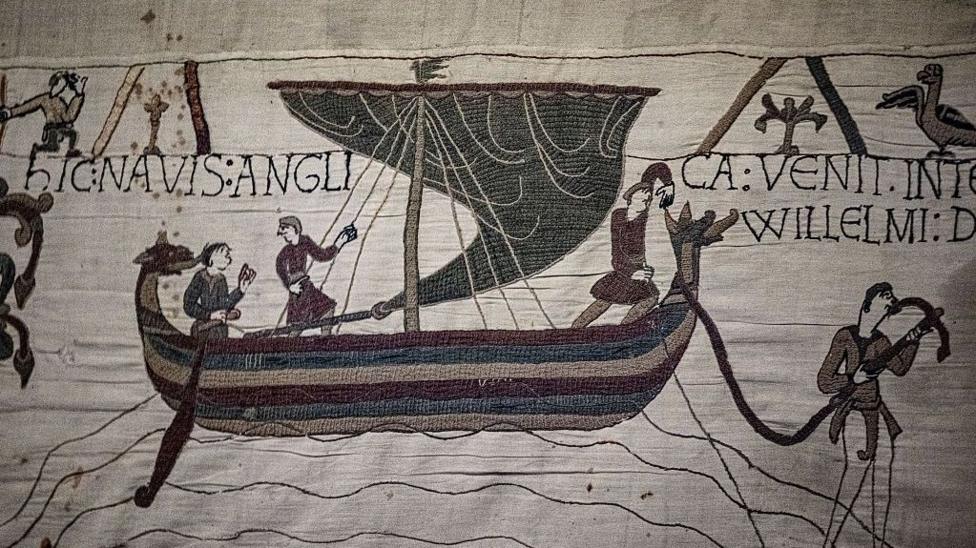
The tapestry itself is a remarkable historical document, believed to have been embroidered by English women for the new Norman rulers in the 1070s. It comprises 58 separate scenes, featuring 627 human figures, 737 animals, 37 ships and 23 trees, with Latin narration accompanying the images. Using dyed wool stitched onto linen, it depicts the competing claims to the throne, the Norman crossing of the Channel and the decisive Battle of Hastings, which resulted in Harold's death and William's ascension to the monarchy.
This visit marks the first official joint engagement undertaken by King Charles and Burnham since the Prime Minister took office in July 2026. Burnham described the tapestry exhibition as an opportunity to celebrate the "shared heritage" between the two nations.
"The return of the Bayeux Tapestry to England is a landmark moment in the history of our two nations,"he said.
French government sources indicated that the occasion also provides an opportunity for President Macron to develop his relationship with Burnham. Among the topics expected to be discussed are support for Ukraine, the conflict in the Middle East, relations with the European Union, and the movement of small boats across the Channel—a contemporary echo of the Norman crossings depicted in the tapestry itself.
As part of this cultural diplomatic exchange, the UK is lending France one of the British Museum's most prized possessions: treasures from the Anglo-Saxon Sutton Hoo burial, a significant archaeological discovery that complements the historical narrative of the Bayeux Tapestry.
Culture Secretary Lisa Nandy emphasised the significance of the exhibition, stating:
"Britain and France have a unique shared history and nothing symbolises it more than the Bayeux Tapestry."She added that
"a generation of British children will remember it for the rest of their lives".
Ticket demand and visitor information
The exhibition has generated substantial public interest. The British Museum reports that the exhibition is already sold out until the end of 2026, with adult tickets priced at £33 at peak times and £27 off-peak, with under-16s admitted free when accompanied by an adult. The exhibition is planned as a 40-minute timed experience in the British Museum's Sainsbury Exhibitions Gallery, with school visits set aside each week for children.
The next tickets, covering visits between January and March 2027, will become available from the British Museum from 21 October 2026.
What happens next
The Bayeux Tapestry opens to the public on 10 September 2026, marking a significant moment in cultural diplomacy and heritage preservation. The exhibition's timing coincides with commemorations of the 1,000th anniversary of William the Conqueror, adding historical resonance to the display. Visitors will have until 11 July 2027 to experience this medieval masterpiece on British soil for the first time in its history.