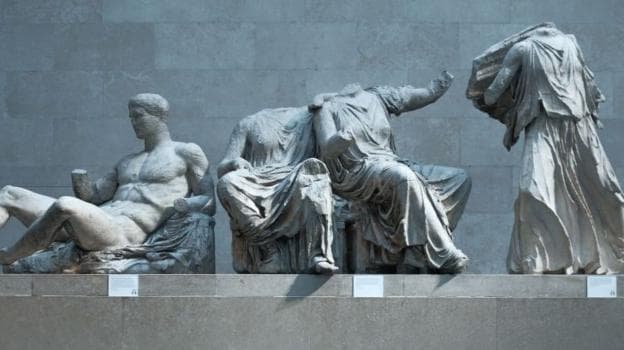
Greek Prime Minister Kyriakos Mitsotakis has directly appealed to Manchester Mayor Andy Burnham to demonstrate the "political will" needed to secure a permanent return of the Parthenon sculptures from the British Museum to Greece. Writing in a major newspaper, Mitsotakis framed the move as both historically necessary and symbolically powerful, though he acknowledged it would demand considerable courage from British decision-makers. The sculptures, known as the Elgin Marbles in the UK, have remained in the British Museum since the 19th century despite Greece's longstanding legal and diplomatic challenges to their removal.
Mitsotakis's intervention comes as negotiations between Greek authorities and the British Museum have reportedly reached an impasse. According to exclusive reporting, discussions between the two sides have effectively collapsed, with no active negotiations currently underway. The Greek government has pursued repatriation efforts intensively since reopening formal talks with the museum in 2021, but the two parties remain fundamentally at odds over the terms of any potential agreement.
The timing of Mitsotakis's appeal reflects frustration with recent developments at the British Museum. The institution's director, Nicholas Cullinan, had suggested that the successful loan arrangement for the Bayeux Tapestry—which arrived at the British Museum for the first time in nearly 1,000 years—might offer a template for resolving the Parthenon dispute. Mitsotakis firmly rejected this comparison, arguing that a loan model is fundamentally incompatible with Greece's position.
In his statement, Mitsotakis employed a pointed analogy to illustrate the absurdity of the current arrangement.
"Nobody would seriously contemplate cutting what survives of the tapestry in two and displaying half in London and half in Bayeux, and claiming this was an adequate way to understand it,"he wrote.
"Yet that is exactly what happened to the Parthenon sculptures."
The Greek leader was equally explicit about what Greece will not accept.
"Greece cannot accept any arrangement that would require it to recognise the British Museum's ownership of the sculptures, or a scheme that would mean we 'borrow' parts of our own monument,"he stated. Instead, Mitsotakis called on Burnham to honour commitments the Labour politician made years earlier, before his return to high office.
What changed Burnham's position?
In 2023, several years before becoming prime minister, Burnham had declared that the sculptures should be returned to Greece with "no strings attached" and had long supported legislative changes to make this possible. However, his stance shifted markedly by last month, when he told the Financial Times that "ultimately it's an issue for the British Museum," adding that "legally that's where that issue rests." This apparent reversal prompted Mitsotakis to challenge him directly to reconsider.

How did the sculptures end up in London?
The Parthenon sculptures originate from the Temple of Athena, now known as the Parthenon, located in the Acropolis in Athens. Created between 447BC and 432BC to decorate the temple, the marble statues were removed in the early 19th century by British ambassador Lord Elgin, who had been granted permission by the Ottoman Empire, then the governing authority in Athens. An 1816 parliamentary select committee subsequently deemed Elgin's actions lawful, and the sculptures entered the British Museum collection through an act of Parliament.
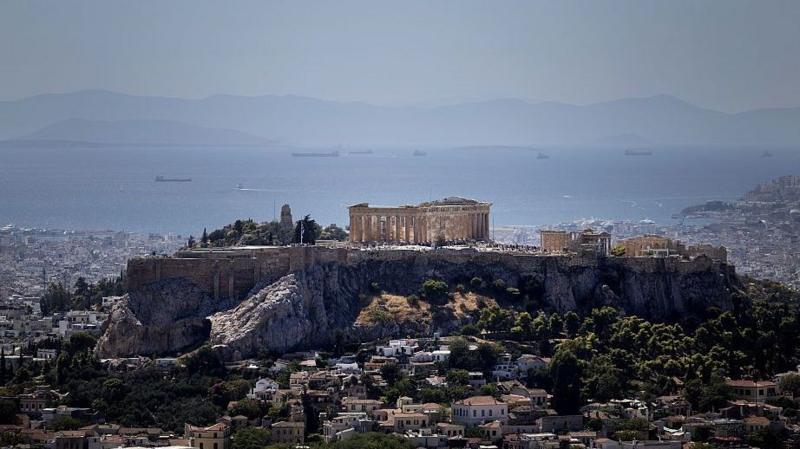
Greece has consistently disputed the legality of the removal and has mounted vocal demands for the statues' return. The Parthenon gallery in the Acropolis Museum in Athens was deliberately designed with empty spaces reserved for the sculptures held in London, serving as a physical reminder of the incomplete collection. In 2023, George Osborne, then chair of the British Museum, acknowledged the long dispute, telling a national broadcaster he was seeking a "more co-operative arrangement" after "quite a bitter disagreement" spanning more than 200 years.
What is the current legal barrier?
The British Museum and the UK government maintain that existing legislation prevents the permanent return of items in the museum's collection, though loan agreements remain permissible under current law. Campaigners have pointed out that the British Museum Act could be amended to allow permanent repatriation, but the UK government has not indicated this is a priority. This legal position has become the primary obstacle to any resolution, even as political pressure mounts internationally.
What developments are unfolding now?
Despite the apparent collapse of formal negotiations, Mitsotakis has called for efforts to return the Parthenon Marbles to be revived, insisting that a deal remains possible if there is sufficient political will and courage. His latest intervention suggests Greece intends to maintain diplomatic pressure rather than abandon the cause.
Meanwhile, the British Museum is proceeding with a separate initiative involving the Parthenon sculptures. The institution is set to lend two Parthenon sculpture fragments to an exhibition in Frankfurt, Germany, running from November 18, 2026, to July 25, 2027. Greece reportedly rejected a request to lend nine Parthenon fragments from the Acropolis Museum for the same Frankfurt exhibition, further illustrating the tension between the two institutions over how these artefacts should be displayed and shared.
Mitsotakis's appeal to Burnham represents a significant escalation in rhetoric around this longstanding dispute. Last month, Greece's health minister had suggested that US President Donald Trump might be persuaded to pressure the British government on the issue, indicating that Athens is exploring multiple diplomatic channels to advance its claim. The Greek government frames permanent repatriation as a "decisive step" that would "reunite the sculptures and transform a historic dispute into a unique act of cultural friendship."
Key Facts
- The Parthenon sculptures have been displayed in the British Museum since the 19th century, following their removal by British ambassador Lord Elgin in the early 1800s with Ottoman permission.
- Greece disputes the legality of the removal and has demanded permanent return; negotiations between Greek authorities and the British Museum have reportedly collapsed with no active talks currently underway.
- Mitsotakis explicitly rejected the Bayeux Tapestry loan model as a template for resolving the dispute, stating Greece will not accept any arrangement requiring recognition of British Museum ownership or a borrowing scheme for Greek cultural property.
- The British Museum is constrained by the British Museum Act, which the UK government has not signalled it intends to amend to permit permanent repatriation.
- Two Parthenon sculpture fragments will be loaned to a Frankfurt exhibition from November 2026 to July 2027, while Greece declined to contribute fragments from the Acropolis Museum to the same show.