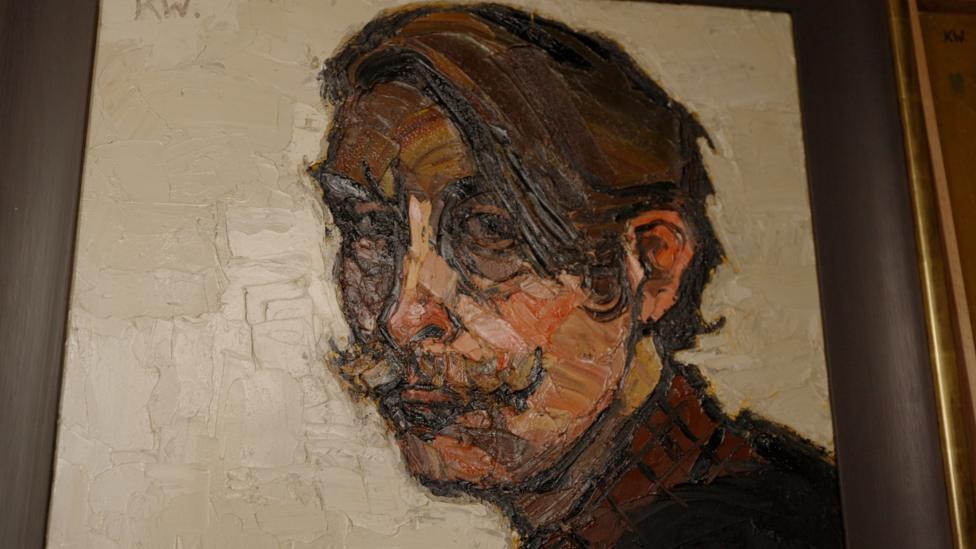
An interactive exhibition bringing the work of Sir Kyffin Williams to life has opened at the National Library of Wales, using cutting-edge projection technology to immerse visitors in the artist's mountain landscapes, hillfarms and stormy seas. According to BBC News, the experience features a 360-degree immersive space where scenes from Williams's paintings animate around visitors, alongside a touchable recreation of a self-portrait that lets people feel the texture of his distinctive thick oil technique.
BBC News reports that the National Library received £500,000 in grants to develop the exhibition, which uses technology similar to that deployed for major retrospectives of Van Gogh, Cézanne and LS Lowry. The experience was formally unveiled on 12 November, with the Rhyl Journal noting that Heledd Fychan MS, cabinet minister for culture and sport, officially launched the attraction, which marks 20 years since Williams entrusted the National Library with much of his life's work.
Sir Kyffin, born on Anglesey in 1918, is widely regarded as the defining Welsh artist of the 20th century. He developed his distinctive style using the impasto technique, applying paint so thickly to canvas that it stands out in three dimensions. The National Library holds the world's largest collection of his work, having begun acquiring pieces in 1950 when the young artist was establishing his career after leaving the Slade School of Fine Art in London.
How does the exhibition work?
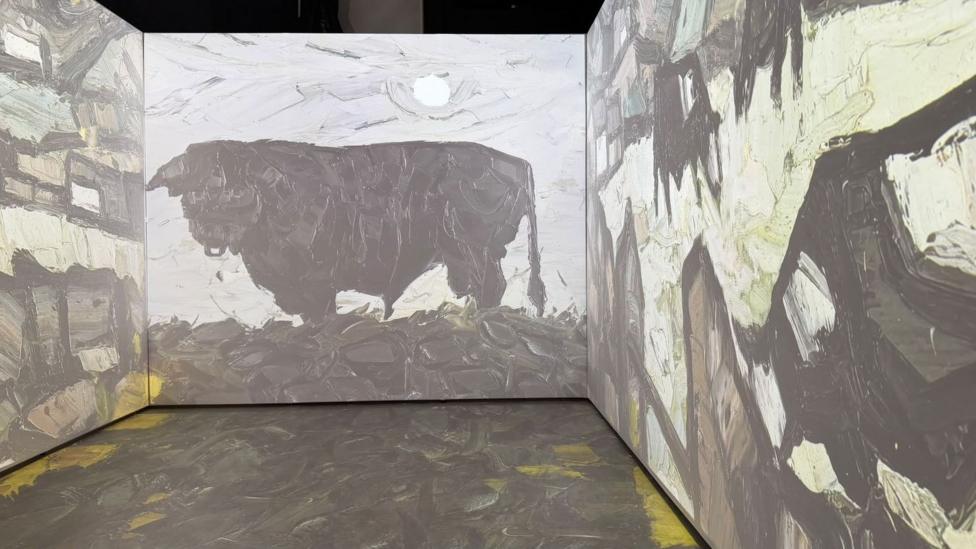
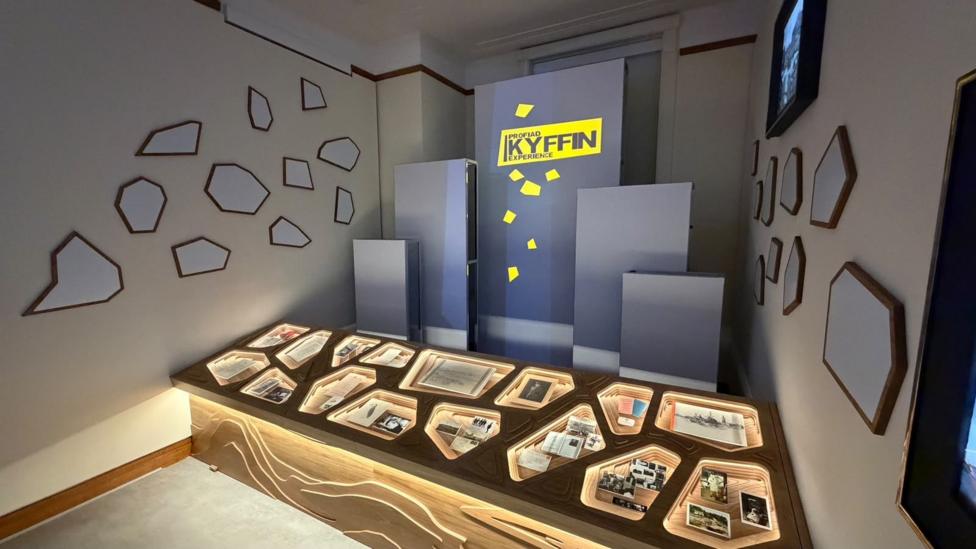
Visitors journey through three converted office spaces, each offering a different element of the immersive experience. In the opening room, the Welsh opera singer Sir Bryn Terfel narrates the life story of Sir Kyffin in both Welsh and English while images from his paintings are projected onto the walls. The centrepiece is a 360-degree projection space where scenes from Williams's work come alive—cattle graze, waterfalls cascade, and a farmer with his sheepdog move around the visitor. The Rhyl Journal reports that sessions are limited to 10 people and last approximately 30 minutes.
The final installation features an interactive touchable recreation of one of Williams's self-portraits, allowing visitors to experience the physical texture of his oil paintings firsthand. This element addresses one of the exhibition's core aims: to help audiences understand the tactile quality that defines his work.
What technology made this possible?
The exhibition was developed by Focal Studios, an immersive experience company, working in partnership with animation specialists leo&hyde. Dennis Outten, chief executive of Focal Studios, described the project as a
labour of loveand
an incredible journey for everyone involved. The team created high-fidelity 3D scans of Williams's original paintings and used advanced animation techniques to bring them to life.
We actually created a 3D model of Kyffin's farmer and dog, and then using animation techniques, puppeteering them essentially to move, Outten explained.
Outten emphasised that the experience differs fundamentally from virtual reality.
It's not like virtual reality, because you can hold the hand of your child, you can sit there with your grandmother or your friend and you experience it together. I think that's incredibly powerful, he said.
It's like you're in one of his paintings, I love it.
Why does the National Library hold so much of his work?
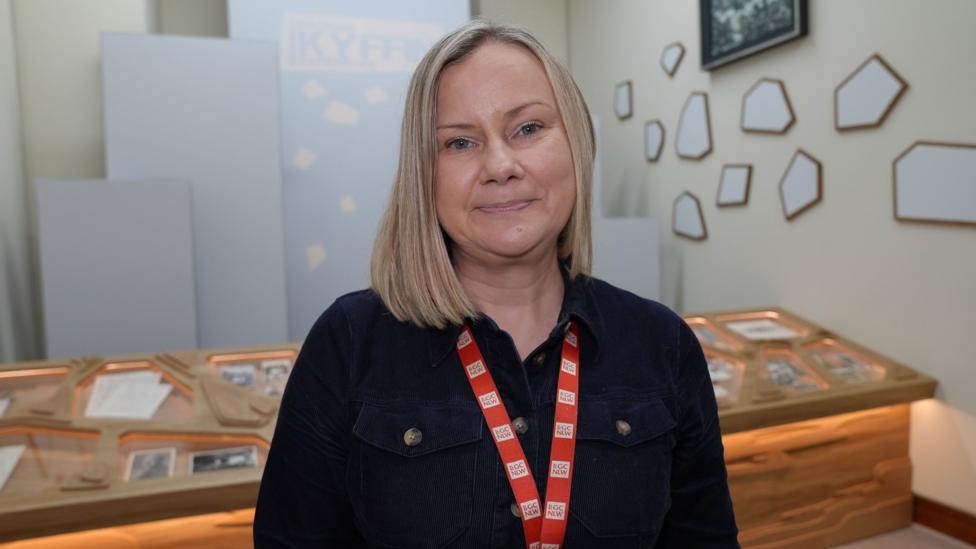
The relationship between Sir Kyffin and the National Library began in 1950 when the institution purchased two early pieces from the then-struggling young artist. Morfudd Bevan, art curator at the National Library of Wales, recalled that the library paid £15 for an oil painting of Cader Idris and £7.10 for an ink and wash drawing of Tre'r Ceiri on the Llŷn Peninsula—a total investment of £22.10.
The library saw the potential of this young artist, Bevan said.
It was really important that we were encouraging and supporting young artists at the beginning of their careers, when Kyffin was trying to establish himself as a professional artist.
Today, original works by Sir Kyffin sell for tens of thousands of pounds, making those early purchases a remarkable investment in both artistic and financial terms. When Williams died in September 2006, he left a substantial portion of his estate to the library: more than 1,200 works on paper, approximately 200 oil paintings, more than 300 original prints and his complete personal archive. This bequest cemented the National Library's position as the custodian of the world's most comprehensive collection of his work.
What does the library hope to achieve?
Carys Ifan, director of experience at the National Library, emphasised that the exhibition represents a departure from traditional art display.
It's by no means a traditional exhibition. You go on a journey, literally moving through three rooms that used to be old offices. They've been repurposed because we are so keen to open up more and more to the public. Rhodri Llwyd Morgan, the library's chief executive, positioned the experience as part of a broader institutional strategy
to be more popular, more appealing and that's our aim.
The library hopes the exhibition will introduce new audiences to Williams's work and demonstrate how contemporary technology can make historical art accessible and engaging. The immersive format allows visitors of all ages and backgrounds to connect with the artist's vision in a way that traditional gallery settings may not achieve.
When can visitors experience it?
The experience opened to the public on 18 November 2026. Nation.Cymru reported that the library released additional tickets after more than 1,000 were booked within the first 10 days of availability. Public sessions are scheduled through the end of March 2027, with tickets available through the National Library's website. Given the 10-person capacity per session and the 30-minute duration, advance booking is recommended for those wishing to attend.