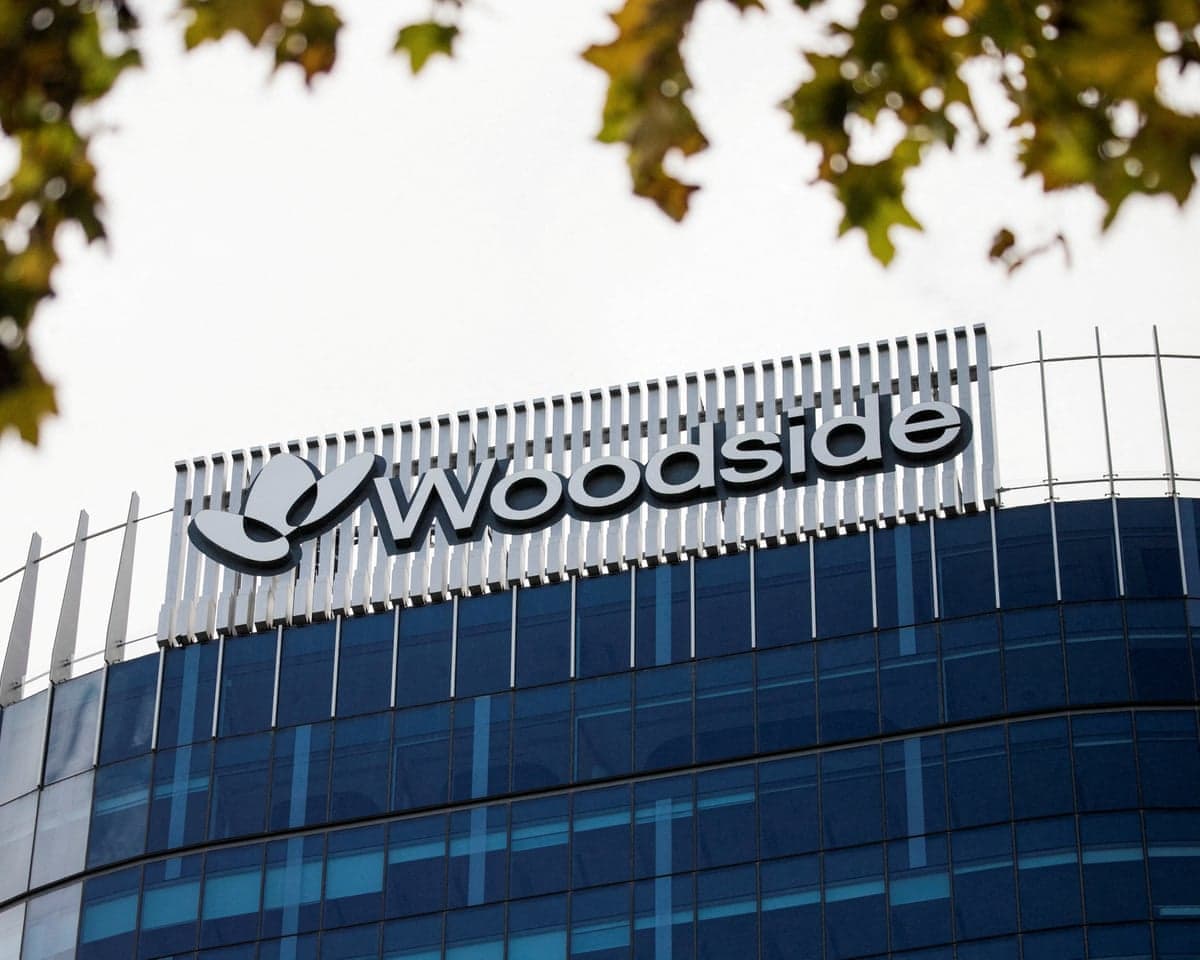
Australia's largest oil and gas producer has eliminated its long-term emissions reduction and clean energy investment commitments, even as the company benefited from exceptional profits driven by supply disruptions linked to the Iran conflict.
The Perth-based company reported a 27% surge in sales profit to $1.67bn (A$2.33bn) during the six-month reporting period, according to financial statements filed on Tuesday, following a sharp rise in crude oil prices caused by global supply constraints. The company anticipates further trading gains by redirecting crude supplies to markets offering premium pricing.
Under newly appointed chief executive Liz Westcott, who took the role effective 18 March 2026, Woodside is intensifying its focus on fossil fuel operations while retreating from decarbonisation commitments and renewable energy development.
What targets has Woodside abandoned?
Woodside has withdrawn its commitment to invest US$5bn (A$7bn) in emerging energy products, including hydrogen, by 2030. The company has also placed its ammonia production facility in the United States under strategic review—an asset previously identified as among Woodside's most promising opportunities for developing lower-carbon energy sources.
Most significantly, Westcott announced on Tuesday that the company would "retire" its scope 3 investment and abatement targets, which measure emissions generated by customers using Woodside's products. The company justified this decision by stating the targets "were established in a different market context."
"The reality is that markets for emerging lower carbon opportunities, including hydrogen, ammonia, and carbon capture and storage, have developed more slowly than anticipated," Westcott said.
Woodside stated that its new energy business would now be determined by "customer demand and commercial markets" rather than predetermined climate objectives.
What is Woodside's current emissions performance?
Despite abandoning future targets, Woodside achieved its 2025 net equity scope 1 and 2 greenhouse gas emissions reduction target of 15% below its baseline, according to the company's 2025 full-year results. The company maintains a 2030 target for a 30% reduction in net equity scope 1 and 2 emissions, and has established a methane intensity target of below 0.2% of production by volume across operated assets by 2029.

However, the withdrawal of scope 3 targets—which address the emissions produced when customers burn Woodside's oil and gas—represents a significant retreat from climate accountability, as these emissions typically dwarf the company's direct operational emissions.
How does this decision affect Woodside's portfolio?
Woodside has taken steps to streamline its operations, having sold its 70% stake in the Calypso gas project to BP. The divestment was completed on 14 August 2026, with the company stating the sale would simplify its portfolio and allow focus on higher-value opportunities. This rationalisation of Woodside's global portfolio occurs alongside the company's shift away from clean energy investments.
What is the investor and activist response?
The decision to abandon emissions and clean energy targets comes after years of shareholder pressure on Woodside's climate performance. In 2022, a shareholder revolt saw 49% of investors vote against the company's climate efforts in a non-binding poll, signalling deep investor concern about the company's environmental strategy.
Brett Morgan, investor campaigns manager at climate activist organisation Market Forces, criticised the move as a capitulation on environmental responsibility.
"Woodside has ditched its already feeble scope 3 emissions reduction and new energy investment targets, despite years of investor pressure demanding stronger climate action," Morgan said.
Morgan called on major Woodside investors, including Australian superannuation funds, to demand an end to the company's plans to expand fossil fuel operations in response to the policy reversal.
What financial returns is Woodside delivering?
Woodside declared an interim dividend of US57 cents per share, up from US53 cents in the prior year, reflecting the company's strong financial performance during the reporting period. The increased dividend reflects the company's strategy of returning profits to shareholders rather than investing in energy transition initiatives.
What lies ahead for Woodside?
Woodside's next major climate milestone is its 2030 emissions-reduction target of 30% reduction in net equity scope 1 and 2 emissions. The company also faces a 2029 deadline for achieving its methane intensity target of below 0.2% of production by volume across operated assets. However, with scope 3 targets now abandoned, the company's overall climate accountability framework has been substantially weakened, leaving questions about how seriously Woodside will pursue even its remaining direct emissions reduction commitments.