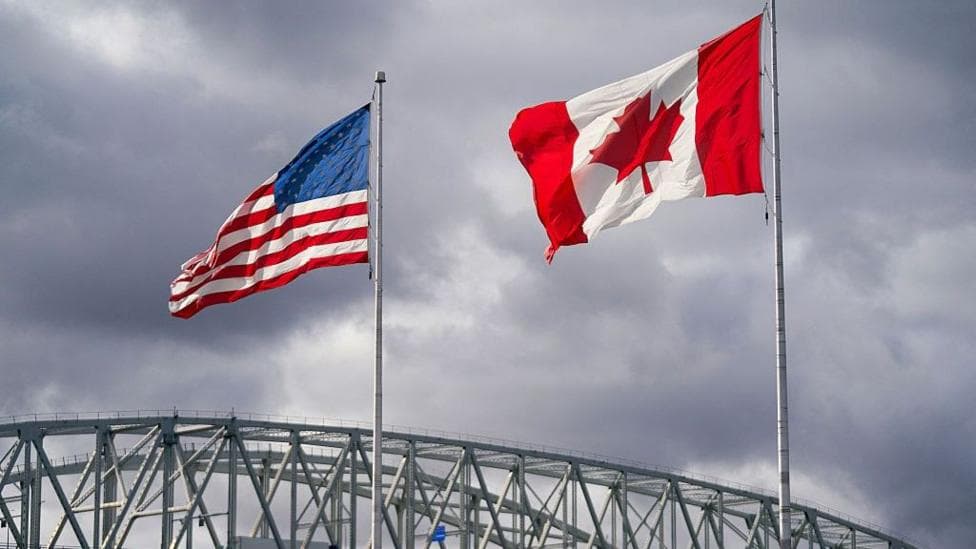
President Donald Trump has announced plans to raise US tariffs on Canadian automobiles, trucks and auto parts from their current 25% level to 50%, marking a sharp intensification of trade tensions between the two nations. The threatened increase follows the breakdown of negotiations between Washington and Ottawa late last week, with both sides publicly accusing the other of introducing unacceptable last-minute demands that made agreement impossible.
According to , the new 50% tariff rate on Canadian cars, trucks and auto parts will take effect on 1 January 2027. The collapsed agreement would have reduced tariffs on Canadian cars and light-duty trucks to 15% and lowered steel and aluminium tariffs to 25%, but negotiations fractured over the treatment of medium- and heavy-duty trucks.
A White House proclamation indicated that 50% duties on certain Canadian products already took effect on 22 August 2026, with the administration citing Canada's maintenance of a 25% tariff on some US motor vehicle imports since 9 April 2025.
What triggered the breakdown in talks?
Negotiations between the two countries collapsed late on Friday, moments before a US-imposed deadline that would have activated a 50% levy on nearly $20 billion (C$28 billion; £14 billion) of Canadian imports. Canadian officials stated that the US introduced last-minute demands they deemed unacceptable, including a clause that would restrict which countries Canada could sign trade deals with. US Trade Representative Jamieson Greer countered in a CNBC interview on Monday, saying
"They wanted more."
The shift in tone was dramatic. Earlier in the week, both sides had appeared optimistic that a new trade agreement could be reached. According to , negotiators had been attempting to bridge gaps over possible auto-tariff cuts as recently as 17 August, with discussions centred on lowering the 25% auto tariff. The proposed deal would have provided meaningful relief had agreement been reached before the talks broke down.
How is Canada responding?
Prime Minister Mark Carney characterised Trump's tariff threat as unsurprising and accused the president of seeking to destroy Canada's auto industry. Carney stated that Canada stands ready to resume negotiations if the US approaches future talks with the
"right attitude."He emphasised his focus on supporting Canadian businesses affected by the new 50% US tariffs that took effect after the Friday deadline expired.
Carney announced C$11 billion ($7.95 billion; £5.83 billion) in funding to construct six icebreakers at a Quebec shipyard for the Canadian Coast Guard, replacing its ageing medium and heavy fleet. These vessels will be deployed to open winter shipping routes through Canada's northern and Atlantic waters, representing part of a broader strategy to diversify the country's trade relationships beyond its historical dependence on the US.
On the retaliatory front, Carney declared that Canada would counter Trump's levies with reciprocal tariffs on US goods
"dollar for dollar."According to and Al Jazeera reporting, Canada's planned retaliation extends beyond autos to encompass a broader set of US goods, including steel, dairy, appliances, agricultural equipment, pulp and paper, and electronics. These Canadian retaliatory tariffs are scheduled to take effect on 8 September 2026.
What is Ontario's position?
Doug Ford, the premier of Ontario—the province that houses Canada's auto manufacturing industry—responded to Trump's tariffs with combative language, telling the US president to
"kiss my ass."Ford also proposed that Canada should levy additional charges on US imports of oil, gas, electricity and critical minerals, and indicated he would consult with Carney on strategies to
"fight back."
Ford's remarks drew a response from Trump, who posted on Truth Social that the Ontario premier was engaging in
"bluster"and wrote:
"Someone should get these clowns to 'fall in line' or, the consequences for Canada will be far WORSE!"Canada accounts for 60% of total US crude oil imports and close to 100% of US natural gas exports, according to Canadian government data, giving the country significant leverage in any energy-related retaliation.
How will businesses be affected?
Companies on both sides of the border have warned they face substantial harm from the escalating tariff regime. In Portland, Oregon, Mike Roach and Kim Osgood, owners of Paloma Clothing, noted that the price of one of their best-selling items—specially designed pillows manufactured in Canada—could rise by approximately 50% to $90. For now, they are maintaining prices at current levels while hoping the tariff dispute resolves quickly. Roach explained the challenge:
"It would be one thing if we had three months' notice - that would be something you could plan around, do some work with the vendors. But when it happens literally overnight you're really stuck."
What does this mean for the broader North American trade framework?
The rapidly escalating trade war has raised questions about Mexico and the trilateral trade pact binding the three North American neighbours—the USMCA (United States-Mexico-Canada Agreement). Both Canada and Mexico have expressed their desire to extend the USMCA for another 16 years, but the US has signalled it will not renew the pact in its current form. The agreement underpins $1.6 trillion in North American trade.
Experts from Oxford Economics warned on Monday that escalating trade tensions mean
"the risk of the USMCA unravelling has increased,"cautioning that such an outcome
"would plunge Canada into recession and leave it on a permanently lower growth path."The stakes extend well beyond bilateral relations between Washington and Ottawa, potentially reshaping the entire North American trading system.
What happens next?
Canada's retaliatory tariffs on US goods are scheduled to commence on 8 September 2026. The US 50% duties on certain Canadian products are already in effect as of 22 August 2026. No date has been set for the resumption of negotiations between the two countries, with both sides maintaining hardened public positions. The trajectory of the dispute will likely depend on whether either government signals willingness to return to the negotiating table with substantive concessions.