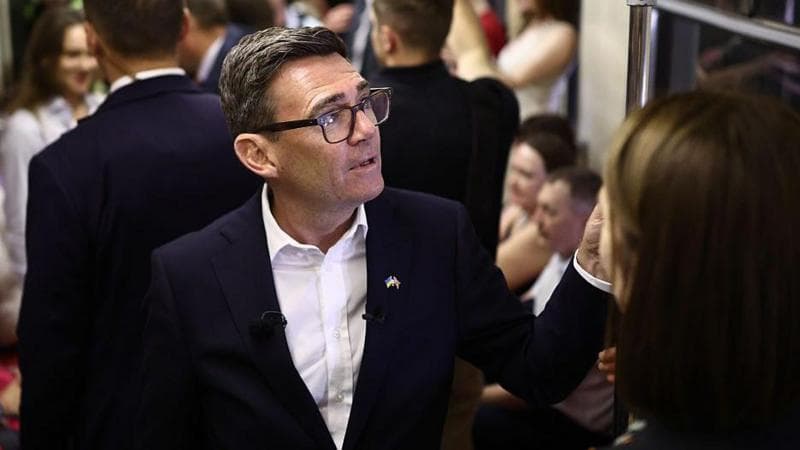
Prime Minister Andy Burnham has declined to rule out raising taxes in the forthcoming autumn Budget, stating he will not adopt an "unrealistic" stance given the "challenging" condition of the nation's finances.
During remarks made on his first official overseas visit, Burnham said he would adopt a "careful approach" to managing the economy and reaffirmed that his previously announced cost-of-living measures represent funded commitments rather than unfunded promises.
Burnham took office in July with a mandate to provide households with relief and support on living costs, yet significant uncertainty persists about the funding mechanisms for major initiatives such as social care reform. According to , his government faces substantial spending pressures stemming from an ageing population, defence requirements and wider investment ambitions.
Financial analysts have cautioned that Burnham and Chancellor John Healey will have limited scope for fiscal manoeuvre when they present their first Budget on 28 October. According to Capital Economics, the government could face pressure to raise taxes by as much as £25 billion, with possible increases affecting capital gains tax and pensions.
How have early pledges been funded?
The prime minister has already implemented several cost-of-living measures, including capping bus fares at £2 and reducing VAT on household electricity bills. During an interview with ITV from Ukraine, Burnham characterised these as "the first steps that I've felt able to make", explaining that they were achievable because funding was redirected from lower priorities.
"I took the decision early on that digital ID wasn't the top priority for now. And so we've reprioritised funding to other priorities,"he said.
Burnham has previously acknowledged through media interviews that his initial announcements aimed at tackling the cost of living are insufficient by themselves and indicated that additional support would follow. Speaking during his overseas visit on Monday, he stated that while he would provide assistance where possible, he would not be naive about the constraints.
"I won't be unrealistic and people really need to understand that. We are in a challenging position, whatever I do will be carefully thought through, it will be funded and there will be more to come as we go into the autumn."

What are the constraints on raising taxes?
When pressed on whether tax increases would be necessary to address spending shortfalls, Burnham emphasised his track record of financial discipline.
"I will always take a careful approach to things. I ran Greater Manchester for 10 years and we ran a very tight ship with rock solid finances. Nothing will change as I come into this role as prime minister. I won't take risks with people's jobs or their livelihoods or their family finances."
However, Labour's manifesto commitments significantly restrict the government's options. According to , the party's election pledges rule out increases in income tax, VAT and national insurance, meaning any additional revenue would need to come from other sources such as capital gains tax, inheritance tax or corporation tax.
Both Burnham and Healey have committed to adhering to the fiscal rules established by former chancellor Rachel Reeves. These rules require day-to-day spending to be covered by tax revenue by the end of the parliamentary term and mandate a reduction in debt relative to GDP.
What do recent economic figures show?
The fiscal situation has been complicated by mixed economic signals. Official data released last week revealed that government borrowing exceeded forecasts in July, despite income tax receipts reaching record levels. Simultaneously, inflation climbed to a four-month peak of 2.9% in July and is forecast to increase further due to the continuing effects of the Iran war, which has elevated energy prices and fuel costs.
Burnham earlier indicated a willingness to consider tax contributions from the public. According to , he suggested in July that people may need to pay "a little more" in tax because of major spending pressures and wider investment goals.
When questioned about whether the public should accept that some new policies would require tax funding, Burnham suggested this was not necessarily inevitable, though his subsequent comments indicated flexibility on the matter.
What happens next?
The Autumn Budget is scheduled for Wednesday 28 October 2026. In the weeks leading up to that date, the Treasury will need to determine its approach to balancing the competing demands of manifesto commitments, fiscal rules and spending pressures. Experts have warned that the government will need to choose between tax rises, spending cuts or borrowing within the constraints it has set for itself.
The prime minister has signalled that further support measures will be announced as the autumn progresses, suggesting that the October Budget will represent a significant moment for clarifying how the government intends to fund its agenda.