

Celine Tsoi and Charles Mock met two years ago in Goleta, California, when she was 23 and he was 27. Eight months later they were engaged, and friends immediately asked whether they were getting a prenup.
"A lot of things could happen in a marriage and you want to discuss them when you still love each other rather than when things go bad and you want to take revenge,"says Celine.
These days, it is not just the rich and famous. More people are deciding it makes sense to have a legal agreement that sets out what happens to the money if the marriage ends, with younger couples particularly likely to sign one, even when there are not major wealth differences to consider.
Charles, a nurse, earns more than Celine does as a PhD student, but she had saved a little more, so the differences were not large. Even so, they wanted to face important financial questions from the start.
She was especially touched that Charles wanted the prenup to say that if they split up, she should have the house.
Just having the conversation, Celine says, can show you what the person you are going to marry is like.
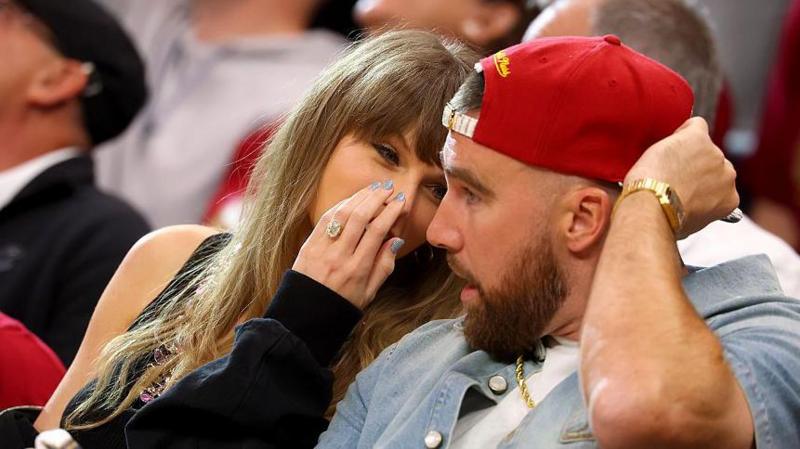
There has been much speculation over whether Taylor Swift and Travis Kelce signed a prenup before their wedding this year.
There are no official figures, but in the US, where divorce courts have long tended to uphold prenups, nearly half of married millennials and more than one in three Gen Z report that they have a prenup. Overall, around one in five married couples in the US has a prenup.
In the UK, research suggests around one in ten couples now has a prenup, following a legal shift in England towards greater recognition.
Here too, younger couples are leading the way, with around one in three married under-35-year-olds having signed one, according to surveys.
Why are more people asking for prenups?
London lawyer Mark Gilmartin of JMW Solicitors says that in the past 18 months he has seen a big increase in demand for prenups, with the billionaire-and-barmaid stereotype quickly giving way to demand from
"start-up professionals"including entrepreneurs and influencers.
"It's the attempts to protect the fruits of what's going to be, rather than what is,"he says.
But beyond the would-be TikTok stars, he sees a significant trend towards
"every-day you and I"couples wanting them, often to protect inherited wealth.
Among them is Becca Gibson from West Sussex. In a few days, when she walks down the aisle to marry Dave Howells, they will be focused on their future rather than whether the marriage might fail. But they do have a plan just in case.
Dave earns £130,000 from his finance job, more than three times what Becca earns from her business offering eyelash extensions.
"I was very open to the idea [of a prenup],"says 33-year-old Becca, especially after her first marriage
"didn't end very well".
She knows a court-determined settlement might produce a better outcome for her, as she has three children from her first marriage and Dave has only one from his.
"It's not an advantage for me... but it's a fair situation,"she says.
Dave and Becca both feel a prenup is a fairer way to handle their finances.

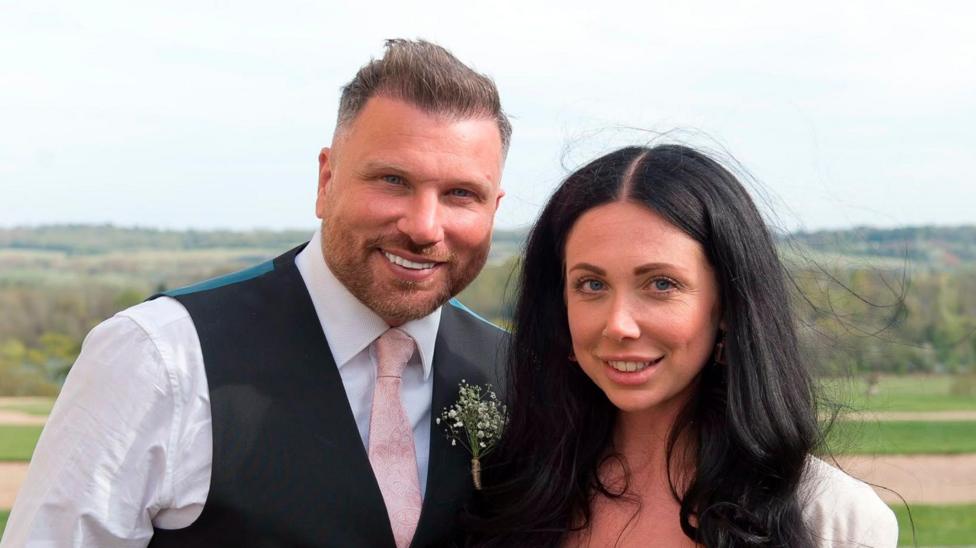
Becca expects to inherit a significant amount of property from her parents, which she wants to protect, so in the event of a split, each will walk away with what they started with.
"It's nice knowing that if anything were to happen, I would just go back to how life was before,"she says.
Dave, 45, admits it is unromantic but says that, given the statistics around divorce, he wants to be pragmatic.
"A court of law could potentially say, hang on, this guy's earning a lot more than her, he needs to pay her.
"I built a home for myself. I've built a future for myself, including pensions.
What is driving the rise in prenups?
"Park the emotional side of me loving both her and the kids, I'm no different now to when I met her, and yet she was independent. Why on earth would I have to pay something towards her life in the event of us splitting up?"
Lawyers say a desire to avoid repeating the pain of a previous separation, or the messy splits they saw their parents go through, is a prime motivation for many couples.
But prenups have also become much more accessible, thanks to online platforms that make them faster and cheaper.
Dave first went the traditional route with a local law firm, expecting to pay around £5,000. Later he switched to Wenup, a semi-automated service that charged a fixed fee of £1,600 instead.
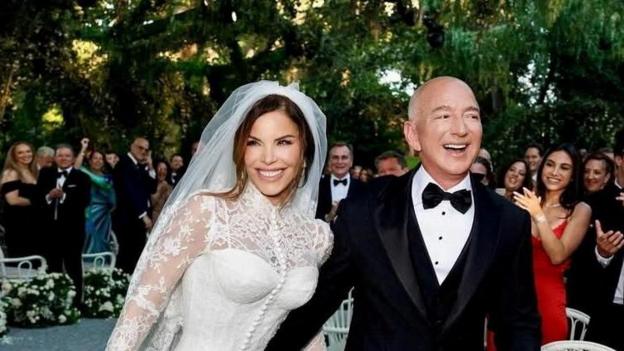
Jeff Bezos and Lauren Sanchez are widely believed to have signed a prenup before their wedding last year.
Couples are also getting married later, says Julia Rodgers, cofounder of US prenup platform HelloPrenup.
"You may have some [university] debt, maybe started a business or purchased a home. So you have a lot to protect and to lose by the age of 34,"she says.
What has become known as
"the Great Wealth Transfer"means some younger people are receiving huge assets to manage. It is often their parents who are the driving force behind ring-fencing those inheritances.
And while prenups have in the past been criticised for limiting women's rights, Rodgers argues they have evolved and now benefit women like her by giving them the chance to clarify their rights from the start.
"We want to make sure we have the honest, open, transparent conversations about life goals, about finances, about roles and responsibilities in the home, so that we can have a long, happy marriage and not end up in that position that we saw our parents in,"she says.
Celine says most of her friends think prenups are a good idea.
It only cost her a few hundred dollars online, but even if she had had to pay lawyers, she says it would have been a worthwhile
"investment"in the marriage, and less expensive, but probably more important than the wedding itself.
Best of all, she and Charles have got the
"hard conversations"out of the way.
"We haven't had a single argument about finances,"she says.


