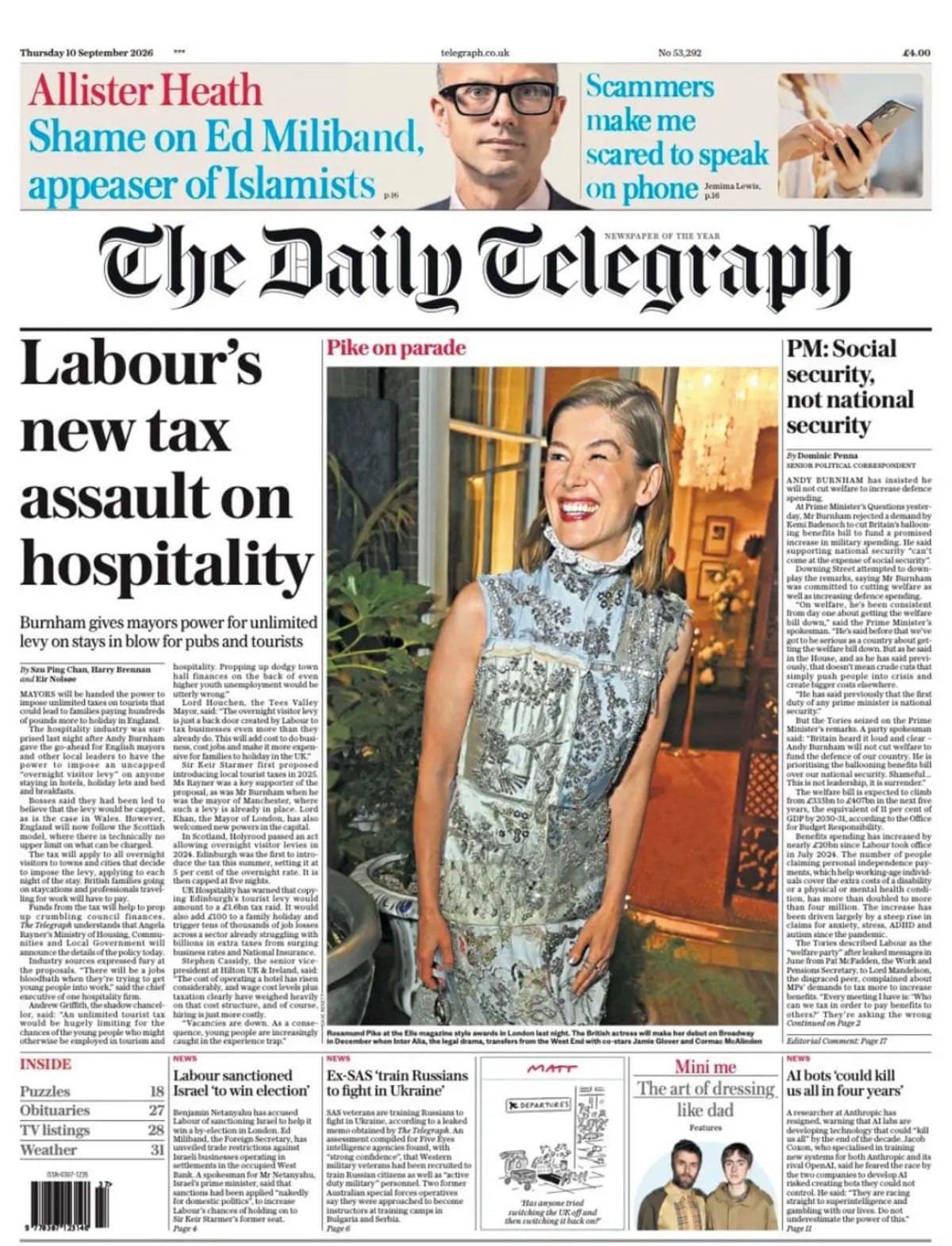
The government is preparing to grant English mayors authority to impose an uncapped overnight visitor levy on accommodation providers, a move that has alarmed the hospitality sector over potential job losses. The proposal, which follows similar schemes already operating in Scotland and Wales, would allow local leaders to set charges on hotels, holiday lets, bed and breakfasts, and guesthouses without any upper limit on the tax rate.
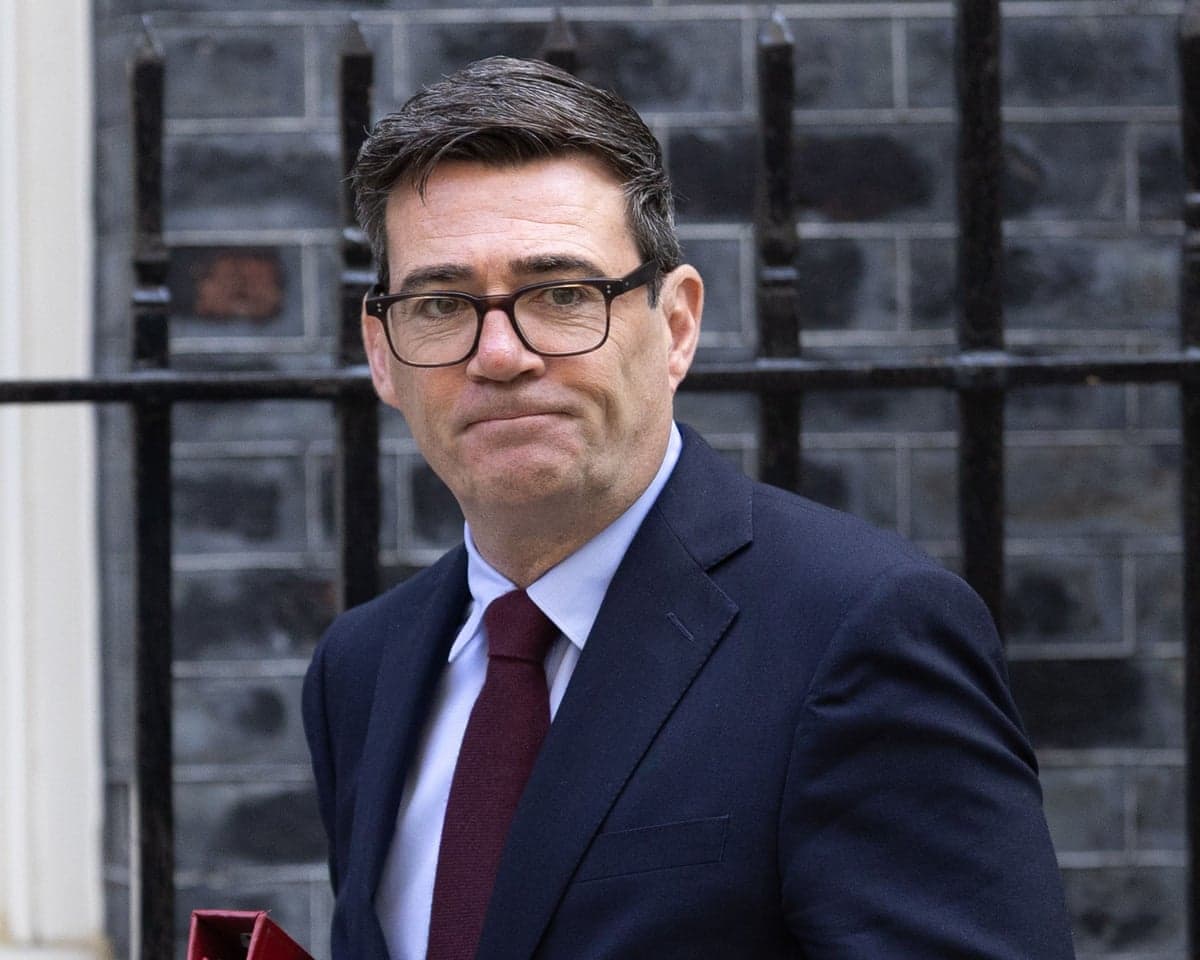
Andy Burnham, now Prime Minister, and Steve Rotheram, mayor of the Liverpool city region, championed the visitor levy concept to the previous government. When Keir Starmer took office in May, the administration included plans for an overnight visitor levy bill in its legislative agenda. However, the hospitality industry now faces uncertainty after learning the scheme will follow Scotland's model of uncapped levies rather than Wales's capped approach.
Why is the hospitality sector concerned?
Industry leaders argue that an unlimited levy could price UK holidays beyond what international competitors charge. Allen Simpson, chief executive of UK Hospitality, the trade body representing the sector, told the Today programme that the proposal grants mayors open-ended power to set tourism taxes at any level they choose. He highlighted that visitors to Paris, Rome, and Berlin pay tourism taxes, but these are capped, whereas the UK's new scheme would have no upper limit. Simpson noted that value-added tax on hospitality is already set at 10 percent, making UK holidays more expensive than comparable European destinations before any new levy is introduced.
Simpson claimed that a 5 percent levy—a rate already applied in Edinburgh but lower than Aberdeen's charge—would result in the loss of approximately 33,000 jobs across the sector. He explained that UK Hospitality could calculate this figure with precision because the industry can measure exactly how price changes affect visitor demand. For a typical family holiday in the UK, Simpson estimated the new tax would add an average of £100 to £120 to costs, more than double the benefit households received from the reduced VAT rate on energy introduced earlier in the year.
Andrew Griffith, the Conservative shadow chancellor, told the Daily Telegraph that an unlimited tourist tax would severely restrict employment opportunities for young people in tourism and hospitality roles.
What does the government say about the scheme?
A government source stressed that while central government will establish the framework for this power, local leaders and voters will determine whether and how to implement it in their areas. The administration has emphasised that the levy remains discretionary, meaning mayors are not obliged to introduce it.

According to the government's policy announcement, the levy would apply to accommodation providers including hotels, holiday lets, bed and breakfasts, and guesthouses. Emergency accommodation, homeless shelters and registered Gypsy and Traveller sites used as primary residences would be exempt from the charge. The government has framed the policy as a tool to help mayors invest in local growth, transport, infrastructure, and the visitor economy.
How does this fit into broader devolution plans?
The visitor levy is part of a wider devolution agenda. Burnham has announced plans to give English metro mayors a share of income tax from 2028, alongside expanded business rates control, as part of efforts to devolve more financial powers to regional leaders. However, this approach has drawn criticism. Opponents have warned that weaker regional economies could lose out under plans allowing mayors to retain a share of income tax and business rates.
Simpson acknowledged that local government has faced severe financial pressure from austerity measures, and that if mayors are granted only one tax-raising power, they will likely use it extensively. He stated:
We know that local government is struggling for funds. It was hit very hard by austerity. And if you only devolve one tax-raising power, of course local mayors are going to pull that lever till it snaps.
What about regional fairness concerns?
Tourism leaders have raised concerns about uneven implementation across regions. A Scarborough bed and breakfast owner has warned that a regional visitor levy without nationwide coverage would create unfair competition, as guests could choose to visit areas without the charge instead. Additionally, tourism leaders in Devon and Cornwall have complained that hotels, restaurants and holiday parks were overlooked after a 20 percent business rates cut was applied to pubs, clubs and music venues, raising questions about whether the government's support for the sector is consistent.
What happens next?
The government launched a 12-week consultation on 26 November 2025 on giving mayors in England the power to create an overnight visitor levy. The consultation closed on 18 February 2026, after which the government said it would publish a response and move toward implementation. According to a House of Commons Library briefing, the power is not likely to be available to mayors until 2028 at the earliest. Parliament will still need to pass enabling legislation before any local levy can begin.
Angela Rayner, the communities secretary, held a meeting with regional mayors to discuss the tourism tax plans. Lucy Powell, the education secretary, also hosted a summit on making England a technical education superpower. Wes Streeting, the defence secretary, made a statement to MPs about Ukraine and the threat from Russia.