As summer ends, roughly 1.5 million UK households that depend on heating oil face an urgent decision: purchase fuel now at elevated prices, or gamble that costs will fall before winter arrives. The stakes are high, with prices having nearly doubled over the past year following escalating tensions between the United States and Iran, leaving householders caught between immediate expense and the risk of further increases.
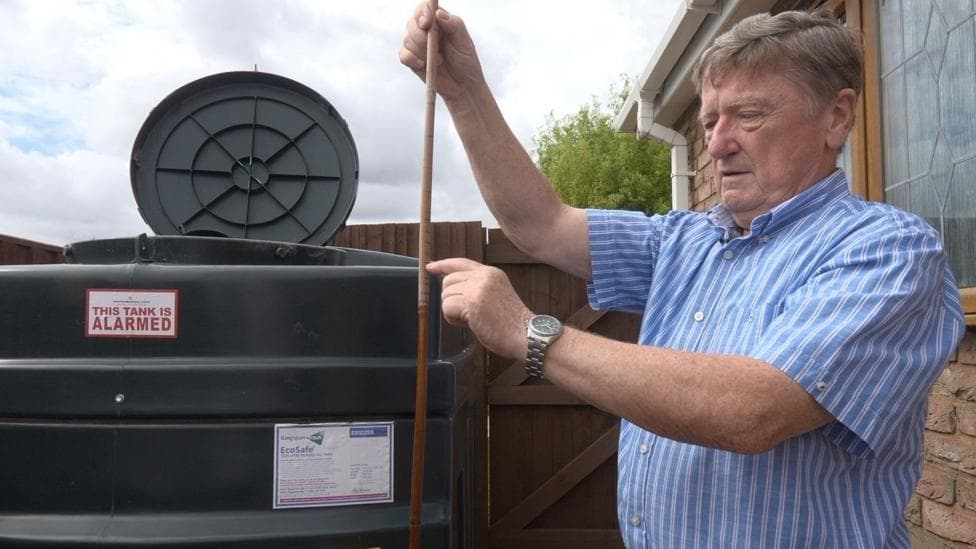
John Craggs, aged 73, and his wife Libby, aged 80, live in Wigtoft near Boston in Lincolnshire—one of the regions most reliant on oil heating. More than 40% of homes in parts of Lincolnshire, including Wainfleet All Saints, Wragby, Roughton and Ludford, depend on heating oil rather than mains gas, according to Census data. The couple face a particularly difficult choice as they contemplate the months ahead.
Over the next few weeks I'll be monitoring the price to see if it goes down a little bit and then order the oil,John Craggs explains his strategy for timing a purchase. Yet regardless of when they buy, the couple have already decided to restrict their heating use significantly.
We've both had health problems over the last few years and we should be keeping warm but its just too expensive. We will only have the heating on up to about 17 degrees in three of the rooms in the house, between about 3pm and 8pm, just to keep the cost down to be able to afford it.

How severe is the price increase?
On 18 September 2026, the average price stood at 97.05 pence per litre for a 1,000-litre purchase, according to price comparison data. This represents an 85% increase from 52.8 pence on 9 September 2025. Although prices have retreated from a peak of 134 pence in March 2026, they have resumed climbing in recent weeks as fighting between the US and Iran intensified. A household filling a standard 1,000-litre tank now faces a bill exceeding £970, a sum many rural families struggle to afford in a single transaction.
According to heating oil price tracking data, a 1,000-litre fill cost approximately £1,030 including VAT in early September 2026, with prices rising by around £120 in just one week. This volatility reflects the underlying market instability driven by geopolitical events.
Why are heating oil customers more vulnerable than gas users?
Unlike households connected to mains gas or electricity, heating oil customers receive no protection from the energy price cap. They must also pay the full cost upfront rather than spreading payments across monthly bills, with domestic tanks typically holding between 1,000 and 2,000 litres. This combination leaves oil-heated homes uniquely exposed to sudden price shocks and supply disruptions.

The government announced a £53 million support package in March 2026 to assist low-income families using heating oil. However, the funding is distributed by local authorities, each setting their own eligibility criteria. John Craggs inquired about assistance but discovered he did not qualify under his local authority's rules, leaving him and his wife to manage the costs independently.
What support is currently available?
The March 2026 package allocated funding across the UK: £27 million for England, £4.6 million for Scotland, £3.8 million for Wales and £17 million for Northern Ireland. In Northern Ireland, a dedicated heating oil voucher scheme opened for applications on 9 September 2026 and continues until 31 March 2027, offering targeted relief to eligible households. The Scottish Emergency Oil Heating Scheme was expected to continue until 30 September 2026, though supplies may run out sooner.
From 1 April 2026, England's support transitioned from the Household Support Fund to the Crisis and Resilience Fund, which is scheduled to continue until 31 March 2027. Additionally, the government increased the Boiler Upgrade Scheme grant for households switching from heating oil to heat pumps to £9,000 from 21 July 2026, offering a longer-term alternative to oil dependency.
What are campaigners demanding?
The charity National Energy Action is calling for systemic change to protect heating oil users. The organisation wants the energy price cap—which shields gas and electricity customers—to be extended to cover all heating fuels, including oil. Matt Copeland, the group's interim director of policy, stated:
I don't think the level of support really anticipated the length of time these high prices would go on for. It's really important that the government does look at that again in the budget and allocates more funding to help people to afford their heating. The government should also look at widening the criteria so the low-income households outside of the benefit system who are really struggling to afford their energy bills can access the support that they need.
The Department of Energy Security and Net Zero responded to these concerns, saying:
Energy is an everyday essential and needs to be affordable for everyone, which is why we have cut VAT on electricity bills to give families breathing space. This follows taking £150 in costs off bills earlier this year, and we will keep looking at what more we can do to protect households.
What happens next?
Support schemes across the UK remain in place through March 2027, though their continuation beyond that date remains uncertain. Households considering switching away from heating oil have until 31 March 2027 to apply for the increased heat pump grant. The outcome of government budget decisions in the coming months will determine whether additional funding becomes available for oil-heated homes facing another winter of high prices.
Key Facts:
- Heating oil prices have risen 85% in one year, from 52.8p per litre in September 2025 to 97.05p in September 2026
- Approximately 1.5 million UK households rely on heating oil, with over 40% of homes in some Lincolnshire areas dependent on it
- Heating oil customers receive no price cap protection and must pay full tank costs upfront, typically £1,000 or more
- A £53 million government support package from March 2026 is distributed by local authorities with varying eligibility criteria
- Support schemes continue until 31 March 2027, with campaigners calling for price cap extension and increased funding