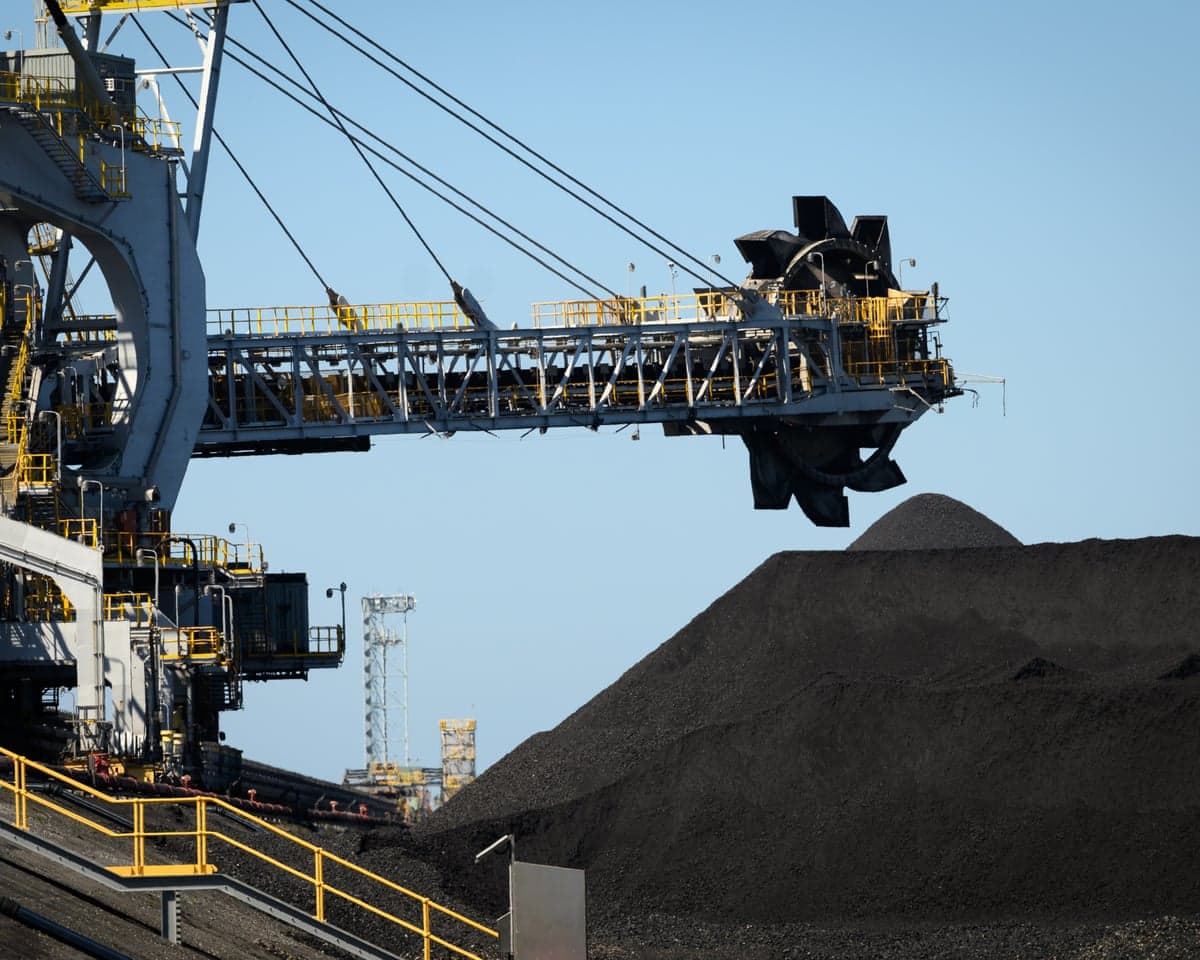
UK-based banks have emerged as Europe's largest financial backers of the global coal industry, channelling billions of pounds into funding for the climate-damaging fossil fuel over the past four years, according to research released by an environmental organisation.
The investigation found that UK banks provided $8.3bn (£6.2bn) in coal financing since 2021, when world leaders at the Glasgow climate summit pledged to "phase down" coal use. This substantially exceeded funding from other major European banking centres, with German banks providing $4.9bn and French banks $3.4bn over the same period.
The surge in UK coal financing was predominantly driven by two major institutions: Barclays and HSBC. Both banks increased their coal financing between 2022 and 2025, contradicting their publicly stated climate and net-zero commitments. Barclays' coal financing rose by 34%, climbing from roughly $1.2bn in 2022 to $1.6bn in 2025. HSBC's coal financing more than doubled, surging 107% from $200m to $414m.
The research was conducted by Urgewald, a Germany-based environmental and human rights organisation. The study examined loans and underwriting provided by 744 commercial banks worldwide to enterprises operating throughout the "coal value chain" – encompassing mining operations, power generation facilities, logistics providers, exploration companies and trading firms. According to Urgewald's dataset, banks globally channelled $467bn to the coal industry between 2022 and 2025.
Heffa Schücking, director of Urgewald, challenged the two institutions directly:
Barclays and HSBC should explain why their financing is moving in the opposite direction to the rest of Europe.
How are the banks responding?
HSBC stated that it had committed to phase out financing for thermal coal-fired power and thermal coal mining by 2030 in EU and OECD markets, and by 2040 in other markets. The bank emphasised that these commitments align with its broader ambition to match financed emissions in its portfolio with net-zero targets by 2050. According to HSBC's 2025 annual report, financed emissions from thermal coal mining fell by 94% between 2020 and 2024, while reported thermal coal financing exposures declined from approximately $1bn to approximately $0.5bn over the same period.
Barclays defended its position by noting that many of the companies identified in the report were "diversified energy or mining companies" rather than pure coal operators. The bank stated it does not provide financing to companies that derive "more than 30% of revenues from thermal coal mining or power generation". Barclays highlighted its broader energy transition strategy, stating:
Barclays is financing an energy sector in transition, providing finance to meet current energy needs and also financing the scaling of clean energy. Over the past three years, we have facilitated more than $300bn of sustainable and transition finance, including billions to cleaner energy projects, and invested millions into climate tech.According to financial reporting, Barclays has stated it plans to phase out thermal coal financing by 2035.
Urgewald defended its methodology for defining companies within the "coal value chain", asserting that the definition is widely recognised and accepted by numerous financial institutions. The organisation noted that the report's methodology assesses banks' relationships with companies responsible for more than 90% of global thermal coal production and coal-fired power capacity, excluding coal used in cement and steel production.
Why is UK coal financing rising while Europe's is falling?
Although some UK banks have reduced their coal financing, the overall financial flows from Britain-based banks to the coal value chain expanded by 17% during the four-year period. According to Urgewald's analysis, UK banks' annual coal financing rose from $1.95bn in 2022 to $2.28bn in 2025. This contrasts sharply with EU banks, which achieved a 46% reduction overall from 2022 to 2025, cutting their coal financing from $4.8bn to $2.6bn.
Globally, Urgewald's analysis revealed that between 2022 and 2025, bank financing for coal remained broadly flat, averaging approximately $117bn annually, despite the commitments made at COP26 in Glasgow. However, this headline figure masks a significant divergence within the international banking sector, with financial institutions in China and the United States substantially increasing their coal funding.
Which countries are driving global coal financing?
Chinese banks accounted for 62% of global coal financing, providing $289bn – an 8% increase over the four-year period. US banks contributed $67bn, representing a 23% rise, while Indonesian banks increased their coal financing by 64%, from $1.4bn in 2022 to $2.3bn. In contrast, banks operating in the EU, Taiwan, Malaysia and Thailand significantly reduced their coal financing commitments.
Schücking welcomed the reductions achieved by some regions, arguing that a clear coal policy could "disrupt the flow of money to the industry". However, he cautioned that this progress was "being swallowed up" by rising coal finance elsewhere.
Banks still funding coal cannot hide behind distant climate promises. They need policies that rule out new coal and bring their financing down now.
Key Facts
- UK banks provided $8.3bn in coal financing between 2021 and 2025, more than any other European banking sector
- Barclays and HSBC increased their coal financing despite public net-zero commitments, with HSBC's funding more than doubling
- Global bank coal financing totalled $467bn between 2022 and 2025, with Chinese banks accounting for 62% of the total
- EU banks reduced coal financing by 46% over the period, while UK banks increased theirs by 17%
- The research examined 744 commercial banks worldwide and their relationships with companies across the entire coal value chain