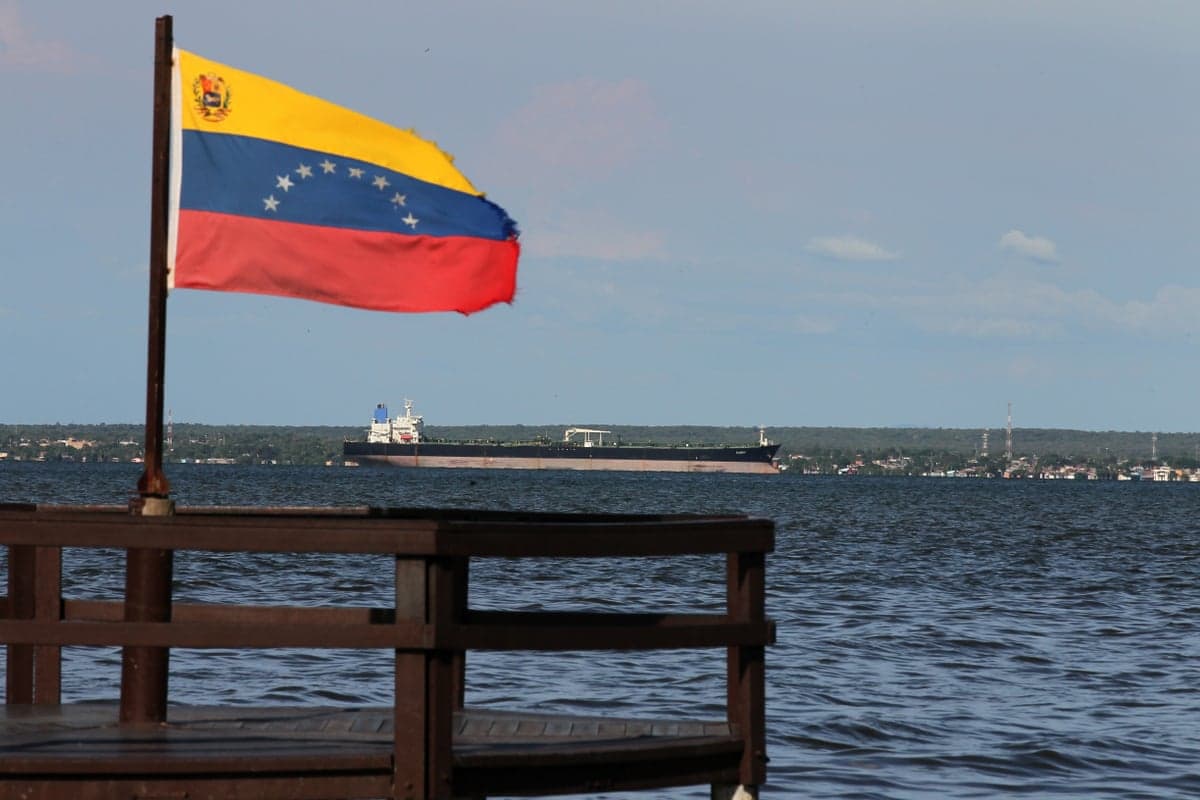
President Donald Trump announced on Friday a sweeping new oil agreement with Venezuela, declaring that the United States will hold "majority" control of 65 billion barrels of proven oil reserves under the arrangement. According to Trump, the deal will more than double the nation's proven oil reserves and substantially lower gas prices for Americans.
"At my direction, Secretary of State Marco Rubio, and Secretary of War Pete Hegseth, working closely with Highly Respected Interim President of Venezuela, Delcy Rodriguez, and, through a partnership with private business, have secured majority U.S. control of more than 65 BILLION BARRELS of proven Oil Reserves in Venezuela, at no cost to the American Taxpayer,"Trump stated in his announcement.
Secretary of State Marco Rubio characterized the agreement as beneficial to both nations.
"For the Venezuelan people, this deal will bring nearly $100 billion in private investment, support thousands of high-paying jobs, and drive the reconstruction of Venezuela's economy,"Rubio said on social media, also calling it "a huge win for both the American and Venezuelan people."
Venezuela possesses an estimated 303 billion barrels of proven oil reserves, making it the world's largest holder of crude reserves. The country's oil industry currently produces approximately 1.25 million barrels per day, though the sector has deteriorated significantly in recent years, declining from its peak in the late 1990s.
How does this fit into broader US energy strategy?
The Trump administration has been pursuing long-term access to Venezuelan crude supplies since capturing and removing former president Nicolás Maduro from power on 3 January. The overarching objective has been to secure a stable flow of Venezuelan oil for American refineries while encouraging US investment into the country's struggling energy infrastructure. According to reporting on 27 August, the negotiating framework was specifically designed to give the US long-term access to a portion of Venezuela's crude reserves, reflecting both supply security and investment access objectives.

The administration has also been exploring solutions to replenish the nation's strategic petroleum reserve, the government's oil stockpile, including potential crude swaps with domestic producers. Trump faces mounting pressure ahead of November's midterm elections over rising gasoline prices, which could potentially be eased through cheaper oil supplies and expanded Venezuelan output. Trump has also claimed the rights to Venezuela's oil after alleging that the country had in the past "unilaterally seized and sold American oil, American assets and American platforms, costing us billions and billions of dollars."
What is the structure of the deal?
The precise legal framework of the agreement remains under development. According to reporting on 27 August, the talks centered on more than a dozen productive oil fields previously controlled by Chinese interests and former Venezuelan insiders. The negotiations have explored a "lease" as the potential legal model, which could be followed by a field-by-field auction or tender process to allocate resources among US producers.
The deal announcement comes after Venezuela's oil minister Paula Henao signed agreements with Hunt Oil and SLB in Houston on 20 August, marking some of the first major US-Venezuela oil deals in close to two decades. Earlier, in January 2026, Trump had announced that Caracas and Washington had already reached a separate oil export deal worth up to $2 billion, involving shipments of "sanctioned oil" to the United States. Trump has also asked US oil firms to invest at least $100 billion to restore the country's oil industry.
What has the Venezuelan opposition said?
The agreement has provoked significant unease and anger among members of Venezuela's opposition movement, who are already frustrated with Trump's failure to bring about genuine political change following Maduro's removal. One well-known opposition figure, speaking on condition of anonymity due to sensitivities around criticizing the US, characterized the arrangement harshly.
"It's a land grab – a massive land grab. It's revolting because this is not the United States one would have [expected]. This is not the United States of the Marshall plan. This is a rapacious, mafioso United States."
The reports of the negotiations, first disclosed earlier in the week by the Wall Street Journal and Axios, had already sparked considerable controversy within opposition circles before Friday's formal announcement.
What comes next?
According to sources on 27 August, the agreement could be formally signed and made public in the near term. If the lease-style framework is adopted, the subsequent procedural step would involve an auction or tender process to assign specific fields to individual US producers, allowing companies to bid for development rights.
Key Facts
- The agreement grants the US "majority" control of 65 billion barrels of Venezuela's proven reserves at no cost to American taxpayers, according to Trump's announcement.
- Venezuela holds the world's largest proven oil reserves at approximately 303 billion barrels, though current production stands at around 1.25 million barrels per day.
- The deal follows Maduro's removal from power on 3 January 2026 and represents part of a broader Trump administration strategy to secure long-term Venezuelan oil supplies and encourage US investment in the country's energy sector.
- Secretary of State Rubio stated the agreement would bring nearly $100 billion in private investment and support thousands of high-paying jobs in Venezuela.
- Opposition figures have criticized the arrangement as a "land grab," expressing frustration with the Trump administration's approach to Venezuela policy.
- The legal structure under consideration involves a potential lease model followed by a field-by-field tender process to allocate development rights among US oil producers.