

A century has passed since Henry Ford handed his factory workers a full Saturday and Sunday away from the assembly line, cementing the modern two-day weekend as a fixture of industrial life. In 2026, as that anniversary arrives, campaigners, economists and historians are asking whether the institution has been quietly dismantled by hybrid schedules, so-called "skiveday Fridays" and a smartphone culture that never really clocks off. The answer, most agree, is that the weekend has not disappeared so much as blurred beyond recognition.
Did the Soviet Union really abolish the weekend?
Yes — between 1929 and 1940, Soviet authorities scrapped the shared weekend entirely, assigning citizens a single rest day out of every seven on a rotating, staggered basis so that roughly four-fifths of the population was always at work and factories never had to stop running. The experiment was meant to boost output, but it instead left families scattered across mismatched schedules, with parents off while children were at school and no reliable day for relatives to gather. A worker's letter to the Soviet newspaper Pravda, published shortly after the system began, captured the frustration bluntly:
What is there for us to do at home if our wives are in the factory, our children at school, and nobody can visit us? It is no holiday if you have to have it alone.
Productivity never rose as planners had hoped, morale sagged, and the policy was eventually watered down and then scrapped altogether — an eleven-year reminder that a day off means little unless it is shared with the people you love.
Why has the weekend become so culturally significant?
Because it represents something more than rest — it is, in the words of one historian, a rare pocket of time that belongs to the individual rather than the employer. "The weekend looms large because it represents the triumph of collective time over market time," says Brad Beaven, professor of social and cultural history at the University of Portsmouth. "It is not just about rest, but about reclaiming autonomy from the industrial clock." That sense of shared ownership has turned Saturdays and Sundays into a stage for national rituals, from televised football results to Sunday roasts, and elevated the presenters and sportspeople who fill them — think Cilla Black or Gary Lineker — into cultural fixtures in their own right.

The texture of a weekend shifts as people age, even if its emotional pull does not. "The weekend that I had when I was 20 was very different from the weekend that I have now, at 40 and with kids," says Pedro Gomes, professor of economics at Birkbeck, University of London and author of Friday is the New Saturday. "When you are young, you are bonding with your friends, and then when you get older, you might be with your family. Eventually, you might be with grandchildren. We move through different manifestations of the weekend, in our lifetimes."
Where do weekends actually start and finish now?
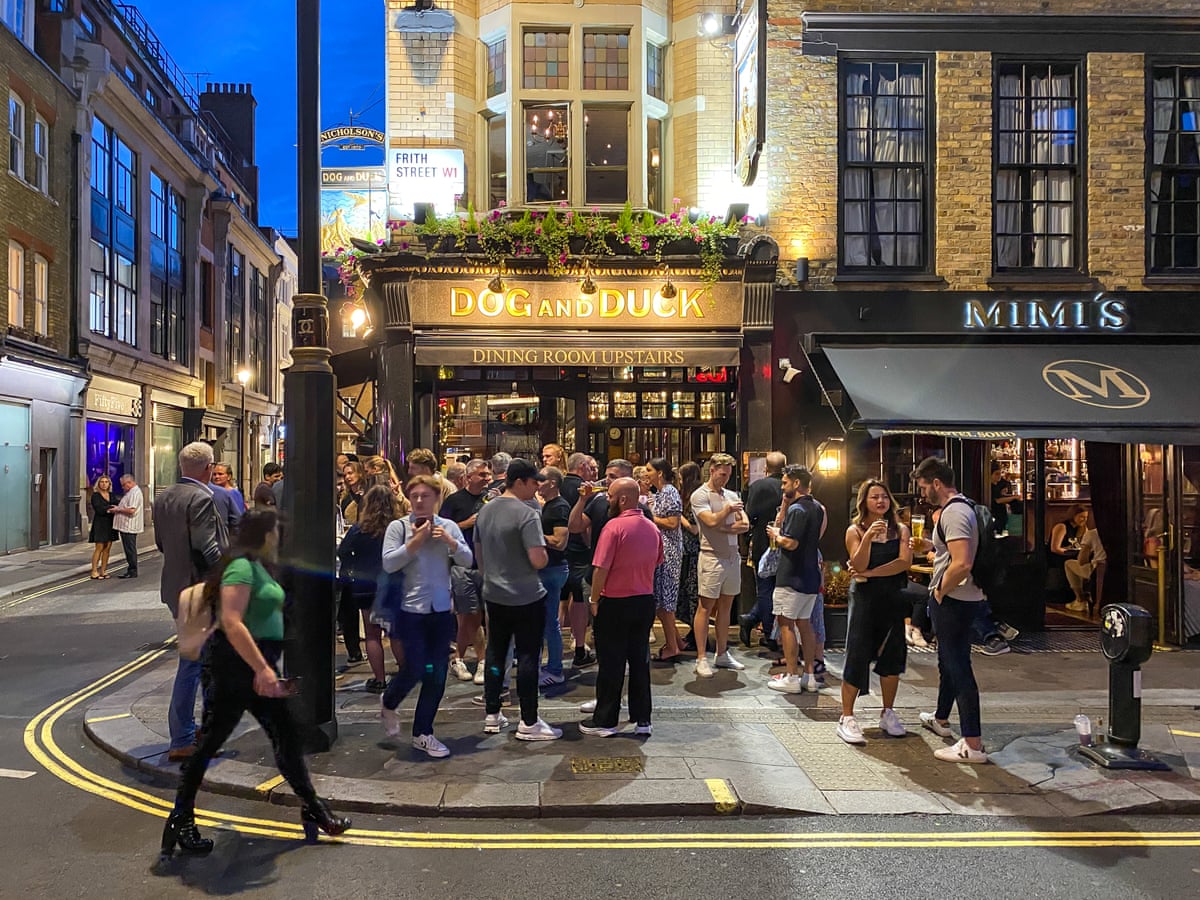
The honest answer is that the boundaries have become far less fixed than they once were. Domestic chores such as laundry increasingly happen on a work-from-home Friday, while inboxes get cleared on a Sunday evening; a treat-yourself online purchase is now as likely to follow a difficult Wednesday as a Saturday shopping trip. Saturday's traditional 3pm football kick-off has been stretched by broadcasters across an entire week of fixtures running into Monday nights, and the four-day week — an idea floated as far back as 1956 by Richard Nixon — is now a lived reality in the Netherlands, where the average working week runs to 32.1 hours. Friday, meanwhile, is edging out of the working week entirely in the eyes of many employees, without any formal policy change sanctioning it.
Who actually invented the modern two-day weekend?
Henry Ford did not dream up the concept from nothing — trade unions, religious organisations and reform-minded employers had been pushing for reduced hours for the best part of a century — but his decision in 1926 to move his workforce to five eight-hour days on unchanged pay gave the idea industrial muscle it had never had before. Ford explained his reasoning in the company's Ford News that October:
It is high time to rid ourselves of the notion that leisure for workmen is either lost time or a class privilege.
The move was not entirely altruistic. Ford's own assembly line had driven absenteeism as high as 10% among exhausted workers, and he was candid that idle time would also translate into new customers for his cars: "People who have more leisure require more transportation in vehicles," he wrote. By 1938, with unemployment soaring during the Great Depression, the five-day week became law across the United States.
In Britain, the pharmacy chain Boots the Chemist led the way. After a new, highly efficient Nottingham factory in 1933 left the company with excess stock, chairman John Boot chose to scrap the Saturday morning shift for his 5,000-strong workforce rather than lay staff off amid 25% unemployment, and did so without cutting wages. The change reduced absenteeism and was formally adopted as company policy in 1934. A subsequent government inquiry led by Richard Redmayne — the great-grandfather of the actor Eddie Redmayne — concluded that the shorter week brought:
An improvement in stamina and animation of the employees arising from the physiological and psychological effects of a long weekend's rest and relaxation.
Even so, the two-day weekend spread only gradually. "The early 20th-century version of the weekend was generally recognised as a half-day Saturday and Sunday off," says Beaven. "The full two-day weekend only really became widely adopted after the second world war."
How did industrialisation reshape our sense of time off?
Before factories dictated the rhythm of daily life, there was little notion of consecutive rest days, since crops and livestock could not simply be abandoned for 48 hours. Work followed the weather and the seasons rather than the clock. As shift patterns and pay packets replaced saints' days and harvests as the organising principle of time, the possibility of organised leisure emerged alongside organised labour — and consumer capitalism was quick to seize on it, selling picnic baskets, cinema tickets and, eventually, budget flights built around the two free days.
Football became one of the weekend's central rituals precisely because it offered something the working week rarely could. "The weekend is about rest, but it is also about passion," says Gomes. "Most of us are not lucky enough to be passionate about our jobs, but at the weekend we can follow our passions."


Has morality always shaped how we spend the weekend?
Very much so. Long before Ford's reforms, skilled workers who only had Sundays off had already invented "Saint Monday", extending a heavy day of drinking by skipping work the following morning. Employers granted Saturday afternoons, and later whole Saturdays, partly hoping to shift the inevitable hangover earlier in the week. Victorian reformers hoped the extra time would be spent on wholesome pursuits — gardening, organised sport, family outings — while Ford, a committed supporter of Prohibition, argued that outlawed alcohol made his shorter week a safe bet, reportedly remarking that "a day off is no longer a day drunk".
In practice, weekends have always mixed indulgence with virtue. They remain the setting for both heavy nights out and quiet acts of penance, whether through a parkrun, DIY or actual churchgoing — though the latter has faded sharply: according to the National Centre for Social Research, roughly one in three Britons attended church regularly in 1900, compared with about one in 20 today. Two moments accelerated Sunday's decline as a day of higher purpose. The Sunday Trading Act of 1994 allowed larger shops in England and Wales to open on Sundays, and pandemic lockdowns a quarter of a century later further weakened the bond between churches and their congregations, leaving some older worshippers wary of returning to crowded indoor gatherings. As the late actor Maggie Smith's character memorably put it in Downton Abbey, with the baffled entitlement of someone for whom money simply arrived rather than being earned:
What is a weekend?
Is the workforce splitting into "time owners" and "time slaves"?
That is the framing offered by Liselotte Lyngsø, founding partner of the Copenhagen-based consultancy Future Navigator, who argues that knowledge workers increasingly control where and when they work, while those in healthcare, manual shift work or gig-economy delivery jobs remain tied rigidly to the clock. For the more flexible group, Friday has become something close to a modern Saint Monday: calendars nominally open, but effort quietly winding down. When Gomes helped run a four-day-week trial across more than 41 public and private organisations in Portugal in 2023, businesses that could not simply cut hours — a nursery, for instance — instead staggered staff across different rest days each week. "Whenever their weekday off was, we found that many employees approached that day a little differently, using it to get 'life admin' done so that they could have their Saturdays and Sundays free," Gomes says. "The weekend isn't just about the number of hours, it is also a coordination device for communities to connect."
Britain has seen similar patterns. In 2024, Transport for London scrapped peak fares on Fridays specifically to draw commuters back into central London, yet the day has stayed noticeably quieter regardless of the discount. Rail operators including LNER and Avanti have since gone further, reclassifying Friday as an entirely off-peak day in line with Saturday and Sunday — a tacit admission that, for many commuters, the weekend already begins a day early.

Yet the same flexible workers whose Fridays have softened are also the ones whose Saturdays and Sundays are most exposed to encroaching work emails and calls. "These are two sides of the same coin," Gomes says. "The speed of communication means that we now live with constant interruptions, and it is hard to find space either for deep work or for real rest. And yet we continue to structure the work week in much the same way as we did 100 years ago. It is no surprise that this isn't working." That tension is visible in the technology sector too: staff at some of the world's leading artificial intelligence companies say the promised efficiencies of AI have not shortened their week at all, with employees at firms including OpenAI, Anthropic, Meta and Google describing 70- to 90-hour weeks, weekend shifts and abrupt reassignment onto AI projects, despite executives publicly touting shorter working hours as a benefit of the technology.
Could Malaysia's new hybrid model point to where the workweek is heading?
A fresh experiment launched on the other side of the world may offer a preview of how governments are trying to formalise flexible time without eroding the weekend itself. Malaysia's Hybrid Working Day policy took effect on 1 August 2026, letting eligible civil servants split their week between three days in the office and two working remotely, according to a report by the Malay Mail. Crucially, the scheme is designed to prevent exactly the kind of Friday drift seen among British commuters: staff are explicitly barred from choosing Monday or Friday as their remote days where doing so would stretch the weekend, according to an earlier Malay Mail report.
The policy also has to accommodate Malaysia's split weekend calendar. Most of the country observes a Saturday-Sunday weekend, but the states of Kedah, Kelantan and Terengganu instead take Friday and Saturday off, meaning mandatory office days fall on Monday and Friday in the majority of the country but on Sunday and Thursday in those three states, according to Malay Mail's coverage of the Cabinet approval. Officials have been careful to stress that the scheme applies only to eligible civil servants and does not reduce total contracted working hours, per the same report.
The arrangement stops well short of a four-day week. As one regional outlet noted, the policy was designed as a flexible arrangement for the civil service rather than a genuine cut in hours, according to People Matters, which also reported that each officer's third mandatory office day is set individually by their department head rather than fixed nationally.
What happens next?
The scheme's main implementation milestone has already passed, with the policy formally taking effect for eligible officers on 1 August 2026, according to the Malay Mail. Government departments are now working through the practical task of assigning each eligible officer's third in-office day under the new hybrid schedule, according to People Matters, a process that will determine how evenly the new pattern is applied across Malaysia's civil service in the coming months. A separate Malay Mail report from 22 July 2026 reiterated that the mandatory in-office days would continue to differ according to each region's local weekend pattern, meaning the policy's effects will look different depending on where in the country a civil servant is based.
Is a three-day weekend actually on the table in Britain?
The idea has moved from fringe proposal to live political argument, though it remains far from consensus. The Green party backs a gradual shift towards a four-day week, but the proposal has met resistance elsewhere in politics. In 2025, the then local government secretary Steve Reed criticised South Cambridgeshire council, a Liberal Democrat-led authority that had been running a four-day week for two years. In April 2026, Conservative politician James Cleverly went further, announcing that a future Conservative government would seek to ban four-day weeks for council staff altogether, describing the push as part of a wider trend he called "completely wrong".
Campaigners point to different evidence entirely. The 4 Day Week Foundation, which is coordinating trials across Britain, reports that companies which piloted a four-day week saw an average 35% rise in revenue and a 57% drop in staff turnover during the trial period, with the large majority of participating organisations choosing to continue the arrangement once the pilot ended. Around 260 UK companies are now formally signed up to the model.
The wider question, though, is not just about hours but about who gets to share a rest day with anyone at all. The gap between so-called time owners, who can shape their own schedules, and time slaves, whose work remains bound to the clock, risks turning the weekend from a shared national ritual into something closer to a private luxury. Technology has compounded the divide in unexpected ways: a small study of Bristol teenagers who gave up social media for a week found the experience boring but ultimately beneficial, reporting better sleep, more family time and sharper focus, with teachers noting the students seemed calmer — evidence, perhaps, that reclaiming unstructured time still has real value even a century after Ford first offered his workers two days to spend it.
Even the Soviet Union's failed experiment and Ford's profit-driven generosity point to the same underlying truth: a day off is only as valuable as the people you get to spend it with. A hundred years on, the two-day weekend is fraying — leaked into Friday afternoons, nibbled at by Sunday-night emails — but it has yet to disappear, because nothing has replaced its central promise of shared, unstructured time.
Key Facts
- Henry Ford introduced the five-day, 40-hour week at his factories in 1926, formalising the modern weekend without cutting workers' pay.
- The Soviet Union abolished the shared weekend between 1929 and 1940, assigning staggered rest days that left families unable to gather together.
- Malaysia's Hybrid Working Day policy took effect on 1 August 2026, giving eligible civil servants three office days and two remote days, while explicitly banning Monday or Friday remote days that would extend the weekend.
- The 4 Day Week Foundation reports UK pilot firms saw a 35% average revenue rise and a 57% fall in staff turnover, with 260 UK companies now signed up.
- Church attendance in Britain has fallen from around one in three people in 1900 to roughly one in 20 today, according to the National Centre for Social Research.


