Two years after the fall of President Bashar al-Assad, many Syrians report their financial circumstances have deteriorated sharply amid a severe cost-of-living crisis. Last month, the largest wave of public discontent since President Ahmed al-Sharaa took power erupted across the country, with citizens burning tyres, blocking roads and protesting the government's decision to raise fuel prices. According to BBC News, the demonstrations reflected mounting frustration over economic hardship that has worsened despite initial hopes for rapid recovery following Assad's overthrow and the end of more than 13 years of devastating civil war.
Residents expressed their anguish in stark terms. One man told a Syrian television channel that although he still backed the authorities, his circumstances had deteriorated so severely he could no longer afford bread. Another said:
"Honestly, we have begun to fear what kind of new decision each morning will bring."The fuel price increase represented the latest in a series of austerity measures that citizens blame for the deepening financial crisis gripping the nation.
When rebels led by Sharaa ousted the Assad family after five decades of authoritarian rule, Syrians initially celebrated their newfound freedoms and harboured hopes for swift economic improvement. However, those expectations have not materialised. The government has pursued aggressive economic restructuring, slashing long-held subsidies and shifting towards a liberal, free-market model—policies that have inflicted immediate hardship on ordinary people even as they aim at long-term recovery.
How have prices changed since Assad's fall?
The scale of price increases has been dramatic. The cost of bread, a Syrian staple, has risen tenfold since Sharaa came to power. Fuel prices have been adjusted to align with international rates, placing severe pressure on farmers and transportation costs. According to external reporting, the September increases included a 40% rise in diesel, 25.9% for 90-octane petrol and 28.3% for 95-octane petrol, with diesel rising from SYP 125 to SYP 175 per litre. Electricity costs have surged several hundred per cent for some households. The government has adjusted public sector wages and pensions in response, but these increases have been rapidly eroded by rising prices.
The United Nations Development Programme reported that 90% of Syrians lived in poverty in the previous year. The World Bank noted that extreme poverty had reached 18% in 2022, compared with near-zero levels before the conflict, and that the minimum wage rose to SYP 12,560 in May 2026 but remained below half the cost of a basic household expenditure basket.
What are families cutting back on?
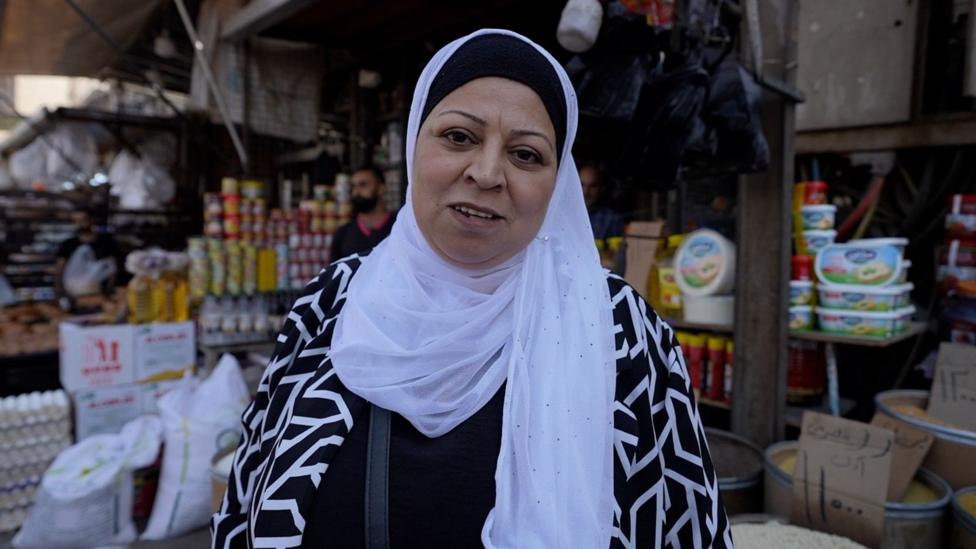
Ordinary Syrians are making painful choices about basic necessities. In a suburb of Damascus, Fatima Saleh Eid, a 50-year-old cleaner who helps support her family, described her household's changing diet.
"We eat more sparingly now. We can't afford chicken anymore nor meat. We only eat vegetables but even that is expensive."Her husband had recently found work at a ceramic factory after a year of unemployment, placing them among the fortunate minority. Many others struggle to find any employment; in some streets, men gather daily hoping to secure a day's work, often waiting without success.
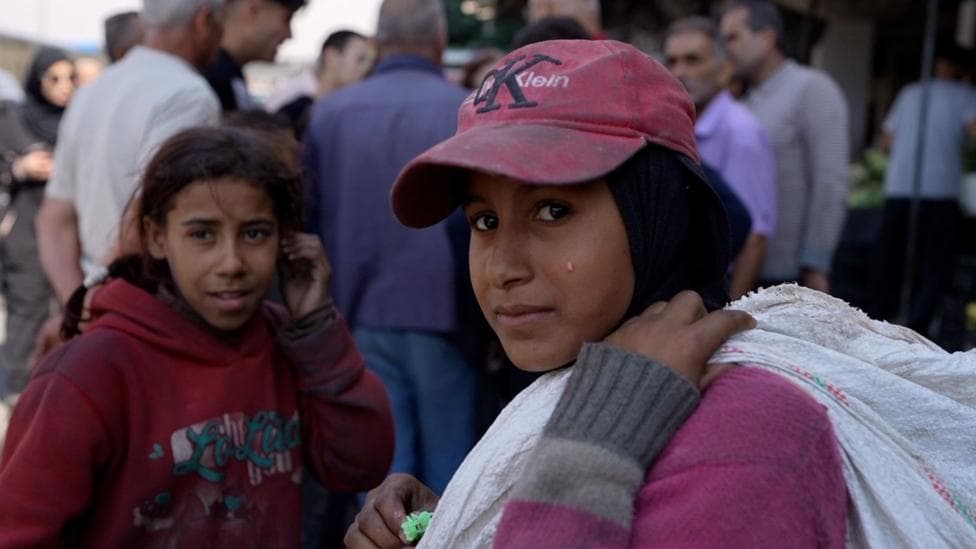
The hardship extends across all age groups. An elderly man told the BBC correspondent he had stopped eating meat entirely. A young man in his 20s said his family could no longer afford medicine for his father, who had a heart condition. A young woman reported that she and her four children could afford a proper meal only every two days.
Marwan Bashour, a 68-year-old pensioner, receives a monthly public sector minimum wage of around $90 (£70).
"It's not enough at all,"he said. To survive, he has resorted to borrowing money and selling household items.
"Sometimes I sell things from my house, like an old pot or plates that we never used, gifts that were given to us. I've even had to sell furniture."Like many Syrians, Marwan previously relied on aid from international organisations, but those services have been cut due to funding reductions.
Nabil al-Remhein, a 63-year-old pensioner, faces even more acute deprivation. None of his four adult children has found work.
"We're now having only one meal a day. It's tragic,"he said, his exhaustion evident.
"It isn't only me. It's the entire population. We're all hungry... We're suffocating under rising costs."His electricity bill alone consumes about a third of his family's income, which he has not been able to pay.
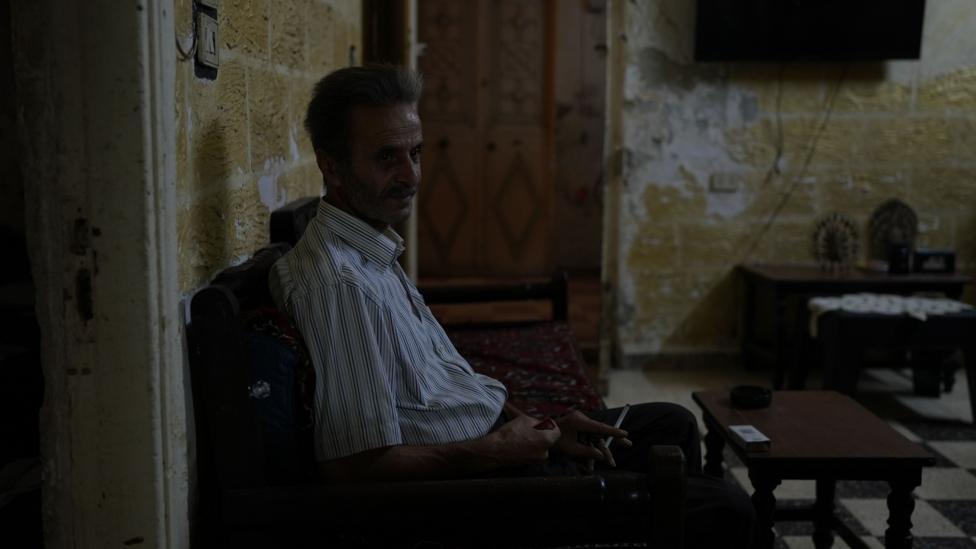
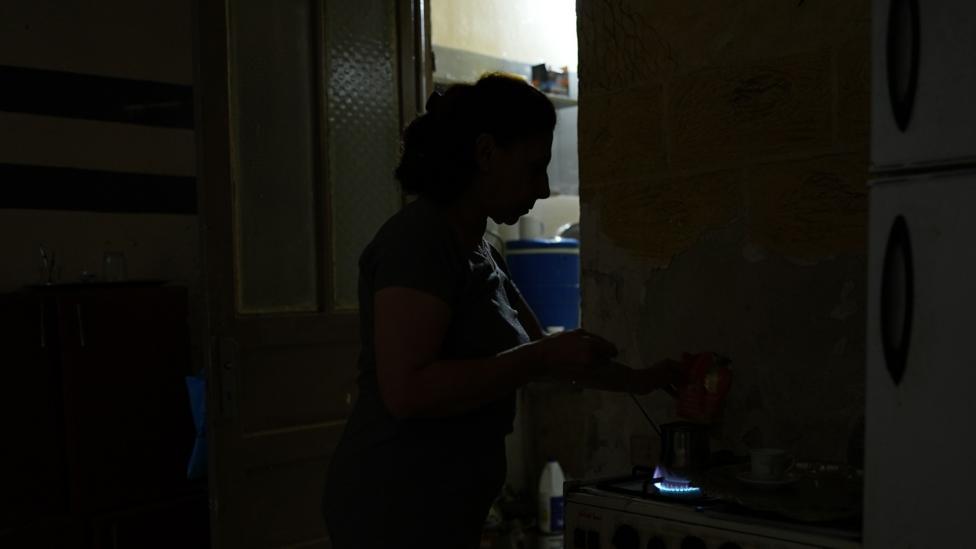
To manage costs, Nabil has drastically reduced his household's electricity use.
"We've cut back on lighting up the house and we also turn off the fridge for about five hours a day."His wife performs her household chores in darkness to avoid triggering additional charges.
What role has geopolitical tension played?
The government has attributed part of the fuel price increase to broader regional pressures. Syria has not been insulated from the impact of the US-Iran conflict, which has created strain on global energy markets. The authorities cited this external pressure as a contributing factor to the decision to raise fuel prices, though this explanation did little to mollify angry citizens.
In response to the backlash, the government revoked the fuel price increase within days. However, the underlying economic crisis persists. Some Syrians have begun exploring alternative solutions; recent reporting indicates that some Damascus drivers are switching to electric vehicles to avoid fuel costs, with one driver noting that charging for a 200-kilometre trip costs about $6 compared with $26 for petrol. The Energy Ministry attributed substandard petrol reaching markets to an "operational error" and promised accountability and compensation for affected motorists.
What do economists say about the crisis?
Dr Haid Haid, a Syrian columnist and consulting fellow at the London-based think tank Chatham House, characterised the economic crisis as
"one of the most dangerous issues"facing the government. He acknowledged that part of the problem stems from the legacy of the former regime and depleted financial resources, but emphasised that government policy bears responsibility as well.
"Part of the crisis is related to the lack of financial resources and the legacy left by the former regime. But it's also the direct impact of the new policies that are moving Syria towards a liberal and free-market sort of economy, which don't take into account the impact on people."
Samir Aita, a Syrian economist who heads the Circle of Arab Economists, a Paris-based independent think-tank, described the crisis as a
"combination of policies with the government not managing expectations and creating unrealistic hopes."When asked about the outlook, he expressed deep concern:
"It's unsustainable. If they don't change, I fear chaos."
A spokesman for the Syrian economy and industry ministry declined to make anyone available for an interview.
What progress has the government made?
Sharaa has achieved some significant diplomatic gains. International sanctions imposed during the Assad era have been lifted, and the United States removed Syria from its list of state sponsors of terrorism. The security situation, while remaining volatile, has stabilised compared with the chaos of the civil war. The president has also consolidated his power, retaking the resource-rich north-east from a Kurdish-led militia earlier this year. (The Druze continue to control areas in the south where they seek autonomy, and Israel occupies parts of the south-west.)
In February 2026, the transitional government regained control of key oil and gas areas, increasing its share of national oil production from about 20% to 88%, according to the World Bank. This development was intended to strengthen the government's financial position, though the benefits have not yet translated into relief for ordinary citizens.
What is the scale of reconstruction needed?
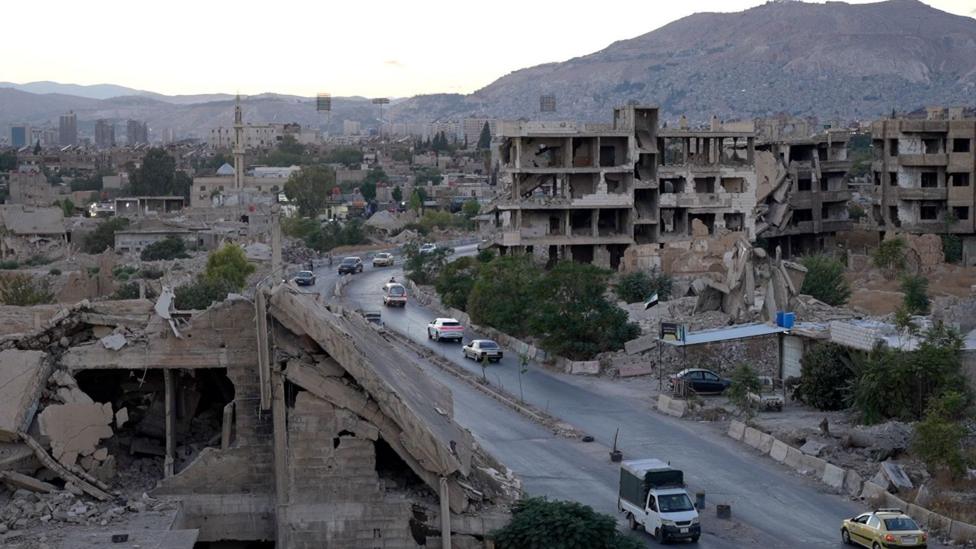
Real economic recovery remains elusive. Large sections of Syria remain in ruins following a war that killed approximately half a million people and displaced half the population. Unable to afford rent, many families inhabit partially destroyed buildings. The World Bank estimates reconstruction costs at $216 billion, and without substantial foreign investment and assistance, Syrians cannot rebuild their country.
What happens next?
Members of the People's Assembly have indicated they will seek an urgent hearing with the energy minister to address the fuel price crisis, though no specific date has been confirmed for this session. The government faces mounting pressure to demonstrate that its economic policies can deliver tangible improvements for citizens, or risk further unrest.
Despite exhaustion from years of conflict and limited options, many Syrians remain hopeful. Abu Mahmoud, a cab driver, reflected the sentiment of those trying to maintain patience:
"They inherited the country bankrupt, so people need to be patient. Things don't happen overnight."Yet as months pass without visible economic improvement, that patience is visibly wearing thin, and the government's ability to manage public expectations will prove crucial to maintaining stability.