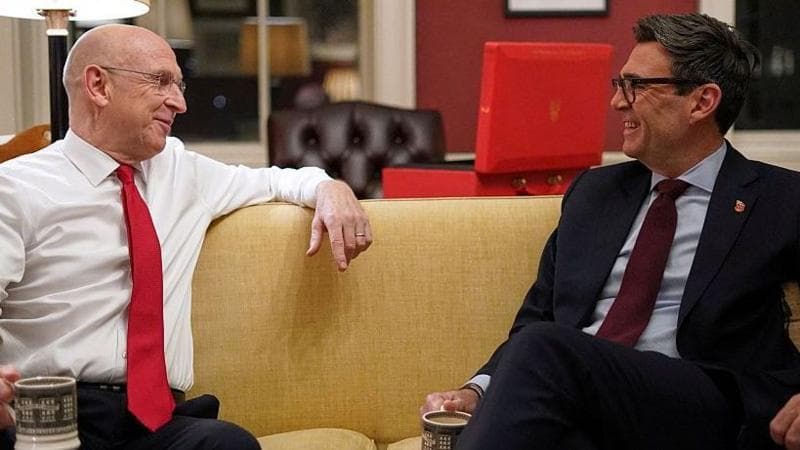
Chancellor John Healey's autumn fiscal event fell short of unveiling a transformative new economic model, instead serving as a cautious prelude to Prime Minister Andy Burnham's promised 10-year strategy due next month. According to BBC News, the statement was deliberately designed to avoid the market turmoil that followed Liz Truss's mini-budget, announcing £65bn in extra borrowing over five years without triggering the bond and currency volatility that had previously spooked investors.
The Budget's cautious approach reflected a strategic choice to provide what officials termed "breathing space" for households and government alike, rather than radical fiscal action. The markets barely reacted to Healey's borrowing announcement, with government interest costs actually falling since the statement despite broader market turbulence stemming from the US-Iran conflict. This stability came at the cost of deferring major policy announcements, leaving substantial gaps that the prime minister's longer-term plan will need to address.
The immediate fiscal pressures facing the government are considerable. The Office for Budget Responsibility's economic forecast revealed that the welfare bill is projected to jump to £431bn by 2031 when pensioner support is included. According to the Independent, health-related benefit spending alone will reach £105bn in 2028–29, with three-quarters of those payments going to working-age adults. These figures underscore why welfare reform has become unavoidable, despite its political sensitivity.
The government did announce targeted support for struggling households. The Budget includes a £100 winter energy payment for households in council tax bands A–D, a measure affecting up to 20 million households, according to BBC News. Additional measures included tax rises on banks and gambling firms alongside business-rate relief for high-street retailers, attempting to balance support with revenue generation.
What welfare reforms are coming?
The Milburn Review process is clearly heading toward some form of welfare-to-work scheme, potentially including a separate system for younger workers. Such reforms will require upfront investment to subsidise work opportunities, with the hope of generating longer-term savings from reduced welfare expenditure. Healey witnessed Gordon Brown implement similar strategies two decades earlier, providing a template for the approach now being considered. The government has deferred major welfare changes until 2027, with Alan Milburn's review of youth unemployment due next month.
How will energy policy shift?
The Budget introduced a "cheaper power" mission that reshapes previous emphasis on clean energy alone, though the government remains committed to Net Zero targets. Technical changes to powers over levies and renewable auctions are intended to ease mounting pressures on energy costs. This reframing signals recognition that affordability concerns must be balanced against environmental commitments.
What devolution powers are being offered?
Plans to allow local mayors to retain additional business rate and income tax revenues represent a more radical approach than initially expected. These incentives provide regional leaders with tools to grow their economies, expand their workforces, and broaden their tax bases—arrangements that are standard in other developed nations but have been absent from the UK's highly centralised tax system. Such devolution could unlock economic growth at the regional level if properly implemented.
What are the economic headwinds ahead?
The OBR's forecast points to a challenging economic backdrop through spring, with the Middle East conflict reducing fiscal headroom by more than £8bn according to Investment Week. The OBR cut its 2027 growth forecast to 1%, down from 1.6% in its March projection. The Resolution Foundation estimates that typical disposable incomes could fall by £1,050 by 2028–29, though cost-of-living measures provide some protection, giving the poorest half of households an average £158 gain compared with £144 for the richest half.
The prime minister's insistence that he will not call an election for a year is credible given the risk of 5% inflation and declining household income. A spending review next year will prove particularly difficult, as it must accommodate the new defence target of 3% of national income by 2030—a commitment that will squeeze other departmental budgets.
What major gaps remain?
The central challenge facing Burnham involves reconciling his stated "theory of growth" with the chancellor's spending constraints. Questions loom over whether the 10-year plan can be announced without detailing flagship infrastructure projects such as the Liverpool to Manchester high-speed rail line or a revival of cancelled HS2 routes that the prime minister championed a year ago. These omissions suggest that major announcements have been deliberately held back for the longer-term strategy.
What happens next?
The government's Spending Review is scheduled for next year, when it plans to set out details of defence spending commitments and broader fiscal allocations. The OBR projects fiscal headroom of £15bn in 2029–30, rising to £22bn in 2030–31, providing some scope for future initiatives. Burnham's 10-year plan, expected next month, will need to fill the evident gaps left by this cautious Budget and articulate how growth will be achieved within the fiscal constraints now binding the government.